

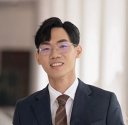
 Zhonghua Wu
· 2 previous affiliations
- Sensetime (China)Since 2023
- Researcher · Since 2023
- Current
- Nanyang Technological University2019–2022
- PhD student · 2019–2022
Research Overview
Zhonghua Wu focuses on computer vision, multimodal large language models, and unified architectures for visual understanding and generation. His early work addressed weakly supervised learning and few-shot semantic segmentation to reduce annotation bottlenecks in dense prediction tasks. More recently, his research investigates synergistic frameworks that seamlessly integrate image generation, spatial reasoning, and camera-centric multimodal understanding.
Research Trajectory
Zhonghua Wu’s early research centered on reducing the heavy reliance on dense annotations in computer vision, alongside applications in human-centric visual analysis. In 2019, he developed M2E-Try On Net: Fashion from Model to Everyone, a framework for virtual try-on, and introduced Keypoint based weakly supervised human parsing. Expanding into broader object detection, he proposed Exploring Bottom-Up and Top-Down Cues With Attentive Learning for Webly Supervised Object Detection. This work combined bottom-up region estimation—leveraging a fully supervised detector to recognize common objectiveness—with top-down cues to detect novel classes using only web images without further bounding box annotations.
Moving into the early 2020s, his focus shifted toward few-shot learning and 3D point cloud segmentation. He introduced Learning Meta-class Memory for Few-Shot Semantic Segmentation to improve segmentation performance when labeled data is scarce. Alongside collaborators, he also contributed to the research direction of Dense Contrastive Learning for Dense Prediction through Few-Shot Segmentation with Global and Local Contrastive Learning. This method extracted prior information independently from query images using a global-local contrastive approach, allowing the model to better process query content before integrating it with support images. Transitioning these principles to 3D environments, he developed Dual Adaptive Transformations for Weakly Supervised Point Cloud Segmentation, which applied consistency constraints under various perturbations to effectively regularize unlabeled 3D points in scenes with very few labeled instances.
This trajectory of minimizing annotation bottlenecks culminated in his comprehensive overview, 2D and 3D visual understanding with limited supervision, which formalized approaches to inexact, incomplete, and inaccurate supervision. He continued to refine 3D segmentation techniques with Reliability-Adaptive Consistency Regularization for Weakly-Supervised Point Cloud Segmentation.
In recent years, while serving as a Senior Researcher at SenseTime International, his focus expanded toward unified multimodal architectures and generative models. He oversaw the development of MOWA: Multiple-in-One Image Warping Model. He also participated in advancing the broader area of Synergistic Multimodal Understanding and Generation. This is evident in Harmonizing visual representations for unified multimodal understanding and generation, which leveraged masked autoregressive modeling to share a single visual encoder across both text-to-image generation and visual question answering, matching the performance of dedicated models on both fronts.
Further integrating spatial awareness into large models, he co-authored Thinking with Camera: A Unified Multimodal Model for Camera-Centric Understanding and Generation. This work contributed to the research area of Dense Geometric Fields for Robust Spatial Reasoning by treating camera geometry as a language, bridging the gap between camera calibration and controllable image generation. Returning to human-centric applications with advanced generative techniques, he collaborated on DI-Net : Decomposed implicit garment transfer network for digital clothed 3D human, which reconstructs 3D human meshes for virtual try-on by decomposing the process into image and texture layout transfers to preserve high-frequency fidelity. Concurrently, he has continued to refine foundational segmentation methods, as seen in Exploiting independent query information for few-shot image segmentation.
More recently, Wu's research has expanded into embodied intelligence and robotic control using frontier models. Contributing to Action Chunking for Robot Learning, they co-authored Embo-Harness: Towards Understanding Frontier-Model-as-Policy Harness, which systematically analyzes agentic loops that employ frontier multimodal models directly as robotic policies. Wu also collaborated on large-scale evaluations of frontier reasoning systems in Has GPT-6-Astra Achieved Embodied Intelligence?, which assesses embodied capabilities across manipulation and navigation tasks, and contributed to World Models as Native Latent Action Models, showing how pretrained video world models can extract compact latent actions to pretrain vision-language-action policies.
Current Directions
The most recent papers in the evidence indicate a strong focus on unifying multimodal understanding and generation within single, cohesive architectures. Recent work investigates how shared visual encoders and masked autoregressive modeling can simultaneously support high-fidelity image synthesis and complex visual reasoning tasks without requiring separate, specialized models. Additionally, there is an emerging emphasis on embodied artificial intelligence and robotics, investigating how frontier foundation models and video world models can be harnessed directly as policies or latent action teachers for physical manipulation and control.
Profile updated
Loading new papers…
Other researchers whose papers cluster into the same research directions — a proxy for overlapping technical interests and shared intellectual neighborhoods.
See something wrong? Report a mistake