

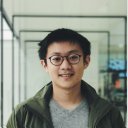
 Bingchen Liu
· 6 previous affiliations
- Character.AISince 2025
- Member of Technical Staff · Since 2025
- Playground Inc.2024
- Researcher · 2024
- Playground2024
- Research Lead · 2024
- ByteDance (China)2021–2024
- Senior Research Scientist · 2023–2024
- Researcher · 2021–2023
- Artrendex2018–2021
- Research Scientist · 2018–2021
- Doctor of Philosophy - PhD, Computer Science · 2017–2021
- Teaching Assistant · 2017–2019
- Bachelor of Science - BS, Computer Science · 2015–2017
Research Overview
Bingchen Liu focuses on the development of generative models for high-fidelity image synthesis, multimodal representation learning, and the optimization of deep neural architectures. His research trajectory tracks the evolution of generative modeling from early adversarial approaches to contemporary diffusion-based systems, with a consistent emphasis on disentanglement, few-shot efficiency, and the integration of large-scale language-vision priors.
Research Trajectory
Liu’s early work was situated at the intersection of computer vision and semantic understanding, particularly in the context of zero-shot learning (ZSL) and style classification. Between 2017 and 2018, he participated in research that leveraged Generative Adversarial Networks (GANs) to address the data scarcity inherent in ZSL. In Imagine it for me: Generative Adversarial Approach for Zero-Shot Learning from Noisy Texts, he contributed to a framework that synthesized visual features from noisy textual descriptions, such as Wikipedia articles, effectively converting zero-shot tasks into standard classification problems. During this period, he also explored the interpretability of convolutional neural networks in the context of art history, analyzing how machines internalize style representations across large-scale datasets of paintings.
By 2019, Liu’s focus shifted toward the fundamental mechanics of generative models, specifically the challenge of unsupervised disentanglement. In OOGAN: Disentangling GAN with One-Hot Sampling and Orthogonal Regularization, he proposed a novel framework that utilized alternating latent variable sampling and orthogonal regularization to separate distinct factors of variation within a GAN. This work argued that GANs possess inherent advantages for disentanglement over Variational Autoencoders (VAEs) when structured with specific sampling robustly. This period also aligned with broader community efforts toward Hierarchical Semantic Control in Generative Networks, exploring how deep networks organize visual information into manageable semantic hierarchies.
In 2021, Liu addressed the computational and data-intensive nature of high-resolution image synthesis. He introduced a light-weight GAN architecture in Towards Faster and Stabilized GAN Training for High-fidelity Few-shot Image Synthesis, which enabled the training of 1024x1024 resolution models on a single consumer-grade GPU with fewer than 100 training samples. This was achieved through two primary technical contributions: a skip-layer channel-wise excitation module and a self-supervised discriminator that functioned as a feature encoder. This emphasis on efficiency and self-supervision extended to the domain of sketch-based generation. In Self-Supervised Sketch-to-Image Synthesis, he developed a method to synthesize realistic images from rough sketches without the need for paired datasets, utilizing an auto-encoder to decouple content and style features.
Current Directions
Liu’s recent research reflects the paradigm shift toward diffusion models and the integration of Multimodal Large Language Models (MLLMs). He has explored the transition from iterative denoising to more efficient sampling methods, contributing to the discourse on Bridging the Gap Between Diffusion and One Step Sampling. His work on Shifted Diffusion for Text-to-image Generation introduced the "Corgi" model, which improves the generation of image embeddings from text by encoding the prior knowledge of pre-trained CLIP models directly into the diffusion process. This approach addresses the limitations of standard noise schedules by utilizing Informed Priors for Efficient Conditional Diffusion.
His current work also prioritizes personalization and fine-grained control in image generation. In MoMA: Multimodal LLM Adapter for Fast Personalized Image Generation, Liu presented a training-free adapter that enables zero-shot, subject-driven generation. By employing an MLLM as both a feature extractor and a generator, the model can effectively transfer identity and texture from a reference image to a new generated context. This research intersects with several emerging themes in the field, including Preserving Manifold Fidelity in Generative Latent Spaces and the use of Zero Terminal SNR for High Fidelity Diffusion Models to ensure complete signal destruction during the forward diffusion process.
Additionally, Liu has participated in efforts to scale diffusion transformers efficiently. His involvement in the development of SANA-1.5 highlights a "grow-then-prune" paradigm for linear Diffusion Transformers, which allows for scaling model parameters without the necessity of training from scratch. This work also incorporates Lifting 2D Generative Priors to 3D concepts by leveraging high-quality 2D priors to inform complex spatial generation tasks.
Representative Work
- OOGAN: Disentangling GAN with One-Hot Sampling and Orthogonal Regularization: Proposes a novel GAN framework for unsupervised disentanglement, demonstrating that alternating latent variable sampling can outperform VAE-based methods in robustness and clarity of feature separation.
- Towards Faster and Stabilized GAN Training for High-fidelity Few-shot Image Synthesis: Introduces a light-weight GAN structure that achieves high-fidelity synthesis at 1024x1024 resolution with minimal compute and extremely limited training data.
- Self-Supervised Sketch-to-Image Synthesis: Develops a self-supervised framework for high-resolution sketch-to-image translation that eliminates the requirement for paired sketch-image datasets by disentangling style and content.
- PIVQGAN: Posture and Identity Disentangled Image-to-Image Translation via Vector Quantization: Introduces a Vector-Quantized Spatial Normalization (VQSN) module within the StyleGAN2 framework to independently control object arrangement and fine-grained styling.
- Shifted Diffusion for Text-to-image Generation: Presents a shifted diffusion model that improves text-to-image alignment by initializing the diffusion process with pre-trained CLIP knowledge.
- MoMA: Multimodal LLM Adapter for Fast Personalized Image Generation: Describes an open-vocabulary, training-free adapter that leverages Multimodal LLMs to facilitate subject-driven image generation in a zero-shot manner.
Profile updated
| Paper | Venue | Year |
|---|---|---|
| MoMA: Multimodal LLM Adapter for Fast Personalized Image GenerationGitHubKunpengSong/ | Openreview | 2024 |
Loading new papers…
Other researchers whose papers cluster into the same research directions — a proxy for overlapping technical interests and shared intellectual neighborhoods.
See something wrong? Report a mistake