

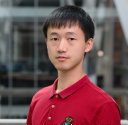
 Zhixiang Chen
· 3 previous affiliations
- University of SheffieldSince 2022
- Lecturer · Since 2022
- Imperial College London2019–2021
- Postdoc · 2019–2021
- Tsinghua University2017–2019
- Postdoc · 2017–2019
Research Overview
Zhixiang Chen focuses on 3D computer vision, human-object interaction, and large-scale multimedia retrieval. His early work developed efficient hashing techniques for scalable video search before transitioning to monocular 3D object detection and geometric representation learning. His most recent research investigates the physical dynamics of human motion and efficient network compression for resource-constrained environments.
Research Trajectory
Chen’s early research began in systems architecture, where he explored resource management for multimedia applications. This phase included the development of an Energy-efficient stream task scheduling scheme for embedded multimedia applications on multi-issued stream architectures in 2013.
By 2018, his focus shifted toward computer vision and scalable multimedia retrieval, specifically addressing the computational bottlenecks of video search through advanced hashing techniques. He proposed Nonlinear Structural Hashing for Scalable Video Search, which utilized multi-layer neural networks to capture structural information between video frames and nonlinear relationships among samples. To resolve the NP-hard mixed integer programming challenges inherent in discrete optimization for hashing, he introduced Deep Hashing via Discrepancy Minimization, transforming binary optimization into a differentiable problem via series expansion. He further advanced this domain with Neighborhood Preserving Hashing for Scalable Video Retrieval, an unsupervised framework that selectively encoded relevant video segments using spatial-temporal anchors and neighborhood attention mechanisms.
Entering the 2020s, Chen expanded his research into 3D computer vision, making significant contributions to the area of Monocular 3D Object Detection via Geometric Lifting. He developed UR3D, detailed in Distance-Normalized Unified Representation for Monocular 3D Object Detection, a single-stage framework that learned unified representations across varying distance ranges using distance-guided non-maximum suppression. He continued to refine depth and distance estimation through collaborative work on Geometry-based Distance Decomposition for Monocular 3D Object Detection. Recognizing that inaccurate physical and visual height predictions limit distance accuracy, he subsequently co-authored Multivariate Probabilistic Monocular 3D Object Detection. This work explicitly modeled the joint probability distribution of object heights, advancing the broader research direction of Confidence Weighted Local Predictions for Geometric Regression.
Parallel to his work on object detection, Chen investigated the geometric representation of human figures and 3D meshes. He explored feature learning for deformable shapes in Learning Feature Aggregation for Deep 3D Morphable Models. Building on these geometric foundations, he contributed to MAPConNet: Self-supervised 3D Pose Transfer with Mesh and Point Contrastive Learning, a framework enabling pose transfer between source and target geometries without requiring ground-truth correspondence, preserving target identity in unsupervised and semi-supervised settings.
Chen has also maintained a sustained interest in model efficiency and robust learning. In the context of object detection, he explored uncertainty and contrastive learning in Semi-Supervised Object Detection with Object-wise Contrastive Learning and Regression Uncertainty. To address the deployment of deep models on resource-constrained devices, he developed Filter Pruning via Automatic Pruning Rate Search, utilizing Wasserstein distance and a Pareto plane optimization method to quantify filter sensitivity. This trajectory of network compression continued with Efficient network compression via gradient-score aware pruning, which introduced a genetic algorithm for fast neural architecture search pruning. Additionally, he addressed model reliability with PViT: Prior-augmented Vision Transformer for Out-of-distribution Detection, injecting pre-trained prior knowledge as dedicated tokens to better identify unfamiliar data.
Most recently, Chen’s research has focused on the complex dynamics of human motion and interaction. He contributed to Sequential Joint Dependency Aware Human Pose Estimation with State Space Model, which treated the human skeleton as a sequential kinematic chain. By leveraging state space models, this approach achieved highly efficient 2D-to-3D pose lifting, aligning with the research direction of Conditional State Initialization for Contextual Sequence Learning. He also explored physically grounded animations in HOI-Dyn: Learning Interaction Dynamics for Human-Object Motion Diffusion, reframing 3D human-object interaction as a driver-responder system to produce causally consistent motion.
Current Directions
Chen’s most recent work investigates the physical grounding and causal consistency of 3D human-object interactions. The latest papers in the evidence address the generation of realistic motion by framing interactions as dynamic systems where human actions explicitly dictate object reactions. His current research agenda emphasizes combining advanced sequence modeling—such as state space models for kinematic chains—with physics-based constraints and diffusion frameworks. By integrating lightweight dynamics models into generative pipelines, his ongoing work seeks to eliminate physically implausible movements and improve the accurate perception and generation of 3D humans by machines.
Profile updated
Loading new papers…
Other researchers whose papers cluster into the same research directions — a proxy for overlapping technical interests and shared intellectual neighborhoods.
See something wrong? Report a mistake