

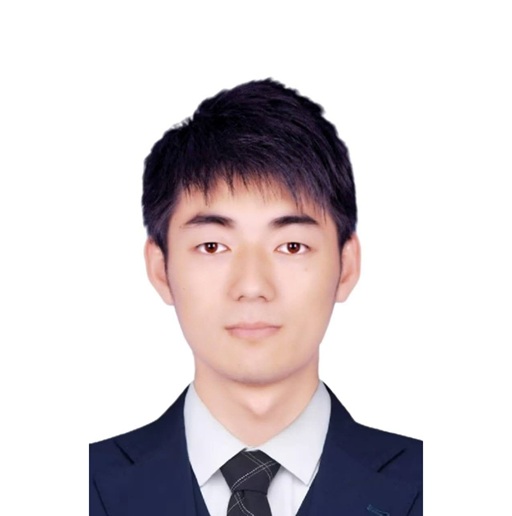
 Lin Wu
· 5 previous affiliations
- University of GlasgowSince 2024
- PhD student · 2024–2028
- Current
- Visiting PhD Student · 2025
- Southeast University2019–2022
- MS student · 2019–2022
- Wuhan University of Technology2015–2019
- Undergrad student · 2015–2019
- Central China Normal University2015–2019
- Undergrad student · 2015–2019
5 other authors named Lin Wu: Lin Wu (Chinese Academy of Sciences · 22 papers), Lin Wu (3 papers), Lin Wu (1 paper), Lin Wu (1 paper), Lin Wu (Hefei University of Technology · 1 paper)
Research Overview
Lin Wu focuses on multimodal understanding, 3D human-object interaction, and scalable optimization methods for machine learning. His early work explored stochastic variational inference and second-order optimization techniques that balance computational efficiency with complex geometry. Recently, his research has shifted toward generative models for human motion diffusion and physically grounded interaction dynamics.
Research Trajectory
Lin Wu’s research trajectory begins with a strong focus on the theoretical foundations and scalability of machine learning optimization, before evolving toward modern generative modeling and 3D vision.
In his early work, he concentrated on improving variational inference by balancing computational efficiency with complex geometric constraints. In 2015, he contributed to the research direction of Optimization on the Manifold of Probability Distributions. Working with collaborators, he developed Proximal-Gradient Stochastic Variational Inference (PG-SVI) in the paper Faster Stochastic Variational Inference using Proximal-Gradient Methods with General Divergence Functions. This framework successfully combined the scalability of stochastic gradients with geometry-aware optimization, enabling simple, closed-form updates for complex, non-conjugate models that previously required expensive numerical optimization. Concurrently, he analyzed the theoretical properties of these approaches in Convergence of Proximal-Gradient Stochastic Variational Inference under Non-Decreasing Step-Size Sequence. This work provided formal convergence-rate guarantees for methods exploiting the geometry of the variational-parameter space, advancing the broader area of Non-Conjugate Inference for Gaussian Processes and the direction of Geometry Aware Optimization via Relative Smoothness. Through these foundational studies, he also contributed to the area of Decoupling Optimization via Variable Splitting.
Building on these optimization foundations, his focus expanded to bridging Bayesian exploration and continuous optimization. He participated in developing the Variational Adaptive-Newton Method for Explorative Learning in 2017. By optimizing a distribution rather than a single point, this method provided a scalable, second-order update that naturally facilitated exploration in large-scale machine learning tasks. This work contributed significantly to the research direction of Scalable Second-Order Optimization for Neural Networks. Continuing this emphasis on efficient optimization, he later introduced Structured second-order methods via natural gradient descent. By cleverly restricting the geometry of Gaussian distributions using matrix groups, this approach yielded computationally efficient updates that handled non-convexity gracefully while maintaining the linear invariance characteristic of Newton's method. This advanced the area of The Hyperparameter Sensitivity of Second-Order Optimization.
Following a period working as an Algorithm Engineer at Huawei, his research shifted toward multimodal generation and 3D vision. In 2025, he introduced HOI-Dyn: Learning Interaction Dynamics for Human-Object Motion Diffusion. This work reframes 3D human-object interaction as a "driver-responder" system, where human actions explicitly dictate object reactions. By integrating a lightweight dynamics model and a residual-based loss into a diffusion framework, the method eliminates unrealistic "telekinetic" object movements, producing physically grounded and causally consistent animations.
Current Directions
Recent work investigates multimodal understanding and generation, with a specific focus on physically grounded 3D human-object interaction. The most recent papers in the evidence address the integration of dynamics models into diffusion frameworks to ensure causal consistency in generated animations. This involves treating human actions as explicit drivers of object reactions, moving beyond purely kinematic generation to capture the underlying physical rules of interaction. His current focus emphasizes eliminating physical artifacts in simulated environments and scaling interaction dynamics to complex, multi-entity scenes.
Profile updated
Loading new papers…
Other researchers whose papers cluster into the same research directions — a proxy for overlapping technical interests and shared intellectual neighborhoods.
See something wrong? Report a mistake