

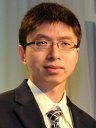
 Zhiru Zhang
· 2 previous affiliations
- Cornell TechSince 2012
- Full Professor · Since 2024
- Associate Professor · 2018–2024
- Assistant Professor · 2012–2018
- Cornell UniversityCurrent
- Current
Research Overview
Zhiru Zhang focuses on high-level synthesis, hardware specialization for machine learning, and programming models for software-defined FPGAs. His trajectory spans from accelerating binarized neural networks on reconfigurable hardware to developing scalable graph neural networks and advanced quantization techniques. Recently, his work investigates semantic compression and large language model-crafted heuristics for combinatorial optimization.
Research Trajectory
Zhang's early trajectory is deeply rooted in high-level synthesis (HLS) and reconfigurable computing, reflecting expertise that led to his co-founding of AutoESL (later acquired by Xilinx) and RapidStream. In 2017, he explored hardware specialization for machine learning by Accelerating Binarized Convolutional Neural Networks with Software-Programmable FPGAs. Recognizing the need for standardized evaluation in this domain, he subsequently introduced Rosetta: A Realistic High-Level Synthesis Benchmark Suite for Software Programmable FPGAs. This effort to improve FPGA accessibility culminated in HeteroCL: A Multi-Paradigm Programming Infrastructure for Software-Defined Reconfigurable Computing, which provided a unified programming model to decouple algorithm specification from hardware customization.
Parallel to his systems work, Zhang has consistently advanced techniques for efficient neural network inference. With collaborators, he developed Channel Gating Neural Networks, a dynamic pruning scheme that skips computations on ineffective input channels at run-time. This work contributed to the broader research direction of Structured Pruning for Spatially Sensitive Vision Tasks. He also addressed quantization challenges in Improving Neural Network Quantization without Retraining using Outlier Channel Splitting, demonstrating how to maintain accuracy on commodity GPUs and specialized accelerators without expensive fine-tuning. He later expanded on pruning methodologies with Structured Pruning of CNNs at Initialization, formulating the pruning-at-initialization problem as a convex optimization task to achieve practical wall-clock speedups.
Around 2020, Zhang's research expanded into the scalability and robustness of graph neural networks (GNNs). He participated in the development of GraphZoom: A Multi-level Spectral Approach for Accurate and Scalable Graph Embedding, a framework that fuses graph topology and node attributes to improve unsupervised embedding. This research advanced several areas, including Information Loss in Graph Pooling and Coarsening, Low-Pass Graph Filtering for Feature Denoising, and Spectrum Preserving Graph Coarsening. Building on spectral methods, his group later introduced GARNET: A Spectral Approach to Robust and Scalable Graph Neural Networks to defend against adversarial attacks on both homophilic and heterophilic graphs. Concurrently, he explored the intersection of hardware and privacy, contributing to the area of Secure Computation with Hardware Enclaves through the design of GuardNN: secure accelerator architecture for privacy-preserving deep learning.
In 2024, Zhang's focus on efficient deep learning yielded novel data formats and quantization strategies. His lab analyzed the statistical properties of large language models (LLMs) in Learning from Students: Applying t-Distributions to Explore Accurate and Efficient Formats for LLMs, proposing a "Student Float" format that outperforms standard normal distributions for low-bit quantization. Returning to FPGA acceleration, he introduced Trainable Fixed-Point Quantization for Deep Learning Acceleration on FPGAs, a differentiable quantization-aware training library that learns optimal binary-point positions to minimize DSP unit reliance. In the graph domain, he addressed the scalability-expressivity trade-off with Polynormer: Polynomial-Expressive Graph Transformer in Linear Time, an architecture that learns high-degree polynomials of input features to achieve linear complexity.
More recently, Zhang has pioneered approaches to semantic compression, leveraging generative AI to encode concepts rather than raw structural data. This began with Exploring the Limits of Semantic Image Compression at Micro-bits per Pixel and extended to spatial domains in Semantic Compression of 3D Objects for Open and Collaborative Virtual Worlds. His ongoing work in graph learning focuses on pre-propagation GNNs (PP-GNNs), which decouple feature propagation from training to avoid neighbor explosion. He characterized these models in Graph Learning at Scale: Characterizing and Optimizing Pre-Propagation GNNs and subsequently improved their accuracy with robust diffusion operators in Revisiting Pre-Propagation GNNs: Robust Diffusion Operators and Hidden-State Re-Propagation. He has also contributed to e-graph extraction for logic synthesis via e-boost: Boosted E-Graph Extraction with Adaptive Heuristics and Exact Solving. Finally, bridging LLMs and combinatorial optimization, his group developed HeuriGym: An Agentic Benchmark for LLM-Crafted Heuristics in Combinatorial Optimization, evaluating the ability of language models to iteratively refine heuristic algorithms for complex engineering tasks.
In 2026, Zhang's lab advanced automated compiler and hardware design tools through new abstractions and optimization formulations. In operator scheduling, they proposed GauS: Differentiable Scheduling Optimization via Gaussian Reparameterization, framing scheduling as a continuous stochastic relaxation to tackle pipelined scheduling on modern parallel processors. For hardware compilation, they developed SPMW: A Grid-Based Programming Model for Scalable Accelerator Design, contributing to Automated Hardware Synthesis from High Level Specifications by making grid regularity a first-class abstraction across behavioral HLS and structural RTL generation. Complementing spatial accelerator compilation, they also introduced Tenon: A Unified Programming Framework for Retargetable PIM Compilation, which leverages a linear layout algebra to map workloads and construct minimal-movement data layouts across heterogeneous processing-in-memory targets.
Current Directions
The most recent papers in the evidence point to three primary research directions. First, Zhang is investigating the scalability of graph neural networks through pre-propagation architectures, focusing on robust diffusion operators and hidden-state re-propagation to match the accuracy of traditional message-passing models without the associated computational overhead. Second, he is exploring the intersection of large language models and combinatorial optimization, developing agentic benchmarks to evaluate how LLMs can design and iteratively refine heuristic algorithms for logic synthesis and engineering problems. Finally, his work addresses extreme-scale semantic compression, utilizing generative models to compress 3D objects and images by encoding conceptual meaning rather than raw geometric or pixel data.
Profile updated
Loading new papers…
Other researchers whose papers cluster into the same research directions — a proxy for overlapping technical interests and shared intellectual neighborhoods.
See something wrong? Report a mistake