

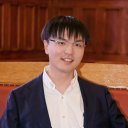
 Chenhui Deng
· 6 previous affiliations
- Nvidia (United States)Since 2024
- Senior Research Scientist · Since 2026
- Researcher · 2024–2026
- Researh Intern · 2020
- Cornell University2018–2023
- PHD Student · 2018–2023
- Cornell Tech2018–2023
- PhD · 2018–2023
- Research Intern · 2022
- Bachelor's degree, Electrical and Electronics Engineering · 2014–2018
- Summer Research Intern · 2017
Research Overview
Chenhui Deng focuses on large-scale graph representation learning, spectral graph theory, and electronic design automation. His trajectory spans the development of scalable graph neural networks and spectral methods for robust machine learning, extending into hardware design verification. Recently, his work investigates the application of large language models and multi-agent frameworks to complex chip design and combinatorial optimization problems.
Research Trajectory
Chenhui Deng’s early research concentrated on the intersection of graph neural networks (GNNs) and hardware design, as well as fundamental improvements to graph learning scalability. He initially applied GNNs to learn operation mapping patterns for high-level synthesis tools in Accurate Operation Delay Prediction for FPGA HLS Using Graph Neural Networks. Expanding into broader graph representation learning, he developed GraphZoom: A Multi-level Spectral Approach for Accurate and Scalable Graph Embedding. This framework addresses scalability and node attribute noise through graph fusion and spectral methods, contributing to the broader areas of Information Loss in Graph Pooling and Coarsening and Low-Pass Graph Filtering for Feature Denoising. He also explored spectral graph theory for evaluating model vulnerabilities in SPADE: A Spectral Method for Black-Box Adversarial Robustness Evaluation, advancing the research direction of Instance Adaptive Adversarial Training for Robust Neural Networks. Building on these themes, he introduced GARNET: A Spectral Approach to Robust and Scalable Graph Neural Networks, a scalable method designed to enhance adversarial robustness across both homophilic and heterophilic graphs using reduced-rank approximations.
Continuing to push the boundaries of graph learning expressivity, he proposed Polynormer: Polynomial-Expressive Graph Transformer in Linear Time. This architecture bridges the gap between linear transformers and message-passing GNNs by explicitly learning high-degree polynomials of input features. To better understand the theoretical properties of these models, he developed SAGMAN: Stability Analysis of Graph Neural Networks on the Manifolds, a spectral framework that maps graphs to low-dimensional manifolds to quantify how node distances distort under noise. Further addressing the neighbor explosion problem in large-scale graph learning, he contributed to Graph Learning at Scale: Characterizing and Optimizing Pre-Propagation GNNs, which investigates models that decouple feature propagation from training. Additionally, his work on SmoothE: Differentiable E-Graph Extraction explores differentiable methods for extracting expressions from equivalence graphs.
In recent years, his focus has expanded to the intersection of large language models (LLMs), multi-agent systems, and electronic design automation (EDA). He developed ChipAlign: Instruction Alignment in Large Language Models for Chip Design via Geodesic Interpolation, a training-free model merging strategy that fuses domain-specific expert models with general-purpose chat models. This work aligns with research directions such as Weight Fusion Across Heterogeneous Model Architectures, Linear Weight Interpolation in Parameter Space, and Weight Interpolation for Model Merging and Task Composition. Returning to hardware verification, he applied GNNs in ReVEAL: GNN-Guided Reverse Engineering for Formal Verification of Optimized Multipliers, enabling faster and more memory-efficient formal verification of optimized netlists.
Recognizing the limitations of existing evaluation metrics for AI in hardware, he introduced Comprehensive Verilog Design Problems: A Next-Generation Benchmark Dataset for Evaluating Large Language Models and Agents on RTL Design and Verification, exposing gaps in models' abilities to handle real-world Register-Transfer Level (RTL) engineering. To address these complex tasks, he collaborated on specialized multi-agent frameworks, including JARVIS: A Multi-Agent Code Assistant for High-Quality EDA Script Generation, which automates EDA script generation through domain-specific fine-tuning and agentic workflows. He also guided the development of Marco: Configurable Graph-Based Task Solving and Multi-AI Agents Framework for Hardware Design, bringing structured, graph-based multi-agent workflows to tasks like RTL coding and timing analysis. Most recently, he contributed to HeuriGym: An Agentic Benchmark for LLM-Crafted Heuristics in Combinatorial Optimization, challenging LLMs to iteratively refine heuristic algorithms for complex scientific and engineering problems.
Current Directions
The most recent papers in the evidence indicate a strong focus on applying large language models and multi-agent frameworks to complex engineering domains, particularly electronic design automation and combinatorial optimization. Recent work investigates how specialized AI agents can automate high-quality EDA script generation, synthesize RTL code, and perform timing analysis through structured, graph-based workflows. Additionally, there is an ongoing emphasis on developing rigorous benchmarks to evaluate the true capabilities of LLMs in real-world hardware design and heuristic algorithm crafting, moving beyond static coding tests to assess iterative, agentic problem-solving.
Profile updated
Loading new papers…
Other researchers whose papers cluster into the same research directions — a proxy for overlapping technical interests and shared intellectual neighborhoods.
See something wrong? Report a mistake