

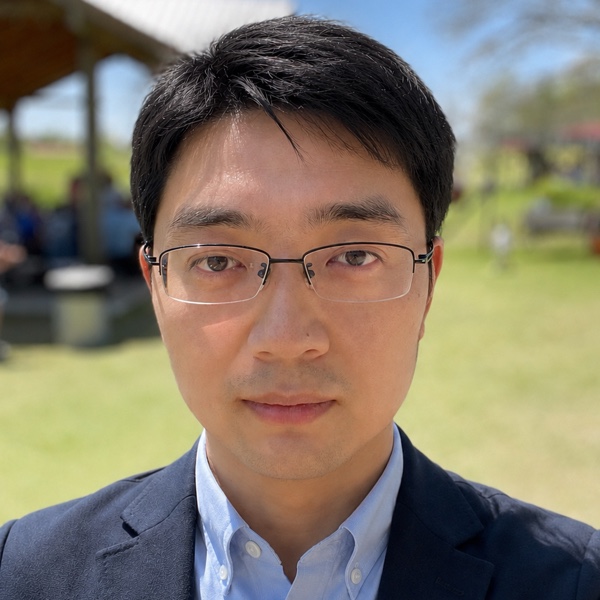
 Zhiqian Chen
· 2 previous affiliations
- Mississippi State UniversitySince 2020
- Assistant Professor · Since 2020
- Virginia Tech2014–2020
- PhD student · 2014–2020
Research Overview
Zhiqian Chen focuses on graph representation learning, spatial optimization, and the development of scalable machine learning frameworks for complex network data. Their work spans the theoretical unification of graph neural networks, spatiotemporal forecasting in urban and epidemiological contexts, and the application of combinatorial optimization to regionalization problems. Recently, Chen has extended these methodologies to address challenges in social influence maximization and interdisciplinary domains, including regenerative medicine and pharmacological modeling.
Research Trajectory
Chen’s early research, beginning around 2016, centered on the extraction of structured narratives from high-volume, unstructured data streams. This work primarily addressed the challenges of "storytelling" within heterogeneous networks, particularly those derived from social media. In Storytelling in heterogeneous Twitter entity network based on hierarchical cluster routing, Chen contributed to the development of algorithms designed to connect disparate entities—such as individuals and organizations—across massive Twitter datasets. This period was characterized by an emphasis on handling the short-form, noisy nature of microblogging data and the need for incremental algorithms to track evolving topics. This line of inquiry continued with participation in the development of models like Trendi, which integrated news media and microblogs to monitor the emergence and fading of phrases across multiple platforms.
By 2018, Chen’s focus shifted toward the intersection of computer vision, spatial data, and urban perception. This transition involved applying deep learning to interpret the physical and social characteristics of urban environments. A significant contribution during this phase was the development of StreetNet: preference learning with convolutional neural network on urban crime perception, which moved beyond binary classifications of safety to infer specific crime types based on street-level visual data. Concurrently, Chen began exploring the optimization of large-scale machine learning tasks, participating in the formulation of distributed self-paced learning (SPL) methods. This work utilized the alternating direction method of multipliers (ADMM) to allow for the parallel optimization of instance weights, addressing the computational bottlenecks inherent in training on large-scale datasets.
Between 2019 and 2021, Chen increasingly focused on spatial optimization and the theoretical underpinnings of Graph Neural Networks (GNNs). This period saw the development of frameworks for regionalization, such as school boundary design, which Chen framed as a problem of Enforcing Spatial Contiguity in Clustering Algorithms. This work addressed the limitations of standard clustering algorithms, which often fail to maintain spatial contiguity or respect domain-specific barriers. In 2021, Chen published a significant theoretical contribution that sought to bridge the gap between spatial- and spectral-based GNNs. By establishing a unified framework based on spectral graph and approximation theory, this work provided a basis for comparing previously disparate GNN architectures.
In the most recent phase of their work (2022–2024), Chen has focused on the dynamics of and on graphs, as well as complex influence patterns in social networks. This includes the development of scalable deep echo-state networks for translating node attribute changes into topological evolutions. Chen has also taken a leadership role in investigating multiplex influence maximization, accounting for the simultaneous dissemination of multiple, related information items. Furthermore, the scope of Chen's research has expanded into highly specialized interdisciplinary applications. This includes contributions to modeling Site-Specific Delivery to Decouple Local Efficacy from Systemic Toxicity and Synchronizing Scaffold Degradation with the Pace of Tissue Regeneration. These efforts suggest an application of computational modeling to solve critical "handover" and survival problems in regenerative medicine, such as Overcoming Hostile Microenvironments for Stem Cell Survival and Inhibiting the TGF-beta Smad Axis to Prevent Tissue Scarring.
Current Directions
Chen’s current research is increasingly concerned with the robustness and standardization of graph-based models. A primary focus is Standardized Benchmarking for Graph Machine Learning, addressing the "fragmented progress" in the GNN field by advocating for unified evaluation metrics and consistent data splits. This drive for rigor complements Chen’s ongoing work in temporal forecasting, where they are developing attention-aided dependency models for predicting complex time-series events, such as citation counts for scientific publications and patents.
Another active area of investigation involves the refinement of population-based metaheuristics for spatial partitioning. Recognizing that standard search operators are often ill-suited for discrete spatial units, Chen is exploring the integration of domain knowledge into memetic algorithms to improve the efficiency and scalability of spatial optimization. This work is particularly relevant for large-scale administrative and logistical partitioning problems where exact optimization methods are computationally prohibitive.
Representative Work
Bridging the Gap between Spatial and Spectral Domains: A Theoretical Framework for Graph Neural Networks As the lead author of this study, Chen addresses a fundamental divide in the GNN literature between spatial methods (which operate on local neighborhoods) and spectral methods (which leverage the graph Laplacian). The paper proposes a unified theoretical framework that integrates these approaches using approximation theory. This work is significant for providing a rigorous mathematical basis for comparing different GNN architectures and understanding their intrinsic connections, which had previously been obscured by differing theoretical origins.
Graph Bayesian Optimization for Multiplex Influence Maximization Serving as the senior author, Chen explores the problem of influence maximization (IM) in social networks, specifically focusing on "multiplex" scenarios. Unlike traditional IM, which considers a single piece of information, this work models the simultaneous and interactive dissemination of multiple related items. The research utilizes Bayesian optimization to identify influential users who can trigger cascading effects across related content categories, reflecting the recommendation-heavy and associative nature of modern information platforms.
StreetNet: preference learning with convolutional neural network on urban crime perception In this second-author paper, Chen applies convolutional neural networks (CNNs) to the field of urban computing. The study investigates the "broken window theory" by linking the visual appearance of streetscapes to public perceptions of safety and actual crime data. StreetNet improves upon prior binary classification models by learning to infer potential crime types from visual features, demonstrating the utility of computer vision in providing actionable insights for urban planning and public safety.
Fast and adaptive dynamics-on-graphs to dynamics-of-graphs translation Chen contributed to this work as a second author, addressing the complex relationship between node-level attribute changes ("dynamics on graphs") and the evolution of the underlying network structure ("dynamics of graphs"). The paper introduces a scalable deep echo-state network designed to map these dynamics without requiring rigid prior hypotheses. This model is particularly relevant for understanding rapidly changing systems such as human mobility networks and functional brain networks.
Storytelling in heterogeneous Twitter entity network based on hierarchical cluster routing As a second author, Chen developed a system for automated story construction within large-scale, unstructured Twitter data. The research addresses the challenges of heterogeneous features and the massive volume of microblogging streams. By using hierarchical cluster routing, the system identifies latent relationships between diverse entities, enabling the discovery of coherent narratives in real-time or near-real-time data environments.
Memetic algorithms for Spatial Partitioning problems In this work, Chen participated in the development of population-based metaheuristics tailored for spatial partitioning. The paper identifies a critical mismatch between standard continuous optimization operators and the discrete, combinatorial nature of spatial units. By incorporating domain-specific constraints and spatial relationships into the memetic search process, the proposed approach offers a more scalable solution for NP-hard spatial optimization problems than exact methods.
Profile updated
Loading new papers…
Other researchers whose papers cluster into the same research directions — a proxy for overlapping technical interests and shared intellectual neighborhoods.
See something wrong? Report a mistake