

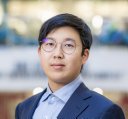
 Zhengzhong Tu
· 7 previous affiliations
- Texas A&M UniversitySince 2024
- Assistant Professor · Since 2024
- IEEE Transactions on Image ProcessingSince 2025
- Associate Editor · Since 2025
- VQEG – Video Quality Experts GroupSince 2025
- Co-Chair · Since 2025
- Action Editor · Since 2025
- Google (United States)2022–2024
- AI Research Scientist · 2022–2024
- The University of Texas at Austin2018–2022
- Doctor of Philosophy - PhD, Electrical and Computer Engineering · 2018–2022
- Fudan University2016–2018
- Master of Science - MS · 2016–2018
Research Overview
Zhengzhong Tu focuses on multimodal artificial intelligence, generative models, and collaborative perception for autonomous systems. His work spans from foundational architectures for efficient image processing to robust frameworks for vehicle-to-vehicle communication. Recently, his research investigates the physical consistency of video generation, the alignment of large reasoning models, and defenses against malicious generative editing.
Research Trajectory
Early work focused on foundational visual architectures and quality assessment. He developed MaxViT: Multi-axis Vision Transformer and MAXIM: Multi-Axis MLP for Image Processing, introducing multi-axis spatial mixing to achieve global receptive fields with linear complexity. These architectures advanced efficient high-resolution vision and image restoration. Concurrently, he addressed the challenges of in-the-wild video degradations with UGC-VQA: Benchmarking Blind Video Quality Assessment for User Generated Content, establishing comprehensive evaluations for unpredictable consumer video artifacts.
Expanding into spatial intelligence and autonomous systems, Tu began exploring how connected vehicles can share sensor data to see beyond line-of-sight. He participated in the development of V2X-ViT: Vehicle-to-Everything Cooperative Perception with Vision Transformer, a robust attention model for fusing multi-agent information. This work naturally progressed into the research direction of Overcoming Sensor Occlusion Through Collaborative Perception, supported by his contributions to V2V4Real: A Real-World Large-Scale Dataset for Vehicle-to-Vehicle Cooperative Perception, which provided synchronized multimodal data to transition cooperative perception from simulation to reality.
As generative models became central to computer vision, his focus expanded to their efficiency, fidelity, and security. Addressing the area of Overcoming the Iterative Inference Latency of Diffusion Models, he demonstrated in Bigger is not Always Better: Scaling Properties of Latent Diffusion Models that smaller latent diffusion models can outperform larger counterparts under fixed inference budgets. He also collaborated on CoDi: Conditional Diffusion Distillation for Higher-Fidelity and Faster Image Generation, distilling conditional diffusion models into efficient few-step generators. His group further applied generative techniques to extreme image degradation, developing the HeadsUp! High-Fidelity Portrait Image Super-Resolution framework to resolve visible artifacts in facial restoration. Recognizing the security implications of these powerful tools, he led work on Edit Away and My Face Will not Stay: Personal Biometric Defense against Malicious Generative Editing, introducing adversarial perturbations as a biometric defense to prevent unauthorized identity manipulation.
Returning to quality assessment through a modern lens, his team released Subjective and Objective Quality Assessment of Banding Artifacts on Compressed Videos, introducing a dedicated dataset and a no-reference prediction model for temporal artifacts. They also investigated how multimodal large language models process visual degradations in Demystifying the Visual Quality Paradox in Multimodal Large Language Models, utilizing test-time tuning to dynamically adjust image frequencies. His collaborative efforts extended to model alignment, participating in the development of Re-Align: Aligning Vision Language Models via Retrieval-Augmented Direct Preference Optimization to mitigate cross-modal hallucinations, and contributing to the broader area of Group Relative Policy Optimization for Large Reasoning Models through the DisCO: Reinforcing Large Reasoning Models with Discriminative Constrained Optimization framework.
Most recently, Tu's research has pushed the boundaries of collaborative perception and multimodal reasoning. To address the challenge of heterogeneous autonomous fleets, his group proposed STAMP: Scalable Task- And Model-agnostic Collaborative Perception, utilizing lightweight adapters for secure, cross-architecture communication. Advancing the direction of Bandwidth Efficient Collaborative Perception for Connected Vehicles, they introduced LangCoop: Collaborative Driving with Language, which replaces dense sensor data with natural language messages to drastically reduce communication overhead. In navigation, his team developed VISTA: Generative Visual Imagination for Vision-and-Language Navigation, enabling AI agents to visually anticipate destinations using diffusion models. His ongoing work in representation learning includes DecAlign: Hierarchical Cross-Modal Alignment for Decoupled Multimodal Representation Learning, which separates modality-unique and modality-common features, and he collaborated on Noisy-Pair Robust Representation Alignment for Positive-Unlabeled Learning to achieve near-supervised performance without auxiliary negatives. Finally, bridging generative AI with physical reality, his group introduced the Physics-Aware Video Instance Removal Benchmark to evaluate whether video editing models respect physical consistency. His recent collaborative efforts have also addressed systemic evaluation in autonomous driving and language agents: Tu contributed to Ego2Flow: Benchmarking the Traffic-System Impact of Autonomous Driving on Maps Distilled from Real-World Roads, which uses an agent-guided distillation framework to evaluate how driving policies affect city-scale traffic efficiency and safety. In language generation, Tu co-authored Explicit Style Extraction for Personalized Long-Form Text Generation, presenting a stylistic taxonomy and refinement method to guide personalized long-form drafting. Furthermore, Tu participated in developing Flex-RSI: Benchmarking Recursive Self-Improvement of Frontier Agents to evaluate how vision and robotics agents recursively improve their execution harnesses under task feedback. Turning to language model alignment and forgetting, Tu co-authored Contrastive On-Policy Self-Distillation for LLM Unlearning, introducing an on-policy distillation framework that reverses knowledge-associated distributional shifts along a model's rollout trajectory to improve utility retention during unlearning. Additionally, Tu contributed to ReJEPA: Bounded Predictive Regulation for Latent World Models, exploring bounded loss functions like log-cosh to prevent latent world models from overfitting noisy frames while maintaining smooth planning representations.
Current Directions
The most recent papers in the evidence indicate a strong focus on aligning multimodal and generative models with physical and semantic constraints, as well as scaling collaborative perception for autonomous systems. Recent work investigates the physical consistency of video generation models, highlighting the gap between visual plausibility and true physical understanding. Concurrently, ongoing research addresses the efficiency and interoperability of connected vehicles, exploring how natural language and model-agnostic adapters can facilitate low-bandwidth, secure communication between heterogeneous autonomous agents. Additionally, there is a continued emphasis on refining multimodal representation learning and benchmarking agent self-improvement and system-level traffic impacts of driving policies.
Profile updated
Loading new papers…
Other researchers whose papers cluster into the same research directions — a proxy for overlapping technical interests and shared intellectual neighborhoods.
See something wrong? Report a mistake