

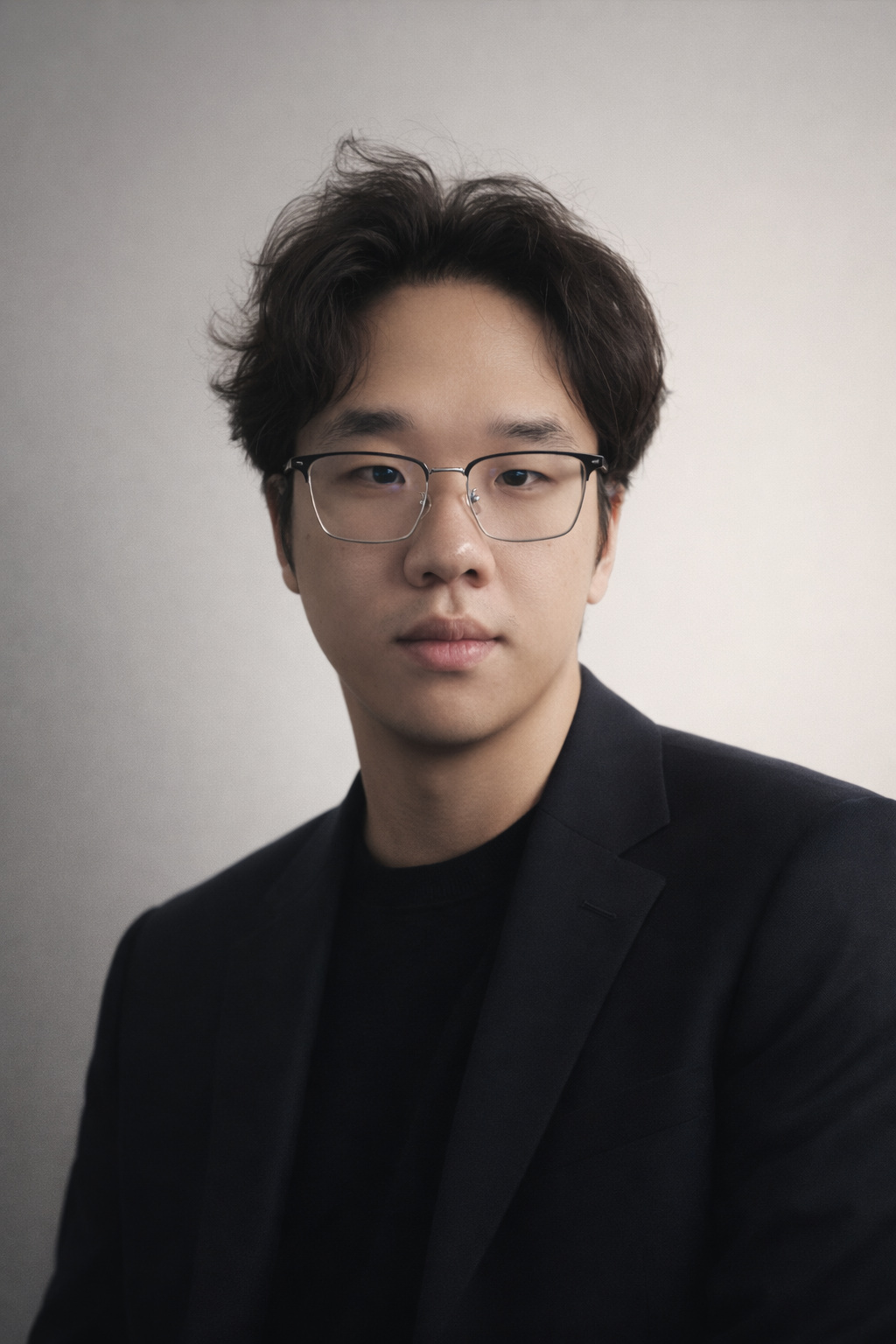
 Zhengqing Yuan
· 2 previous affiliations
- University of Notre DameSince 2024
- PhD student · 2024–2029
- Current
- Anhui Polytechnic University2020–2024
- Undergrad student · 2020–2024
Research Overview
Zhengqing Yuan focuses on natural language processing, multimodal foundation models, and efficient deep learning architectures. His research trajectory spans from foundational data augmentation and model quantization to the development of multi-agent systems and interactive video generation frameworks. Currently, he investigates the clinical alignment of language models and the robustness of autonomous agents in complex, multi-turn environments.
Research Trajectory
Early work addressed natural language understanding through novel data augmentation techniques. He introduced RPN: A Word Vector Level Data Augmentation Algorithm in Deep Learning for Language Understanding (2022), which modifies word embeddings by introducing noise based on existing vector values. This approach allows for fine-grained modifications that better capture natural language variations compared to traditional discrete augmentation methods.
In 2024, the focus expanded to the efficiency and accessibility of large-scale models. He developed TinyGPT-V: Efficient Multimodal Large Language Model via Small Backbones, an open-source multimodal model that achieves strong performance with significantly fewer computational resources. This work contributes to the broader area of Aligning Visual Features with Language Model Embeddings. Continuing this emphasis on efficiency, he explored ternary quantization for computer vision in ViT-1.58b: Mobile Vision Transformers in the 1-bit Era. By constraining weights to three values and utilizing BitLinear modules, this architecture substantially reduces memory usage and increases computational throughput for ImageNet classification.
Concurrently, he advanced generative modeling for complex visual domains. He introduced Mora: Enabling Generalist Video Generation via A Multi-Agent Framework, a collaborative multi-agent system designed to replicate and extend the capabilities of state-of-the-art video generation models through specialized agent interactions.
His research also encompasses biomedical imaging and AI safety. He participated in the development of Biomedical SAM-2: Segment Anything in Biomedical Images and Videos, a foundation model fine-tuned for medical data that advances the research direction of Robust Interactive Segmentation via Prompt Stability. He also contributed to TTT-UNet: Enhancing U-Net with Test-Time Training Layers for Biomedical Image Segmentation, integrating dynamic parameter adjustments during inference to better capture long-range features in medical images. In the domain of AI security, he designed a multi-pronged defense framework in Fortifying Ethical Boundaries in AI: Advanced Strategies for Enhancing Security in Large Language Models, utilizing a collaborative multi-model ensemble voting system to protect language models from adversarial attacks while preserving their core reasoning capabilities.
In 2025, his work on model efficiency culminated in EfficientLLM: Efficiency in Large Language Models, a comprehensive benchmark evaluating architecture, fine-tuning, and inference trade-offs. This research intersects with areas such as Post-Training Quantization for Efficient Model Deployment and Asymmetric Key Value Sharing for Efficient Transformer Inference. He also addressed real-time robotic control by developing BLURR: A Boosted Low-Resource Inference for Vision-Language-Action Models, a lightweight inference wrapper that accelerates VLA models and reduces memory usage without retraining, enabling high-frequency control on standard hardware.
Expanding multi-agent frameworks to social applications, he introduced Food4All: A Multi-Agent Framework for Real-time Free Food Discovery with Integrated Nutritional Metadata. This dual-agent architecture integrates official databases and social media signals to provide geographically precise recommendations, contributing to the field of Reinforcement Learning with Verifiable Geometric Rewards. In visual generation, he developed 3D4D: An Interactive, Editable, 4D World Model via 3D Video Generation, a framework combining WebGL and foveated rendering to transform static inputs into editable, real-time 4D scenes.
The most recent phase of his trajectory focuses on clinical reasoning and the robustness of autonomous agents. In 2026, he investigated the application of chain-of-thought prompting and reinforcement learning for verifiable medical report generation in Reason like a radiologist: Chain-of-thought and reinforcement learning for verifiable report generation. Addressing mental health applications, he introduced Can LLMs Move Beyond Short Exchanges to Realistic Therapy Conversations?, which presents CareBench-CBT, a clinically validated benchmark revealing the limitations of current models in extended therapeutic dialogues. Finally, he participated in diagnosing agentic failures through DRIFT-BENCH: Diagnosing CoopeRative Breakdowns in LLM Agents under Input Faults via Multi-Turn Interaction, a benchmark that tests how agents navigate vague or flawed instructions, highlighting a prevalent execution bias in modern models.
Current Directions
The most recent papers in the evidence address the deployment of large language models in high-stakes, multi-turn environments, particularly in clinical and agentic settings. Recent work investigates the clinical alignment of models for psychological counseling, evaluating their ability to sustain realistic, long-form therapeutic conversations rather than merely memorizing psychological facts. Alongside mental health applications, current research explores verifiable reasoning in medical image analysis, utilizing reinforcement learning to generate accurate radiological reports. Another major theme is the robustness of autonomous agents during cooperative breakdowns. This involves diagnosing how agents handle vague instructions or false assumptions in multi-turn interactions, aiming to mitigate execution biases and improve the reliability of agentic systems under input faults.
Profile updated
Loading new papers…
Other researchers whose papers cluster into the same research directions — a proxy for overlapping technical interests and shared intellectual neighborhoods.
See something wrong? Report a mistake