

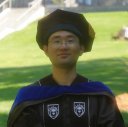
 Kai Zhang
· 5 previous affiliations
- Stanford UniversitySince 2026
- Postdoctoral Researcher · Since 2026
- Lehigh University2022–2026
- PhD student · 2022–2026
- Research Intern · 2025
- Research Intern · 2024
- Applied Scientist Intern · 2023
22 other authors named Kai Zhang: Kai Zhang (Nanjing University · 167 papers), Kai Zhang (NeoCognition · 137 papers), Kai Zhang (Tsinghua University · 134 papers), Kai Zhang (University of Science and Technology of China · 117 papers), Kai Zhang (East China Normal University · 85 papers), and 17 more
Research Overview
Kai Zhang focuses on multimodal foundation models, federated learning, and artificial intelligence for healthcare. His doctoral research initially explored the adversarial robustness of graph neural networks before shifting toward privacy-preserving distributed learning and medical image analysis. Currently, he develops generalist vision-language models and multi-agent reasoning systems to improve the reliability of computational precision medicine.
Research Trajectory
Zhang's early research examined the vulnerabilities of deep learning models on graph-structured data. He led a comprehensive review of this space in Adversarial Attack and Defense on Graph Data: A Survey (2018), establishing a mathematical framework to categorize attack strategies and defense mechanisms. This work contributed to the broader research direction of Scalable Adversarial Robustness for Graph Neural Networks and the area of Structural Robustness in Graph Neural Networks. He continued to participate in this domain, contributing to a subsequent journal version, Adversarial Attack and Defense on Graph Data: A Survey (2023), which formalized the structural min-max optimization challenges inherent in graph security.
Transitioning toward distributed and privacy-preserving systems, Zhang investigated federated learning architectures. He developed Efficient Federated Learning on Knowledge Graphs via Privacy-preserving Relation Embedding Aggregation (2022) to enable collaborative training over relational data without compromising local privacy. Recognizing the hardware constraints of edge devices in distributed networks, he subsequently introduced Memory-adaptive Depth-wise Heterogenous Federated Learning (2023). This approach moved beyond traditional width-slimming techniques by allowing clients with varying memory capacities to train subnetworks dynamically, improving global model performance. Alongside his work in distributed systems, he explored data-centric approaches to model reliability, detailing methodologies for handling real-world data variations in Robust Computer Vision in an Ever-Changing World: A Survey of Techniques for Tackling Distribution Shifts (2023).
A major focus of Zhang's recent trajectory is the development of multimodal foundation models for healthcare. He spearheaded the creation of BiomedGPT: A Unified and Generalist Biomedical Generative Pre-trained Transformer for Vision, Language, and Multimodal Tasks (2023). By leveraging self-supervision across large, diverse datasets, this model processes multi-modal inputs to perform various downstream clinical tasks. This research culminated in A generalist vision–language foundation model for diverse biomedical tasks (2024). This lightweight, open-source model advances the area of Unifying Multimodal Generation via Shared Discrete Token Spaces and contributes to the field of Multimodal Instruction Tuning for Zero-Shot Generalization.
Continuing his work in medical imaging, Zhang collaborated on Biomedical SAM-2: Segment Anything in Biomedical Images and Videos (2024), which fine-tuned a general-purpose segmentation model specifically for medical data. This work touches on the domain of Hybrid Loss Functions for Image Segmentation, aiming to improve diagnostic workflows. He also bridged his expertise in federated learning and large language models by contributing to FedSecurity: A Benchmark for Attacks and Defenses in Federated Learning and Federated LLMs (2024), providing a standardized evaluation framework for distributed model security.
In his most recent work, Zhang has focused on complex clinical reasoning, drug discovery, and rigorous model evaluation. He co-authored Beyond Affinity: A Benchmark of 1D, 2D, and 3D Methods Reveals Critical Trade-offs in Structure-Based Drug Design (2025), which systematically compared computational drug design models, highlighting the balance between binding affinity and chemical validity. In the domain of medical image segmentation, he participated in the development of TTT-UNet: Enhancing U-Net with Test-Time Training Layers for Biomedical Image Segmentation (2026), a framework that dynamically adapts parameters during inference to better capture long-range dependencies.
To improve the interpretability and reliability of AI in radiology, Zhang introduced RadAgents: Multimodal Agentic Reasoning for Chest X-ray Interpretation with Radiologist-like Workflows (2026). This multi-agent system mimics the step-by-step reasoning of human radiologists, utilizing retrieval-augmented verification to enhance diagnostic transparency. Finally, addressing the broader challenge of evaluating language models, he contributed to EIP: Weighted Ranking of LLMs by Quantifying Question Difficulty (2026), a graph-based framework that ranks models based on the empirical difficulty of the questions they solve rather than flat accuracy metrics.
Current Directions
The most recent papers in the evidence indicate a focus on complex reasoning and rigorous evaluation in medical AI. Recent work investigates multi-agent systems that replicate the step-by-step diagnostic workflows of human clinicians, particularly for radiology. Additionally, Zhang is exploring test-time adaptation techniques to improve the performance of biomedical image segmentation models. Beyond direct clinical applications, his current research addresses the broader area of Evaluating Medical Language Models Beyond Lexical Overlap, developing graph-based evaluation frameworks that rank language models based on empirical question difficulty rather than simple accuracy. He also contributes to computational drug repositioning by benchmarking structure-based drug design methods to reveal critical trade-offs in chemical validity and binding affinity.
Profile updated
Loading new papers…
Other researchers whose papers cluster into the same research directions — a proxy for overlapping technical interests and shared intellectual neighborhoods.
See something wrong? Report a mistake