

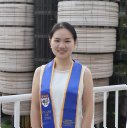
 Zhengding Luo
· 3 previous affiliations
- Current
- PhD student · 2022–2025
- Peking University2018–2021
- MS student · 2018–2021
- Zhengzhou University2014–2018
- Undergrad student · 2014–2018
Research Overview
Zhengding Luo focuses on active noise control, audio machine learning, and reinforcement learning. His work explores how deep learning and adaptive filtering can be combined to create robust, real-time acoustic systems that operate efficiently in dynamic environments. Recently, his research has expanded to address sparse reward challenges in reinforcement learning and lightweight architectures for spatial audio processing.
Research Trajectory
Zhengding Luo’s early research explored multimodal biometrics, focusing on hardware efficiency and system robustness. He developed A Robust Single-Sensor Face and Iris Biometric Identification System Based on Multimodal Feature Extraction Network (2019), which demonstrated how complementary facial and iris data could be captured and processed through a single sensor to reduce device complexity while maintaining security in non-ideal scenarios.
By 2023, his focus had shifted toward acoustic engineering, specifically the modernization of Active Noise Control (ANC) systems using deep learning. Traditional adaptive noise control methods often struggle with dynamic, real-world noises, prompting Luo to investigate Convolutional Neural Network (CNN)-based approaches. He evaluated these architectures in Performance Evaluation of Selective Fixed-filter Active Noise Control based on Different Convolutional Neural Networks, contributing to the broader area of Overcoming the Stationary Noise Assumption in Signal Enhancement. To improve upon systems that merely select from pre-trained filters, he introduced an adaptive combination method in GFANC-Kalman: Generative Fixed-Filter Active Noise Control With CNN-Kalman Filtering. This work integrated a 1D CNN with a Kalman filter to generate dynamic control filters capable of responding to rapidly changing primary noises.
In 2024, Luo expanded the Generative Fixed-filter Active Noise Control (GFANC) framework to address data dependency, system stability, and real-time deployment. Recognizing that labeling noise data for CNN training is resource-intensive and prone to errors, he proposed GFANC-RL: Reinforcement Learning-based Generative Fixed-filter Active Noise Control, which leveraged an RL agent to automatically update network parameters through environmental interaction. He further refined filter generation by incorporating probabilistic methods in Delayless Generative Fixed-filter Active Noise Control based on Deep Learning and Bayesian Filter. To completely eliminate the need for manually labeled datasets, he developed an end-to-end differentiable system in Unsupervised Learning Based End-to-End Delayless Generative Fixed-Filter Active Noise Control. This unsupervised approach minimized noise directly from the error signal, advancing the research direction of Bridging the Reality Gap in Audio Machine Learning. Alongside these algorithmic improvements, he investigated the practical interpretability and physical deployment of these systems in Real-time implementation and explainable AI analysis of delayless CNN-based selective fixed-filter active noise control.
Luo’s most recent acoustic research in 2025 extends these adaptive systems into spatial, multichannel, and hardware-constrained domains. He addressed the limitations of frequency-only filter selection by designing Frequency-Direction Aware Multichannel Selective Fixed-Filter Active Noise Control Based on Multi-Task Learning, which uses a CNN to classify both the frequency and spatial origin of incoming noise. Directing research on environmental adaptability, his group presented Transferable Selective Virtual Sensing Active Noise Control Technique Based on Metric Learning, enabling ANC systems to adapt to new acoustic environments without retraining. He also oversaw work on hardware safety in Preventing output saturation in active noise control: An output-constrained Kalman filter approach, which intelligently rescales disturbance signals to avoid non-linear distortions, contributing to the area of Saturation Aware Control for Constrained Physical Systems. Broadening his scope in spatial audio, he collaborated on DOA Estimation with Lightweight Network on LLM-Aided Simulated Acoustic Scenes, helping develop a highly efficient neural network for Direction-of-Arrival estimation trained on semantically diverse, simulated environments.
Parallel to his work in audio processing, Luo has recently collaborated on fundamental challenges in reinforcement learning, specifically focusing on the research direction of Bridging the Gap in Sparse Reward Environments. In 2025, he participated in the development of novel feedback mechanisms in Highly Efficient Self-Adaptive Reward Shaping for Reinforcement Learning. He also contributed to Centralized Reward Agent for Knowledge Sharing and Transfer in Multi-Task Reinforcement Learning, which introduced a framework for distilling experiences across multiple tasks into dense reward signals, significantly improving sample efficiency and knowledge transfer for policy agents.
Current Directions
Luo’s most recent work operates at the intersection of robust acoustic engineering and sample-efficient machine learning. In the audio domain, his current research investigates how lightweight neural architectures and metric learning can make active noise control and spatial audio localization more adaptable to unconstrained, real-world environments. This includes developing systems that are aware of both frequency and direction, as well as algorithms that respect strict hardware constraints like output saturation. Simultaneously, his recent contributions to reinforcement learning focus on overcoming sparse reward challenges. By exploring self-adaptive reward shaping and centralized knowledge-sharing agents, this line of work aims to make multi-task reinforcement learning more efficient and transferable across complex environments.
Profile updated
Loading new papers…
Other researchers whose papers cluster into the same research directions — a proxy for overlapping technical interests and shared intellectual neighborhoods.
See something wrong? Report a mistake