

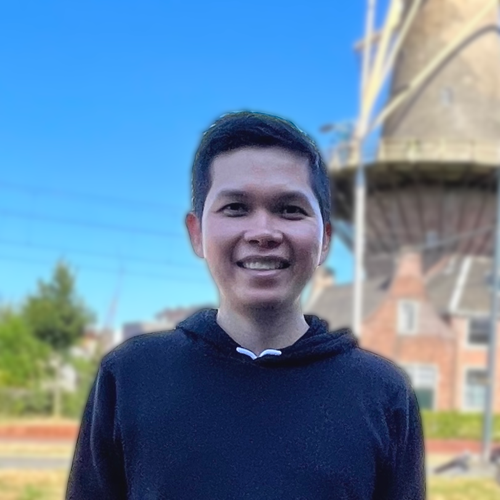
 Thanh Vinh Vo
· 1 previous affiliation
- National University of SingaporeSince 2017
- Postdoc · Since 2022
- PhD student · 2017–2022
Research Overview
Thanh Vinh Vo focuses on the intersection of causal inference, reinforcement learning, and stochastic point processes, with a particular emphasis on developing robust frameworks for learning from observational and decentralized data. His work addresses fundamental challenges in estimating causal effects when data is scarce or heterogeneous, as well as improving the efficiency of reinforcement learning agents in sparse-reward environments. Currently a Research Fellow at the National University of Singapore, Vo’s research trajectory has evolved from the statistical modeling of temporal event sequences to the integration of causal reasoning within deep learning and decision-making architectures.
Research Trajectory
Vo’s early research focused on the mathematical foundations of point processes, specifically addressing the limitations of standard Maximum Likelihood Estimation (MLE) in scenarios involving partially observable or "censored" data. In 2018, he introduced an inference framework for non-homogeneous point processes that utilized Z-transforms—probability generating functions—to match theoretical distributions with empirical observations. This approach provided a computationally efficient alternative for characterizing point processes where exact event timestamps were unavailable, allowing for the estimation of intensities driven by general neural networks.
By 2021, Vo’s focus shifted toward causal inference, particularly the problem of estimating heterogeneous treatment effects from multiple, potentially biased, observational data sources. He developed the AdaTRANS framework to address the challenge of "negative transfer," where dissimilar source datasets can degrade the performance of a model on a target population. This work introduced learnable transfer factors that adaptively control the strength of knowledge transfer across three levels: outcomes, treatments, and confounders. This period also saw an expansion into federated learning environments, where he addressed the problem of learning causal effects from decentralized sources without requiring prior knowledge of data discrepancies. To maintain computational tractability in these high-dimensional settings, he utilized Scaling Kernel Methods with Random Fourier Features, a technique that allows for the disentanglement of loss functions across different data sources while preserving privacy and efficiency.
In recent years, Vo has increasingly applied causal principles to reinforcement learning (RL) and imitation learning. This transition is marked by a focus on Deconfounding Causal Inference with Latent Variable Models to resolve spurious correlations that arise when unobserved confounders influence both an agent's observations and its actions. His work in RL also addresses the "sparse reward" problem through innovative reward shaping mechanisms. By modeling the success rates of specific states using probabilistic distributions and accelerating the underlying computations with kernel approximations, he has developed methods that provide immediate feedback to agents without the manual bias often associated with heuristic reward design.
Vo’s collaborative work has also explored Value Based Filtering for Learning from Imperfect Guidance, particularly in hierarchical RL settings where human-provided sub-goals may be suboptimal or conflicting. This line of inquiry seeks to optimize candidate sub-goals automatically, ensuring that agents can benefit from human expertise while remaining robust to errors in that guidance. His recent contributions extend to Extending Continuous Decision Frameworks to Discrete Action Spaces and the Dynamic Balancing of Competing Training Objectives in multi-task environments, reflecting a broader interest in the scalability and generalizability of autonomous systems.
Current Directions
Vo’s current research is concentrated on the synthesis of causal discovery and policy optimization. A primary objective is Resolving Causal Confusion in Imitation Learning, where agents often fail by mimicking expert actions that are correlated with, but do not cause, desired outcomes. By incorporating do-calculus and backdoor adjustment into actor-critic frameworks, he aims to develop agents that understand the causal consequences of their actions rather than merely identifying statistical patterns.
Additionally, he is investigating the role of centralized reward agents in multi-task RL. This involves creating "knowledge pools" that distill information from various tasks and distribute it to individual policy agents, thereby enhancing learning efficiency across established and novel tasks. His work also continues to touch upon specialized domains, such as continual activity recognition and molecular representation learning, where he participates in developing hierarchical architectures that capture semantically meaningful substructures in graph-based data.
Representative Work
Z-Transforms and its Inference on Partially Observable Point Processes In this work, Vo proposes a novel inference framework for non-homogeneous point processes by matching theoretical Z-transforms with empirical counterparts. The method addresses the "censored data" problem, where only event counts are available, providing a robust alternative to traditional maximum likelihood methods. The framework is demonstrated by estimating point process intensities driven by neural network architectures.
Adaptive Multi-Source Causal Inference from Observational Data Vo introduces AdaTRANS, a framework designed to estimate causal effects by leveraging multiple observational data sources. The approach incorporates parametric transfer factors to adaptively control the strength of knowledge transfer, effectively preventing negative transfer when source and target distributions diverge. The model achieves this by transferring knowledge across the modeling of outcomes, treatments, and confounders.
An Adaptive Kernel Approach to Federated Learning of Heterogeneous Causal Effects This paper presents a causal inference framework for decentralized, federated settings. Vo utilizes Random Fourier Features to decompose the loss function into components associated with individual data sources, allowing the model to learn similarities among heterogeneous sources without prior information. This enables the estimation of causal effects across distributed networks while maintaining computational efficiency.
Hierarchical Reinforcement Learning with Human-AI Collaborative Sub-Goals Optimization Addressing the challenges of sub-goal identification in hierarchical RL, Vo and his collaborators propose an algorithm that automatically optimizes candidate sub-goals. The framework refines prior human knowledge to prevent negative inferences from conflicting goals, accelerating convergence to optimal policies even when human guidance is imperfect or biased.
Highly Efficient Self-Adaptive Reward Shaping for Reinforcement Learning Vo introduces SASR (Self-Adaptive Success Rate-based reward shaping) to mitigate the sparse reward problem in RL. The method calculates the success rate of states from past experiences, modeling them with Beta distributions. By using Random Fourier Features to accelerate the computation, the framework provides a low-overhead mechanism for generating informative auxiliary rewards that guide the agent toward successful outcomes.
Causal Policy Learning in Reinforcement Learning: Backdoor-Adjusted Soft Actor-Critic In this paper, Vo develops DoSAC (Do-Calculus Soft Actor-Critic), which integrates causal backdoor adjustment into the learning process. By reconstructing past experiences to account for unobserved confounders, the framework de-biases the policy learning process. This results in agents that are more robust to spurious correlations and demonstrate improved generalization in environments with hidden causal factors.
Profile updated
Loading new papers…
Other researchers whose papers cluster into the same research directions — a proxy for overlapping technical interests and shared intellectual neighborhoods.
See something wrong? Report a mistake