

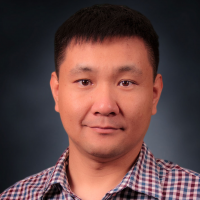
 Zhao Zhang
· 4 previous affiliations
- Assistant Professor · Since 2023
- The University of Texas at Austin2016–2023
- Researcher · 2016–2023
- Postdoc · 2014–2016
- University of Chicago2009–2014
- PhD student · 2009–2014
6 other authors named Zhao Zhang: Zhao Zhang (Hefei University of Technology · 308 papers), Zhao Zhang (Beihang University · 84 papers), Zhao Zhang (Canva · 60 papers), Zhao Zhang (ByteDance (China) · 1 paper), Zhao Zhang (1 paper), and 1 more
Research Overview
Zhao Zhang focuses on the intersection of high-performance computing (HPC), distributed systems, and large-scale machine learning. His research addresses the systemic bottlenecks—specifically in I/O, task scheduling, and resource orchestration—that arise when scaling data-intensive applications and deep learning models on supercomputing infrastructures. His work has evolved from optimizing many-task computing (MTC) on petascale systems to developing scalable middleware for deep learning and scientific AI.
Research Trajectory
The early phase of Zhang’s research, beginning around 2008, was centered on the paradigm of Many-Task Computing. This work sought to bridge the gap between high-throughput computing and traditional HPC by enabling petascale supercomputers to execute millions of independent, loosely coupled serial jobs. During this period, Zhang contributed to the development of the Falkon framework, which utilized Hierarchical Scheduling for Distributed Task Orchestration to achieve high task-dispatch rates on systems like the IBM BlueGene/P. This research emphasized the need for Empirical Performance Validation of Extreme Scale Distributed Systems, focusing on how communication and synchronization overheads impact linear scaling.
Following his doctoral work at the University of Chicago, Zhang’s focus shifted toward the challenges of data-intensive science. During his time at UC Berkeley’s AMPLab and BIDS, he explored how horizontally scalable analytics systems, such as Apache Spark, could be repurposed for scientific domains like genomics and neuroscience. This period marked a transition from general task scheduling to the optimization of data-intensive pipelines, where the primary bottleneck was often the "I/O wall" created by centralized storage systems.
In recent years, Zhang has focused on the systems requirements of large-scale deep learning. His work at the Texas Advanced Computing Center (TACC) and Rutgers University addresses the I/O and communication demands of training deep neural networks (DNNs) on thousands of GPUs. This includes developing Distributed Local Caching for High Performance Computing to mitigate the impact of repeated file access patterns in training datasets. His current research directions involve the resilience and fault tolerance of Large Language Models (LLMs) and the development of structured sparse training techniques to reduce the computational cost of foundation models.
Representative Work
Zhang’s contributions are documented through a series of systems-oriented publications that track the evolution of large-scale computing over the last two decades.
In Toward loosely coupled programming on petascale systems, Zhang and his collaborators extended the Falkon framework to support loosely coupled applications on the IBM Blue Gene/P. As the second author, Zhang was instrumental in measuring the performance factors that allow petascale systems to be leveraged by a broader community of users who rely on serial job execution rather than tightly coupled MPI simulations. This work demonstrated that multi-level scheduling and aggressive data caching could enable near-linear scaling for millions of tasks.
As the first author of Using Application Skeletons to Improve eScience Infrastructure, Zhang addressed a practical challenge in systems research: the difficulty of accessing and modifying complex scientific applications for benchmarking. He proposed "Application Skeletons," a tool for building synthetic applications that mimic the runtime and I/O characteristics of real-world eScience workloads. This allowed researchers to explore corner cases in system design without the overhead of deploying full-scale scientific software stacks.
Zhang’s work on I/O optimization for deep learning is exemplified by FanStore: Enabling Efficient and Scalable I/O for Distributed Deep Learning. As the lead author, he designed FanStore as a transient runtime file system specifically for the random and repeated access patterns inherent in DNN training. By distributing datasets across the local storage of compute nodes and maintaining a global namespace, FanStore provides POSIX-compliant access with native hardware throughput, effectively bypassing the metadata bottlenecks of traditional parallel file systems.
In the area of distributed training performance, Zhang co-authored Fast Deep Neural Network Training on Distributed Systems and Cloud TPUs. This research investigated the operational requirements for finishing ImageNet-1k training in record time by leveraging the massive floating-point capabilities of supercomputers and Cloud TPUs. The paper analyzes the trade-offs between different hardware architectures and the single-precision operation rates required to scale ResNet-50 training across large clusters.
As a senior author and PI, Zhang led the research in Optimizing GPU-Enhanced HPC System and Cloud Procurements for Scientific Workloads. This work provides an analytical framework for determining the optimal ratio of CPU to GPU architectures based on the specific acceleration benefits derived by different scientific applications. This research is particularly relevant for institutional procurement, where the high cost of GPU hardware must be balanced against the actual performance gains for a diverse workload of partially GPU-enabled applications.
Zhang also participated in the development of OpenFold: Retraining AlphaFold2 yields new insights into its learning mechanisms and capacity for generalization. While a middle author in a large collaborative effort, his involvement reflects his focus on providing the necessary computational infrastructure and memory-efficient implementations required to retrain and investigate massive biological models. This work established a trainable, open-source version of AlphaFold2, enabling the scientific community to explore protein-ligand complex structure prediction and model generalization.
Current Directions
Zhang’s current research focuses on the scalability and reliability of foundation models. This includes investigating the resilience of Large Language Models from an end-to-end perspective, particularly regarding fault tolerance during long-running training sessions on critical layers. He is also exploring structured sparse training methods, such as the TranSpa approach, which aims to reduce the complexity of vision and language transformers by considering the correlations between weight matrices during sparsification. These efforts continue his long-term goal of making large-scale distributed computing more efficient and accessible for both traditional scientific simulations and modern artificial intelligence.
Profile updated
Loading new papers…
Other researchers whose papers cluster into the same research directions — a proxy for overlapping technical interests and shared intellectual neighborhoods.
See something wrong? Report a mistake