

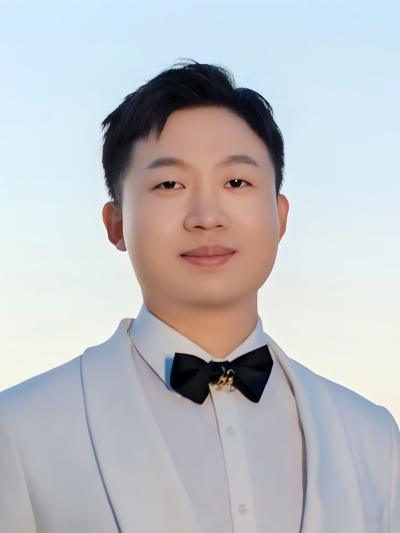
 Zhangkai Ni
· 3 previous affiliations
- Tongji UniversitySince 2022
- Associate Professor · Since 2025
- Assistant Professor · 2022–2024
- City University of Hong Kong2018–2021
- PhD student · 2018–2021
- Nanyang Technological University2017–2018
- Research Engineer · 2017–2018
Research Overview
Zhangkai Ni focuses on computational photography, image quality assessment, and neural rendering. His early work established foundational metrics and databases for evaluating screen content images and perceptual distortion. More recently, his research addresses unsupervised image enhancement, multi-modal medical imaging, and scene-adaptive densification for 3D representation, aiming to improve visual quality across diverse computational domains.
Research Trajectory
Zhangkai Ni’s early research concentrated heavily on Image Quality Assessment (IQA), with a specific focus on screen content images (SCIs). In 2016, he introduced Gradient Direction for Screen Content Image Quality Assessment, which explored the use of gradient direction to measure perceptual quality, demonstrating its sensitivity to typical SCI distortions. Building on this foundation, he developed ESIM: Edge Similarity for Screen Content Image Quality Assessment in 2017. This full-reference IQA model extracted salient edge features—contrast, width, and direction—to better align with the human visual system's sensitivity to the sharp edges characteristic of screen content. Recognizing the need for robust benchmarking in this domain, he concurrently led the creation of SCID: A database for screen content images quality assessment, which provided the community with a large-scale dataset of 1,800 distorted SCIs across multiple degradation levels for subjective quality evaluation.
Moving into the 2020s, his focus expanded toward deep learning-based image enhancement and perceptual visibility modeling. Addressing the limitations of supervised learning that relies on expensive paired datasets, he proposed Towards Unsupervised Deep Image Enhancement With Generative Adversarial Network in 2020. This work advanced the area of unsupervised image enhancement without paired training data by decoupling illumination and noise, allowing for high-quality aesthetic adjustments without pixel-to-pixel supervision. He continued to investigate perceptual thresholds by contributing to Just Noticeable Distortion Profile Inference: A Patch-Level Structural Visibility Learning Approach in 2021, which decomposed image patches into independent components to better approximate structural degradation and human visual masking. In 2022, he further refined unsupervised enhancement techniques with Cycle-Interactive Generative Adversarial Network for Robust Unsupervised Low-Light Enhancement, designing a framework capable of transferring illumination distributions while carefully manipulating detailed signals to suppress noise in low-light conditions.
By 2023 and 2024, Ni’s work began integrating hybrid architectures and addressing complex spatial transformations. With collaborators, he developed CSformer: Bridging Convolution and Transformer for Compressive Sensing, an end-to-end framework that combined the local inductive bias of CNNs with the global context capabilities of transformers for adaptive image sampling and recovery. He also expanded into neural rendering, introducing ColNeRF: Collaboration for Generalizable Sparse Input Neural Radiance Field. This model tackled the challenge of synthesizing novel views from sparse inputs by establishing cooperation among source images and NeRF outputs, bypassing the need for costly depth or semantic supervision. To address the persistent challenge of pixel-level misalignment in paired datasets, he proposed Misalignment-Robust Frequency Distribution Loss for Image Transformation, which utilized Discrete Fourier Transformation to compute distribution distances in the frequency domain. Returning to his roots in quality assessment, he also developed Opinion-Unaware Blind Image Quality Assessment Using Multi-Scale Deep Feature Statistics, a model that integrated pre-trained deep visual features with statistical analysis to perform blind IQA without relying on human rating data.
In 2025, his research trajectory demonstrates a strong emphasis on multi-modal integration, advanced 3D representations, and efficient restoration techniques. He introduced M2Trans: Multi-Modal Regularized Coarse-to-Fine Transformer for Ultrasound Image Super-Resolution, which uniquely incorporated text modality to establish joint image-text guidance, better capturing the distinct texture patterns critical for medical diagnostics. He also contributed to emerging 3D rendering paradigms with Perceptual-GS: Scene-adaptive Perceptual Densification for Gaussian Splatting, exploring scene-adaptive densification techniques. In the domain of High Dynamic Range imaging, he proposed Semantic Masking with Curriculum Learning for Robust HDR Image Reconstruction, leveraging large-model priors from the Segment Anything Model (SAM) to guide the reconstruction network through progressively complex tasks. Further expanding into multimodal generation, collaborative work under his direction resulted in Vision-Language Relational Transformer for Video-to-Text Generation, which utilized visual relation modeling to establish fine-grained semantics between regional and global features. Finally, addressing the need for efficiency, he developed Structural Similarity-Inspired Unfolding for Lightweight Image Super-Resolution, advancing lightweight image restoration through structural and physical priors by unfolding an optimization problem constrained by structural similarity.
Current Directions
The most recent papers in the evidence point toward a research agenda focused on integrating multi-modal priors into specialized image processing tasks and optimizing advanced scene representations. A significant current direction involves leveraging cross-modal guidance—such as using text modalities to regularize ultrasound image super-resolution and employing large vision models (like SAM) to guide HDR image reconstruction via curriculum learning. This indicates a broader interest in using semantic and linguistic knowledge to constrain and improve low-level vision tasks that traditionally relied solely on pixel-wise losses.
Additionally, recent work investigates the efficiency and perceptual quality of both 2D and 3D generation. This includes developing lightweight, model-driven architectures for image super-resolution that operate under strict structural similarity constraints, making them viable for resource-constrained environments. Concurrently, research into scene-adaptive perceptual densification for Gaussian Splatting suggests an ongoing effort to refine the visual fidelity and computational efficiency of modern neural rendering and 3D reconstruction pipelines.
Profile updated
Loading new papers…
Other researchers whose papers cluster into the same research directions — a proxy for overlapping technical interests and shared intellectual neighborhoods.
See something wrong? Report a mistake