

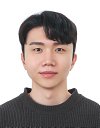
 Donggon Jang
· 2 previous affiliations
- Samsung Electronics (South Korea)Since 2026
- Staff Engineer · Since 2026
- Current
- Doctor of Philosophy - PhD, Electrical Engineering · 2020–2026
Research Overview
Donggon Jang focuses on computer vision and machine learning, with particular emphasis on image enhancement, robust adversarial defense, and medical image segmentation. His trajectory spans from unsupervised image restoration and low-light enhancement to the development of robust multimodal large language models. Most recently, his work addresses complex reasoning segmentation and interpretable functional MRI captioning.
Research Trajectory
Donggon Jang’s early research focused heavily on image restoration and enhancement, particularly in challenging visual environments. In 2021, he participated in developing methods for Unsupervised Image Denoising with Frequency Domain Knowledge. This foundational work in unsupervised restoration naturally extended into the domain of low-light image enhancement. In 2022, he contributed to Learning Color Representations for Low-Light Image Enhancement. Recognizing that most existing models successfully restored shapes but struggled to recover authentic color distributions, this research introduced Channel-aware Color histogram Matching (CCM). By leveraging inter-channel dependencies and a novel differentiable histogram loss, the method restored vibrant, statistically accurate colors in dark images. This work contributes directly to the area of Statistical Distribution Alignment for Global Color Consistency and the broader research direction of Unsupervised Image Enhancement Without Paired Training Data. It also intersects with work in Cross-Channel Correlation Modeling for Color Image Processing and the field of Generalizing Image Restoration Across Diverse Sensor Noise Profiles. He continued to explore semi-supervised approaches to this problem the following year with Temporally Averaged Regression for Semi-Supervised Low-Light Image Enhancement.
Parallel to his work in image enhancement, his 2022 research expanded into medical image segmentation and adversarial machine learning. He collaborated on Accurate Hippocampus Segmentation Based on Self-supervised Learning with Fewer Labeled Data, addressing the high cost and scarcity of labeled MRI data required for diagnosing neurodegenerative disorders like Alzheimer’s disease. The proposed framework utilized a Jigsaw puzzle reassembly method to pre-train models on unlabeled MRI datasets, significantly reducing the reliance on annotated data. In the realm of model robustness, he introduced new attack methodologies in Strengthening the Transferability of Adversarial Examples Using Advanced Looking Ahead and Self-CutMix. This research tackled the low transferability problem of adversarial examples in black-box settings by proposing the Lookahead Iterative Fast Gradient Sign Method (LI-FGSM) and Self-CutMix (SCM), demonstrating improved effectiveness against adversarial training and defense models.
In 2024, his methodological focus incorporated energy-based functions for domain adaptation and model training. This included Energy-Based Domain Adaptation Without Intermediate Domain Dataset for Foggy Scene Segmentation, which applied energy-based techniques to adapt segmentation models to adverse weather conditions without requiring intermediate datasets. He also explored the theoretical applications of these functions in Maximizing discrimination capability of knowledge distillation with energy function.
By 2025, his research shifted toward complex reasoning in multimodal systems and advanced segmentation tasks. He collaborated on COIR: Chain-of-Intention Reasoning Elicits Defense in Multimodal Large Language Models, which developed a defense mechanism against jailbreak attacks. Observing that Multimodal Large Language Models (MLLMs) can inherently recognize harmful inputs, the Chain-of-Intention Reasoning (COIR) approach enabled models to infer the true intent behind queries, providing a more nuanced, context-aware defense than surface-level content filtering.
Simultaneously, he led the development of a major benchmark in MMR: A Large-scale Benchmark Dataset for Multi-target and Multi-granularity Reasoning Segmentation. Moving beyond single-object identification, this work introduced a 194K-instruction dataset designed to handle multiple targets and fine-grained parts—such as distinguishing a specific button on a remote control. Alongside the dataset, the proposed $M^2SA$ model utilized early feature fusion and multiple segmentation tokens to process complex, multi-target scenarios. This benchmark significantly advances the research direction of Resolving Hierarchical Ambiguity in Interactive Segmentation. Returning to the medical domain with these advanced multimodal techniques, his 2025 work also includes Interpretable fMRI Captioning via Contrastive Learning, bridging complex neural data with natural language descriptions.
Current Directions
The most recent papers in the evidence indicate a strong focus on the intersection of complex reasoning, foundation models, and fine-grained visual understanding. Current work investigates defense mechanisms for Multimodal Large Language Models (MLLMs), specifically leveraging chain-of-intention reasoning to detect and mitigate jailbreak attacks by understanding the underlying intent of user queries. Alongside this, recent research addresses multi-target and multi-granularity reasoning segmentation, developing large-scale benchmarks and architectures capable of distinguishing highly specific spatial details and hierarchical parts in complex visual scenes. Additionally, ongoing efforts in the medical domain explore interpretable captioning for functional MRI data using contrastive learning techniques, aiming to translate complex brain activity into understandable linguistic representations.
Profile updated
Loading new papers…
Other researchers whose papers cluster into the same research directions — a proxy for overlapping technical interests and shared intellectual neighborhoods.
See something wrong? Report a mistake