

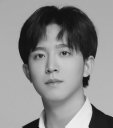
 Zehong Wang
· 3 previous affiliations
- University of Notre DameSince 2023
- PhD student · 2023–2027
- Research Assistant · Since 2023
- Google (United States)Since 2026
- Research Intern · Since 2026
- Applied Scientist Intern · 2025
1 other author named Zehong Wang: Zehong Wang (New York University · 1 paper)
Research Overview
Zehong Wang focuses on developing generalizable artificial intelligence systems that integrate multimodal data for scientific discovery, with an emphasis on graph learning and scientific foundation models. His work explores scalable architectures for graph representation, moving beyond traditional message-passing paradigms to build unified models capable of reasoning across diverse relational domains. Recently, he investigates agentic AI and temporal graph modeling for applications in drug discovery and public health.
Research Trajectory
The trajectory of this research begins with efforts to overcome the fundamental limitations of traditional message-passing in graph neural networks, such as over-smoothing and constrained expressiveness. In 2024, Wang developed GFT: Graph Foundation Model with Transferable Tree Vocabulary, a framework that treats local computation trees as discrete tokens. By quantizing these message-passing structures, the model generalizes across vastly different domains, from citation networks to molecular structures, advancing work in the broader area of Learning Universal Topological Vocabularies for Graph Transfer.
This focus on scalable, general-purpose architectures expanded significantly in 2025 as the research shifted toward bringing Transformer-like scaling laws to graph data. Recognizing that increasing data or model size in standard graph neural networks often fails to yield proportional performance gains, Wang introduced Beyond Message Passing: Neural Graph Pattern Machine. This architecture utilizes random-walk-based tokenization combined with a Transformer-based importance identifier to learn directly from graph substructures, directly supporting the research direction of Scaling Graph Transformers via Neighborhood Tokenization. Building on this paradigm, the generative counterpart, Generative Graph Pattern Machine, treats graphs as sequences of substructures rather than sets of nodes. A related study, Scalable Graph Generative Modeling via Substructure Sequences, further investigates how bypassing message-passing enables graph models to scale effectively and model long-range dependencies.
Alongside architectural innovations, a major theme of the 2025 work is the unification of graph learning tasks. Wang led a comprehensive overview of the field in Graph Foundation Models: A Comprehensive Survey, which outlines frameworks for moving away from narrow, task-specific models toward general-purpose AI, touching upon the area of Foundation Models for Heterogeneous Relational Graphs. To operationalize this unification, he proposed Towards Graph Foundation Models: Learning Generalities Across Graphs via Task-Trees. By pretraining a model called GIT on "task-trees," this work allows a single model to handle node-, edge-, and graph-level tasks simultaneously, driving progress in the direction of Task Unification for General Purpose Graph Foundation Models. Additionally, to adapt these large frozen models to specific downstream applications efficiently, he explored the "pre-train, prompt" paradigm in Graph Prompting for Graph Learning Models: Recent Advances and Future Directions, demonstrating how lightweight prompts can achieve strong few-shot performance.
Wang's theoretical work in graph learning is closely coupled with applications in scientific discovery and public health. In Interpretable Graph-Language Modeling for Detecting Youth Illicit Drug Use, he developed the LAMI framework, which integrates graph neural networks with large language models to analyze survey responses as interconnected psychosocial networks, providing human-readable explanations for risk factors. Similarly, MOPI-HFRS: A Multi-objective Personalized Health-aware Food Recommendation System with LLM-enhanced Interpretation combines Pareto optimization and language models to deliver personalized, medically grounded dietary recommendations. In the domain of molecular design, he introduced Controllable Graph Generation with Diffusion Models via Inference-Time Tree Search Guidance, which leverages Monte Carlo Tree Search to guide graph diffusion models, demonstrating that generation quality improves with increased inference compute.
Moving into 2026, the research trajectory broadens to encompass temporal dynamics and cross-modal integration. Wang developed the Temporal Graph Pattern Machine, a foundation framework that learns the underlying laws of network evolution by representing interactions as multi-scale patches. He also participated in developing Graph is a Substrate Across Data Modalities, which proposes treating graph structure as a persistent, shared foundation across different data types rather than a task-specific tool. Finally, expanding beyond pure graph architectures, he contributed to Non-Monotonic Autoregressive Sequence Model, which introduces a learned mechanism for autoregressive models to detect and retract errors during generation, enhancing performance on complex reasoning tasks.
Current Directions
Recent work investigates the integration of graph structures across diverse data modalities and the modeling of temporal network evolution. The most recent papers in the evidence address how graph representations can serve as a universal, persistent substrate for both generation and understanding tasks, allowing models to accumulate structural knowledge across domains like molecular analysis and scene understanding. Additionally, current research explores mechanisms for self-correction in autoregressive sequence models, enabling systems to dynamically retract and revise errors during complex reasoning and coding processes.
Profile updated
Loading new papers…
Other researchers whose papers cluster into the same research directions — a proxy for overlapping technical interests and shared intellectual neighborhoods.
See something wrong? Report a mistake