

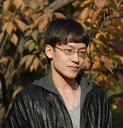
 Yuxiang Yang
· 1 previous affiliation
- University of Hong KongSince 2021
- Assistant Professor · Since 2021
- Current
2 other authors named Yuxiang Yang: Yuxiang Yang (Google (United States) · Google DeepMind (United Kingdom) · University of Washington · 14 papers), Yuxiang Yang (Hangzhou Dianzi University · 3 papers)
Research Overview
Yuxiang Yang focuses on quantum information theory, quantum metrology, and the fundamental limits of quantum computing. His trajectory spans the theoretical bounds of quantum cloning and state compression to the practical optimization of quantum circuits. Currently, his work investigates control-enhanced quantum sensing and the application of reinforcement learning to quantum state characterization.
Research Trajectory
Yuxiang Yang’s early research investigated the fundamental limits of copying and estimating quantum information. In 2013, he explored the theoretical boundaries of quantum cloning in Is Global Asymptotic Cloning State Estimation?. This work provided evidence that in the asymptotic limit of producing a large number of copies, the optimal fidelity achieved by a quantum cloner is matched by sophisticated quantum estimation strategies, suggesting a deep equivalence between the two tasks. Building on these limits, he subsequently developed a unified framework for producing a quadratic number of near-perfect replicas from a small number of inputs in Quantum superreplication of states and gates (2015). This research revealed a fundamental connection between the limits of cloning and the Heisenberg limit of quantum metrology, contributing to the research area of Probabilistic Quantum Superreplication and State Dependent Cloning and the broader field of Non-destructive Measurement and Quantum Information Reuse.
By 2018, his focus expanded to the efficient storage and compression of quantum information. He tackled the challenge of compressing quantum states prepared identically from a known parametric family in Compression for Quantum Population Coding. This work established that a purely classical memory is insufficient for faithful compression unless the states commute, necessitating a hybrid quantum-classical memory protocol. That same year, he introduced a novel protocol in Compression for Qubit Clocks, which significantly reduced the memory required to store multiple identical "qubit clock" states. By achieving theoretical compression limits even in the presence of noise, this work provided new implications for quantum sensing and timekeeping. Continuing to probe the resource requirements of quantum operations, he quantified the minimum communication cost required for a client to instruct a server to perform specific quantum processes in Communication Cost of Quantum Processes (2020). This research established a fundamental lower bound linking communication costs to the precision limits of quantum metrology.
In recent years, Yang’s work has increasingly addressed algorithmic efficiency and the practical challenges of scaling quantum computation and machine learning. Overseeing research on quantum state preparation, his group introduced a novel algorithm in Efficient Deterministic Preparation of Quantum States Using Decision Diagrams (2022). By representing states as compressed graphs rather than raw vectors, the approach achieved circuit complexity linear in the number of paths, drastically reducing CNOT gate requirements for structured states. This advancement contributed to the research direction of Variable Ordering for Efficient Decision Diagrams and the area of The Quantum Data Loading Bottleneck. He also collaborated on Efficient algorithms for quantum information bottleneck (2023), which introduced a faster-converging algorithm for finding compressed yet informative representations of quantum data. This work demonstrated that quantum systems can achieve superior information bottleneck performance compared to classical systems of the same size.
His most recent publications bridge quantum metrology, wireless localization, and artificial intelligence. In 2024, he contributed to Quantum Ranging Enhanced TDoA Localization, which proposed leveraging entangled quantum states to measure linear combinations of distances to multiple anchors simultaneously, significantly reducing ranging errors compared to classical Time Difference of Arrival methods. Concurrently, he proposed an efficient tensor network approach to optimize quantum metrology strategies involving sequences of control operations in Efficient tensor networks for control-enhanced quantum metrology. Moving into the intersection of machine learning and quantum hardware characterization, his group developed a reinforcement learning framework in Reinforced Learning Explicit Circuit Representations for Quantum State Characterization from Local Measurements (2025). By utilizing a Transformer-based agent to process local qubit measurements and generate explicit, step-by-step quantum circuits, the framework successfully reconstructs target states for large systems while bypassing the barren plateau problem, advancing the research direction of Reinforcement Learning for Quantum Architecture Search and Compiling.
Current Directions
The most recent papers in the evidence indicate a strong focus on integrating advanced computational techniques—such as reinforcement learning and tensor networks—with quantum state characterization and metrology. Recent work investigates how artificial intelligence can "open the black box" of quantum systems, using Transformer-based agents to generate explicit circuit representations from local measurements and overcome optimization bottlenecks like barren plateaus. Additionally, ongoing research addresses the optimization of quantum sensing and localization, utilizing tensor networks to manage complex, sequential control operations in metrology and exploring entangled states to enhance the precision of distance measurements in complex environments.
Profile updated
| Title | Venue | Year |
|---|---|---|
| Learning Explicit Circuit Representations for Quantum States from Local Measurements | Openreview | 2025 |
| Reinforced Learning Explicit Circuit Representations for Quantum State Characterization from Local Measurements | ICML | 2025 |
| Quantum Ranging Enhanced TDoA Localization | ICASSP | 2024 |
| Efficient tensor networks for control-enhanced quantum metrology | Quantum | 2024 |
| QuERLoc: Towards Next-Generation Localization with Quantum-Enhanced Ranging | arXiv | 2024 |
| Efficient algorithms for quantum information bottleneck | Quantum | 2023 |
| Efficient Preparation of Cyclic Quantum States | ASP-DAC | 2022 |
| Efficient Deterministic Preparation of Quantum States Using Decision Diagrams | arXiv | 2022 |
| Communication Cost of Quantum Processes | IEEE J. Sel. Areas Inf. Theory | 2020 |
| Compression for Quantum Population Coding | IEEE Trans. Information Theory | 2018 |
Loading new papers…
Other researchers whose papers cluster into the same research directions — a proxy for overlapping technical interests and shared intellectual neighborhoods.
See something wrong? Report a mistake