

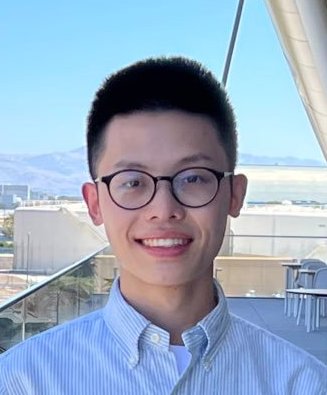
 Yuxiang Wei
· 4 previous affiliations
- Meta (United States)Since 2024
- AI Research Scientist · Since 2026
- Research Scientist Intern · 2025
- Research Scientist · 2024–2025
- University of Illinois Urbana-ChampaignSince 2022
- Doctor of Philosophy - PhD, Computer Science · 2022–2027
- Research Intern · 2024
- Tongji University2017–2022
- Undergrad student · 2017–2022
2 other authors named Yuxiang Wei: Yuxiang Wei (ByteDance (China) · Hong Kong Polytechnic University · 23 papers), YUXIANG WEI (Georgia Institute of Technology · Handshake AI · 17 papers)
Research Overview
Yuxiang Wei focuses on the development of large language models for software engineering, automated program repair, and the creation of autonomous code agents. His trajectory spans from applying early pre-trained models to fault localization, toward scaling code intelligence through synthetic data and execution-guided reinforcement learning. Most recently, his work investigates self-improving software agents that evolve through self-play in real-world repositories.
Research Trajectory
The early phase of Yuxiang Wei’s research investigated the reliability and repair of complex software systems. He explored a paradigm shift in automated debugging with Practical Program Repair in the Era of Large Pre-trained Language Models, which evaluated the transition from specialized, heuristic-based bug-fixing algorithms to the use of general-purpose pre-trained language models. Concurrently, he participated in efforts to ensure the correctness of deep learning systems themselves, contributing to Coverage-guided tensor compiler fuzzing with joint IR-pass mutation to test and analyze intrinsic non-determinism and bugs in tensor compilers.
Recognizing that treating programs merely as sequences of tokens ignores underlying semantic constraints, he introduced a framework to improve patch synthesis in Copiloting the Copilots: Fusing Large Language Models with Completion Engines for Automated Program Repair. By integrating AI models with traditional completion engines, this work reduced the generation of statically invalid patches, aligning with the broader area of Neurosymbolic Integration for Reliable Program Synthesis.
Moving into the domain of code generation and model alignment, he developed the Magicoder series, a project detailed across Magicoder: Source Code Is All You Need and Magicoder: Empowering Code Generation with OSS-Instruct. This work introduced OSS-Instruct, a methodology that uses real-world open-source code snippets to inspire teacher models to generate diverse and realistic coding instructions. By mitigating the inherent biases of purely synthetic data, the resulting models closed the performance gap with significantly larger proprietary counterparts. This heavily contributed to the research direction of Scaling Code Intelligence via Seed-Grounded Synthetic Data and the area of Scaling Small Model Reasoning with Synthetic Pedagogical Data.
To further improve the efficiency of instruction tuning for code models, he explored architectural optimizations in \mathcal XFT: Unlocking the Power of Code Instruction Tuning by Simply Merging Upcycled Mixture-of-Experts. This training scheme upcycled dense models into a Mixture-of-Experts (MoE) architecture during tuning, then merged the experts back into a single dense model, delivering the performance gains of MoE with the inference speed of a small dense network. This advanced work in Memory Efficient Inference for Mixture of Experts Models and the direction of Shared Experts for Sparse Mixture of Experts Models.
Addressing the reliance on expensive human annotations and distillation from proprietary models, he subsequently developed SelfCodeAlign: Self-Alignment for Code Generation. This transparent pipeline allows code-generating models to self-align by generating their own instructions, responses, and tests, which are then filtered through actual execution feedback. Alongside these targeted methodological improvements, he also contributed to large-scale community efforts in open science, participating in the curation and evaluation of massive code datasets for StarCoder 2 and The Stack v2: The Next Generation.
More recently, his focus has shifted toward data quality and reinforcement learning for autonomous software engineering. He investigated the precise characteristics of effective pretraining corpora in Arctic-SnowCoder: Demystifying High-Quality Data in Code Pretraining, introducing a data-efficient base model trained through progressively refined data phases. Building on this foundation, he scaled reinforcement learning to real-world software evolution in SWE-RL: Advancing LLM Reasoning via Reinforcement Learning on Open Software Evolution. By training models on GitHub pull requests and issues using a rule-based reward system based on patch similarity, the framework significantly improved reasoning capabilities in both coding and non-coding domains.
This progression naturally led to the development of dynamic, self-improving agents. He contributed to Live-SWE-agent: Can Software Engineering Agents Self-Evolve on the Fly?, which introduced an agent capable of evolving its own tools and capabilities at runtime while solving real-world bugs, touching on the direction of Programmatic Synthesis for Scalable Execution. Extending this paradigm, he proposed a self-play mechanism in Toward Training Superintelligent Software Agents through Self-Play SWE-RL, enabling agents to learn directly from raw codebases by simulating bug-injection and bug-repair scenarios without relying on human-curated datasets.
Current Directions
The most recent papers in the evidence address the development of autonomous software engineering agents that improve through reinforcement learning and self-play. Rather than relying on static, human-curated datasets or fixed, manually designed toolsets, recent work investigates how agents can learn directly from raw codebases and open software evolution data, such as pull requests and issues. This includes mechanisms for agents to evolve their own capabilities at runtime and self-improve by playing out adversarial bug-injection and bug-repair scenarios. These approaches point toward more scalable, independent systems for real-world software maintenance, emphasizing execution-guided feedback and dynamic tool synthesis over offline imitation learning.
Profile updated
Loading new papers…
Other researchers whose papers cluster into the same research directions — a proxy for overlapping technical interests and shared intellectual neighborhoods.
See something wrong? Report a mistake