

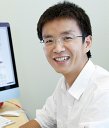
 LINGMING ZHANG
· 1 previous affiliation
- University of Illinois Urbana-ChampaignSince 2021
- Associate Professor · Since 2021
Research Overview
Lingming Zhang focuses on software engineering, programming languages, and their synergy with machine learning. His trajectory spans foundational work in software testing and automated program repair to recent advances in large language models for code generation and analysis. Currently, his research investigates the development and evaluation of autonomous software agents and open-source code models.
Research Trajectory
Zhang’s early research addressed foundational challenges in software testing and quality assurance. In 2012, he explored Regression mutation testing, investigating how to efficiently apply mutation analysis as software evolves. He subsequently developed unified models for test suite optimization, introducing frameworks that bridge generic strategies in Bridging the gap between the total and additional test-case prioritization strategies.
Moving into the late 2010s, his focus expanded to fault localization and automated repair. He contributed to the integration of multiple diagnostic dimensions in DeepFL: integrating multiple fault diagnosis dimensions for deep fault localization. To address the computational expense of traditional mutation testing, he proposed Predictive Mutation Testing, which advanced the broader research direction of Efficient Mutation Analysis for Large-Scale Software. Concurrently, he developed practical automated program repair techniques operating at the JVM bytecode level, as detailed in PraPR: Practical Program Repair via Bytecode Mutation. This work naturally intersected with the broader area of Overfitting in Automated Program Repair, exploring how to generate high-quality patches that genuinely fix bugs rather than merely satisfying test suites.
By 2023, Zhang’s trajectory increasingly integrated machine learning, particularly large language models (LLMs), into software engineering tasks. He investigated the reliability of deep learning infrastructure itself, developing techniques like NNSmith: Generating Diverse and Valid Test Cases for Deep Learning Compilers. In the domain of program repair, he evaluated the capabilities of emerging AI models in Automated Program Repair in the Era of Large Pre-trained Language Models. He also critically examined foundational assumptions in the field, such as in Revisiting the Plastic Surgery Hypothesis via Large Language Models, which highlighted the limitations of LLMs when lacking project-specific context.
In 2024, Zhang’s group made significant contributions to the development of open-source code LLMs and synthetic data pipelines. He participated in the BigCode project, helping introduce StarCoder 2 and The Stack v2: The Next Generation, a massive responsibly curated dataset and model suite. To improve model reasoning without relying on proprietary distillation, he developed Magicoder: Empowering Code Generation with OSS-Instruct. This work utilized real-world open-source snippets to inspire complex coding instructions, advancing several research areas including Scaling Small Model Reasoning with Synthetic Pedagogical Data and The Quality Bottleneck of Teacher Generated Synthetic Data. He further refined these approaches in SelfCodeAlign: Self-Alignment for Code Generation, demonstrating how models can self-align through execution feedback. Together, these projects significantly advanced the direction of Scaling Code Intelligence via Seed-Grounded Synthetic Data. He also applied LLMs to universal fuzzing in Fuzz4All: Universal Fuzzing with Large Language Models.
Alongside model development, Zhang has rigorously evaluated the true capabilities and limitations of code LLMs. To combat benchmark leakage and overfitting, he introduced EvoEval: Evolving Coding Benchmarks via LLM, contributing to the area of Shifting from Static Benchmarks to Dynamic Evaluation. He also assessed the computational efficiency of LLM-generated code in Evaluating Language Models for Efficient Code Generation. Further probing model comprehension, he investigated mathematical reasoning in data science libraries in Can LLMs Implicitly Learn Numeric Parameter Constraints in Data Science APIs?, and introduced the RepoQA: Evaluating Long Context Code Understanding benchmark to test how well models retrieve and understand information across entire repositories rather than isolated snippets.
Current Directions
The most recent papers in the evidence indicate a strong focus on the development, training, and rigorous evaluation of autonomous software agents. Recent work investigates how to move beyond human-curated datasets by employing reinforcement learning and self-play mechanisms directly on raw codebases, as demonstrated in Toward Training Superintelligent Software Agents through Self-Play SWE-RL. Additionally, Zhang is addressing the critical need for robust evaluation frameworks for these agents in complex, high-stakes domains. This includes the development of SEC-bench: Automated Benchmarking of LLM Agents on Real-World Software Security Tasks, which provides an automated pipeline to test agent performance on authentic vulnerability reproduction and patching tasks. Together, these directions highlight an ongoing effort to bridge the gap between static code generation and dynamic, reliable software engineering automation.
Profile updated
Loading new papers…
Other researchers whose papers cluster into the same research directions — a proxy for overlapping technical interests and shared intellectual neighborhoods.
See something wrong? Report a mistake