

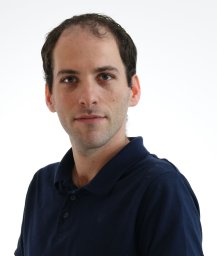
 Yuval Pinter
· 5 previous affiliations
- Ben-Gurion University of the NegevSince 2021
- Senior Lecturer · Since 2021
- Amazon (United States)2023–2025
- Visiting Academic · 2023–2025
- Georgia Institute of Technology2016–2021
- PhD student · 2016–2021
- Data Science Research Intern · 2019
- Tel Aviv University2009–2014
- Master’s Degree, Linguistics · 2009–2014
Research Overview
Yuval Pinter focuses on natural language processing, emphasizing subword representations, model interpretability, and multilingual language technologies. His trajectory spans from early work on character-level modeling and semantic graphs to the development of faithful rationales for neural networks. Most recently, his research addresses fundamental challenges in tokenization and the creation of robust multilingual benchmarks.
Research Trajectory
Pinter’s early research addressed the structural parsing of user input, beginning with Syntactic Parsing of Web Queries with Question Intent in 2016. He soon shifted toward the foundational challenge of out-of-vocabulary (OOV) words in natural language understanding. In Mimicking Word Embeddings using Subword RNNs, he introduced MIMICK, an approach that generates embeddings for unseen words compositionally by learning a function from spellings to distributional spaces without requiring retraining on the original corpus. This work contributed significantly to the area of Overcoming Vocabulary Sparsity in Morphologically Rich Languages and the broader direction of Character Level Representations for Robust Language Modeling.
In 2018, his work expanded into computational sociolinguistics and graph-based semantic modeling. With collaborators, he explored how political identity manifests in language variation on Twitter during the 2017 Catalonian independence referendum in Si O No, Que Penses? Catalonian Independence and Linguistic Identity on Social Media. This study provided quantitative insights into the research direction of Linguistic Signaling of Social Identity and Group Cohesion and related work in Overcoming Geographic Data Sparsity in Predictive Models. That same year, he presented Predicting Semantic Relations using Global Graph Properties, which combined global and local properties of semantic networks like WordNet using Max-Margin Markov Graph Models to better capture the structure of human language at scale.
Between 2019 and 2020, Pinter focused heavily on the interpretability of neural models. He participated in the ongoing debate over attention mechanisms in Attention is not not Explanation, contributing to the area of Stochastic Variance in Machine Learning Explanations. Building on the need for transparent model predictions, he collaborated on Learning to Faithfully Rationalize by Construction, which addressed the high variance and training difficulties associated with discrete selection methods for extracting faithful input snippets responsible for a model's output. Concurrently, he contributed to large-scale multilingual resources, participating in the development of the UniMorph 3.0: Universal Morphology dataset.
Moving into the 2020s, his research group explored training dynamics and data augmentation. In CIAug: Equipping Interpolative Augmentation with Curriculum Learning, they integrated curriculum learning with interpolative augmentation, advancing the research direction of Progressive Scheduling of Data Augmentation Intensity.
More recently, Pinter has addressed the limitations of standard tokenization and the need for robust multilingual evaluation. His group introduced Universal NER: A Gold-Standard Multilingual Named Entity Recognition Benchmark in 2024 to provide cross-lingually consistent annotations across thirteen diverse languages. He also investigated the biases inherent in Byte-Pair Encoding (BPE) in Tokenization Matters: Navigating Data-Scarce Tokenization for Gender Inclusive Language Technologies, revealing how data scarcity causes BPE to overfragment neopronouns. Building on these tokenization challenges, his group proposed Boundless Byte Pair Encoding: Breaking the Pre-tokenization Barrier in 2025, a novel BPE variant that creates "superwords" to improve text compression and token distribution. Additionally, he expanded the application of transformer architectures to software engineering, collaborating on PragFormer: Data-Driven Parallel Source Code Classification with Transformers to assist developers in automatically inserting OpenMP worksharing-loop constructs into source code, addressing the pervasive pitfalls of managing parallel shared memory.
Current Directions
The most recent papers in the evidence investigate the fundamental limitations of subword tokenization algorithms and the application of large language models to specialized, data-scarce domains. A major ongoing theme is the structural reform of Byte-Pair Encoding (BPE) to overcome pre-tokenization boundaries and mitigate representational biases, such as the overfragmentation of gender-inclusive language. Alongside foundational tokenization research, current efforts address the creation of robust, cross-lingually consistent benchmarks for multilingual NLP and the adaptation of transformer models to assist in complex software engineering tasks, such as parallel source code classification.
Profile updated
Loading new papers…
Other researchers whose papers cluster into the same research directions — a proxy for overlapping technical interests and shared intellectual neighborhoods.
See something wrong? Report a mistake