

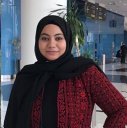
 Salam Khalifa
· 5 previous affiliations
- Stony Brook UniversitySince 2021
- Graduate Teaching Assistant · Since 2021
- PHD Student · 2021
- New York UniversitySince 2025
- Researcher · Since 2025
- Researcher · 2015–2021
- New York University Abu DhabiSince 2025
- Research Associate · Since 2025
- Research Assistant · 2015–2021
- Research Associate · 2013
- University of Sharjah2009–2013
- MS student · 2009–2013
- Teaching Assistant · 2009–2012
- Master of Science (MSc), Computer Science
Research Overview
Salam Khalifa focuses on computational morphology, dialectal natural language processing, and syntactic analysis, with a primary emphasis on Arabic and its regional varieties. Early work developed foundational morphological analyzers and disambiguation systems for morphologically rich languages. More recently, this trajectory has expanded to include the creation of large-scale dialectal corpora and the application of pre-trained transformer models to low-resource morphosyntactic tagging.
Research Trajectory
Khalifa’s early research addressed the fundamental challenges of processing morphologically rich languages, particularly Arabic. A key area of interest was the research direction of Resolving Lexical Ambiguity from Orthographic Underspecification, where traditional orthography often omits short vowels and diacritics. In 2015, Khalifa co-authored Improving Arabic Diacritization through Syntactic Analysis, which demonstrated that integrating syntactic analysis with morphological tagging could significantly improve automatic word diacritization accuracy. This work aligned with broader efforts in the area of Bridging Symbolic Rules and Statistical Models, seeking to combine linguistic structure with computational efficiency. Building on this foundation, Khalifa led the development of YAMAMA: Yet Another Multi-Dialect Arabic Morphological Analyzer in 2016. As first author, Khalifa introduced a system that provided rich morphological representations for multiple Arabic dialects while operating significantly faster than existing state-of-the-art systems.
Moving into the 2018–2020 period, the trajectory increasingly focused on the theme of Modeling the Linguistic Gap Between Formal and Dialectal Speech. Recognizing the lack of standardized orthography and resources for regional dialects, Khalifa led efforts to build foundational datasets. As first author, Khalifa presented A Morphologically Annotated Corpus of Emirati Arabic (2018), detailing the creation of a large-scale, manually annotated corpus drawn from Emirati novels. This focus on dialectal infrastructure continued with A Spelling Correction Corpus for Multiple Arabic Dialects (2020), where Khalifa served as the senior author. This project introduced the MADAR CODA Corpus, providing parallel sentences across five distinct Arabic city dialects to support natural language processing applications dealing with non-standard orthographies.
In subsequent years, Khalifa’s work bridged these foundational resources with modern machine learning paradigms, touching on themes such as Cross-Lingual Transfer for Low-Resource Natural Language Processing. Khalifa participated in the development of widely used infrastructure, such as the 2021 toolkit CAMeL tools: An open source python toolkit for Arabic natural language processing, contributing to utilities for pre-processing, morphological modeling, and dialect identification. In 2022, Khalifa co-authored Morphosyntactic Tagging with Pre-trained Language Models for Arabic and its Dialects, which explored fine-tuning transformer models to achieve state-of-the-art morphosyntactic tagging across Modern Standard Arabic and several regional dialects. This research also intersects with the broader area of Synthetic Morphological Expansion for Robust Language Models, investigating how external linguistic resources and cross-dialectal data can improve performance in low-resource scenarios.
Current Directions
The most recent papers in the evidence indicate an ongoing focus on typologically diverse morphological inflection and the application of large pre-trained language models to dialectal text. Recent work investigates how transformer architectures can be optimized for morphosyntactically complex languages, particularly in low-resource or cross-dialectal settings where training data is scarce. Additionally, Khalifa continues to participate in community-wide evaluations and shared tasks, such as the 2023 SIGMORPHON initiative on morphological inflection, highlighting a sustained commitment to advancing computational morphology and syntactic analysis beyond standard, high-resource languages.
Profile updated
Loading new papers…
Other researchers whose papers cluster into the same research directions — a proxy for overlapping technical interests and shared intellectual neighborhoods.
See something wrong? Report a mistake