

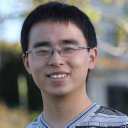
 Yutian Chen
· 4 previous affiliations
- Google (United States)Since 2015
- Research Scientist · Since 2015
- University of Cambridge2013–2015
- Postdoc · 2013–2015
- University of California, Irvine2007–2013
- PhD student · 2007–2013
- Tsinghua University2003–2007
- Undergrad student · 2003–2007
2 other authors named Yutian Chen: Yutian Chen (Stanford University · 29 papers), Yutian Chen (1 paper)
Research Overview
Yutian Chen focuses on scalable Bayesian inference, automated machine learning, and offline reinforcement learning. His trajectory spans early foundational work in deterministic sampling methods to the development of universal optimization models and robust policy evaluation techniques. Recently, he has investigated the use of large language models and transformer architectures as general-purpose optimizers and regressors.
Research Trajectory
Chen’s early research addressed fundamental challenges in probabilistic modeling and sampling efficiency. In On Herding and the Perceptron Cycling Theorem (2010), he introduced Conditional Herding, a discriminative learning algorithm that bridged classical neural network theory with modern generative modeling by behaving as a voted perceptron with hidden units. This interest in deterministic sampling led to Herded Gibbs Sampling (2013), which replaced random draws with a herding mechanism to achieve faster theoretical convergence rates and superior practical performance in image and text processing tasks. This work contributed significantly to the research direction of Breaking the Monte Carlo Convergence Bottleneck. Continuing to scale Bayesian methods for large datasets, he collaborated on Austerity in MCMC Land: Cutting the Metropolis-Hastings Budget (2014), exploring how to compute likelihoods more efficiently during Metropolis-Hastings tests, thereby advancing the broader area of Scalable Bayesian Inference via Stochastic Gradient MCMC.
In the mid-to-late 2010s, Chen transitioned toward optimization and reinforcement learning, exploring how machine learning models could optimize themselves. He developed a novel approach to black-box optimization in Learning to Learn without Gradient Descent by Gradient Descent (2017), training recurrent neural networks on synthetic functions to act as optimizers. This foundational work demonstrated remarkable transferability to diverse tasks and helped establish the area of Pretrained Optimization Models for Zero-Shot Generalization. During this period, he also participated in large-scale reinforcement learning efforts, contributing to the development of AlphaGo Zero in Mastering the game of Go without human knowledge (2017), an algorithm that achieved superhuman proficiency solely through self-play without human data or domain knowledge.
In the early 2020s, Chen’s focus expanded to the safe evaluation and deployment of reinforcement learning policies from logged data. He addressed the challenge of policy selection under restricted interaction budgets in Active Offline Policy Selection (2021), contributing to research directions such as Behavioral Representations for Reinforcement Learning Policies and The Model Selection Paradox in Offline Reinforcement Learning. To tackle confounding variables in data collection processes, he proposed using causal inference techniques in On Instrumental Variable Regression for Deep Offline Policy Evaluation (2022), demonstrating that instrumental variable regression could yield more reliable Q-function estimates than existing techniques. Concurrently, he led research on continual learning, introducing a framework for identifying task transitions in Sequential changepoint detection in neural networks with checkpoints (2022), which utilized cached model states to efficiently detect changes in data streams.
A major theme in Chen’s recent trajectory is the application of transformer architectures and large language models (LLMs) to automated hyperparameter optimization (HPO) and black-box optimization. He introduced a novel framework in Towards Learning Universal Hyperparameter Optimizers with Transformers (2022), framing HPO as a sequence modeling problem to imitate diverse optimization algorithms. He subsequently extended this framework to balance exploration and exploitation more effectively in Multi-step Planning for Automated Hyperparameter Optimization with OptFormer (2022). Advocating for a paradigm shift, he argued in Position: Leverage Foundational Models for Black-Box Optimization (2024) that sequence-modeling approaches could overcome long-standing generalizability hurdles in optimization.
This vision materialized in collaborative projects integrating language models with traditional optimization techniques. He contributed to Predicting from Strings: Language Model Embeddings for Bayesian Optimization (2024), which utilized frozen LLM embeddings to power Bayesian optimization over complex, non-tabular search spaces. Building on this, he led the development of OmniPred: Language Models as Universal Regressors (2024), demonstrating that language models can perform precise numerical regression using only textual representations of mathematical parameters. Alongside optimization, Chen has continued to advance policy representation and architectural efficiency. He participated in the development of π2vec: Policy Representation with Successor Features (2024), a method for predicting policy performance from offline data by combining successor features with visual foundation models. Most recently, he contributed to TRecViT: A Recurrent Video Transformer (2025), a causal video model designed for efficient real-time spatiotemporal reasoning.
Current Directions
The most recent papers in the evidence indicate a dual focus on leveraging foundation models for universal optimization and advancing efficient neural architectures. A primary current direction involves repurposing large language models as general-purpose regressors and black-box optimizers, treating numerical prediction and hyperparameter tuning as sequence modeling tasks over text-based parameter representations. Concurrently, recent collaborative work addresses the efficiency of spatiotemporal reasoning and offline reinforcement learning, investigating recurrent transformer architectures for real-time video processing and novel feature representations for evaluating black-box policies without costly real-world testing.
Profile updated
| Paper | Venue | Year |
|---|---|---|
| Benchmarks for Deep Off-Policy EvaluationGitHubgoogle-research/ | ICLR | 2021 |
Loading new papers…
Other researchers whose papers cluster into the same research directions — a proxy for overlapping technical interests and shared intellectual neighborhoods.
See something wrong? Report a mistake