

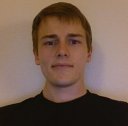
 Scott Reed
· 2 previous affiliations
- Nvidia (United States)Since 2024
- Principal Researcher · Since 2024
- Google (United States)2016–2024
- Research Scientist · 2016–2024
Research Overview
Scott Reed focuses on deep generative modeling, offline reinforcement learning, and the development of generalist autonomous agents. His trajectory spans early work in autoregressive visual generation and neural program induction to large-scale multimodal architectures for robotic control. Currently, he investigates implicit world modeling and video foundation models to scale generalization in embodied artificial intelligence.
Research Trajectory
Scott Reed completed his PhD at the University of Michigan under Honglak Lee, where his early research centered on deep learning architectures for reasoning and generation. In 2016, he introduced Deep Neural Networks for Visual Reasoning, Program Induction, and Text-to-Image Synthesis, establishing a foundation in multimodal learning. Concurrently, he developed Neural Programmer-Interpreters, a recurrent neural network architecture designed to represent and execute compositional programs. By utilizing a modular design with a shared core and program memory, this model demonstrated strong algorithmic generalization from limited training examples.
Continuing his focus on generative modeling, Reed advanced autoregressive visual generation. He presented Few-shot Autoregressive Density Estimation: Towards Learning to Learn Distributions (2017), which integrated neural attention and gradient-based meta-learning into PixelCNN architectures to enable few-shot density estimation for novel image classes. To address the computational bottlenecks of these models, he subsequently proposed Parallel Multiscale Autoregressive Density Estimation, significantly improving inference efficiency. During this period, his work also touched upon the research direction of Motion Synthesis via Continuous Latent Manifolds.
Transitioning toward embodied AI and control, Reed's research expanded to include the areas of Unlocking Parameter Scaling in Deep Reinforcement Learning and Scaling Robot Generalization through Environmental Diversity. By 2020, his focus sharpened on imitation and offline reinforcement learning. With collaborators, he developed Task-Relevant Adversarial Imitation Learning (TRAIL), a method employing data-driven constraints to prevent discriminators from relying on spurious visual features, thereby enabling robust robotic manipulation from pixels. He also directed the development of the Offline Reinforced Imitation Learning (ORIL) framework in Offline Learning from Demonstrations and Unlabeled Experience. This work utilized a small set of expert demonstrations alongside large pools of unlabeled experience to learn robust reward functions, advancing the broader area of Synthesizing Rewards to Unlock Offline Reinforcement Learning. Related efforts during this time included contributions to the research direction of Reinforcement Learning from Reward-Free Offline Data and the area of Causal Reinforcement Learning via Interventional Policy Optimization.
A major milestone in his trajectory was the introduction of Gato, detailed in A Generalist Agent (2022). Inspired by large language models, this work demonstrated a single, unified network capable of operating as a multi-modal, multi-task, and multi-embodiment policy. The same architecture could process varied contexts to output text, joint torques, or button presses, successfully playing Atari games, captioning images, and controlling real robot arms.
Now a principal research scientist at NVIDIA on the GEAR team, Reed has recently focused on collaborative efforts to scale foundation models for robotics and unify multimodal understanding. In QLIP: Text-Aligned Visual Tokenization Unifies Auto-Regressive Multimodal Understanding and Generation (2025), he participated in designing a visual tokenizer that aligns discrete tokens with text semantics, allowing a single auto-regressive model to achieve high-fidelity image generation and understanding. His involvement in embodied AI continued with GR00T N1: An Open Foundation Model for Generalist Humanoid Robots, which combined a vision-language model with a diffusion transformer to provide humanoid robots with versatile motor control trained across simulation and real-world data.
To further enhance robotic reasoning, he contributed to FLARE: Robot Learning with Implicit World Modeling (2025), a framework that aligns diffusion transformer features with latent embeddings of future observations, enabling policies to anticipate long-term consequences. Addressing the data scarcity bottleneck in robotics, he collaborated on DreamGen: Unlocking Generalization in Robot Learning through Neural Trajectories, a pipeline that extracts synthetic training data and pseudo-actions from video generative models. Most recently, this paradigm was extended in World Action Models are Zero-shot Policies (2026), which introduced DreamZero, a World Action Model leveraging pretrained video diffusion to jointly predict future states and actions for zero-shot generalization across new tasks and embodiments.
Current Directions
Reed’s most recent work investigates the intersection of video foundation models, implicit world modeling, and scalable robotic control. A primary focus is the development of World Action Models (WAMs) and Vision-Language-Action (VLA) architectures that leverage the physical and linguistic priors embedded in large-scale video generative models. By extracting "neural trajectories" and aligning latent representations of future observations, this research aims to overcome the data scarcity inherent in manual teleoperation. Ultimately, these approaches seek to enable zero-shot generalization and cross-embodiment transfer, allowing humanoid robots and other autonomous agents to reason about long-horizon tasks and adapt to novel open-world environments.
Profile updated
Loading new papers…
Other researchers whose papers cluster into the same research directions — a proxy for overlapping technical interests and shared intellectual neighborhoods.
See something wrong? Report a mistake