

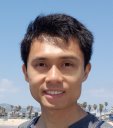
 Yun Liu
· 10 previous affiliations
- Google (United States)Since 2016
- Senior Staff Research Scientist · Since 2023
- Researcher · Since 2016
- Staff Research Scientist · 2020–2023
- Senior Research Scientist · 2019–2020
- PhD Candidate · 2011–2016
- PhD Candidate · 2011–2016
- PhD student · 2011–2016
- Harvard University2011–2016
- PhD student · 2011–2016
- Bioinformatics Institute2008–2011
- Research Officer · 2010–2011
- Researcher · 2008
- Researcher · 2010–2011
- Institute of Computational Medicine, Johns Hopkins University2008–2010
- Researcher · 2008–2010
- Johns Hopkins University2007–2010
- Undergrad student · 2007–2010
- Doctor of Philosophy - PhD, Medical Engineering and Medical Physics
7 other authors named Yun Liu: Yun Liu (Nankai University · 220 papers), Yun Liu (22 papers), Yun Liu (9 papers), Yun Liu (Tsinghua University · 6 papers), Yun Liu (Tsinghua University · 4 papers), and 2 more
Research Overview
Yun Liu focuses on clinical deep learning, multimodal medical image analysis, and the application of large language models to healthcare. His early trajectory established robust predictive models for pathology and dermatology, demonstrating how AI can extract prognostic signals from medical imaging. Currently, his research centers on developing specialized, interactive medical AI systems and foundation models for wearable sensor data to support clinical reasoning and patient care.
Research Trajectory
In his early work, Liu focused on applying deep learning to medical imaging to extract novel clinical insights. In 2017, he explored the area of Non-Invasive Systemic Health Prediction via Oculomics and Deep Learning by demonstrating that neural networks could predict cardiovascular risk factors—including age, gender, and blood pressure—directly from retinal images. This work, detailed in Predicting Cardiovascular Risk Factors from Retinal Fundus Photographs using Deep Learning, achieved a 0.70 AUC in predicting major adverse cardiac events over a five-year period, performing competitively with traditional clinical risk calculators. Expanding into dermatology, he helped develop a system capable of providing a ranked differential diagnosis for 26 common skin conditions from clinical photographs and medical history, achieving diagnostic accuracy comparable to board-certified dermatologists in A deep learning system for differential diagnosis of skin diseases.
Concurrently, his research addressed computational pathology and oncology. He contributed to Development and validation of a deep learning algorithm for improving Gleason scoring of prostate cancer, which introduced a two-stage system to enhance the accuracy and granularity of tumor morphology characterization from whole-slide images. Building on this foundation, he investigated weakly-supervised approaches to extract prognostic signals from histopathology images across ten different cancer types in Deep learning-based survival prediction for multiple cancer types using histopathology images. Recognizing the need for clinical trust and transparency, he later advanced explainable AI methods by generating human-interpretable, clustering-derived features for prognostic modeling in Interpretable survival prediction for colorectal cancer using deep learning.
As large language models (LLMs) emerged as powerful computational tools, Liu’s focus shifted toward adapting these architectures for healthcare, advancing the broader area of Grounding Large Language Models for Clinical Reliability. In 2023, he was part of the team that introduced Med-PaLM, a model aligned specifically for the medical domain using instruction prompt tuning and evaluated on the novel MultiMedQA benchmark, as detailed in Large language models encode clinical knowledge. He subsequently explored how specialized LLMs could serve as interactive assistants to improve clinicians' diagnostic accuracy and comprehensiveness in Towards Accurate Differential Diagnosis with Large Language Models. This work expanded into multimodal domains with the development of Med-PaLM M, a generalist system capable of integrating text, images, and genomics, presented in Towards Generalist Biomedical AI. He also contributed to adapting these models for personal health applications, integrating wearable sensor data to provide personalized insights in Towards a Personal Health Large Language Model.
In his most recent work, Liu has continued to refine the clinical reasoning and safety of medical AI. He contributed to Med-PaLM 2, which introduced novel reasoning strategies that improved long-form medical explanations, as evaluated in Toward expert-level medical question answering with large language models. This work aligns closely with the research direction of Multi-Axis Expert Evaluation for Specialized Large Language Models. To address the safety of conversational diagnostic agents, he helped design g-AMIE, a multi-agent system that decouples patient intake from clinical decision-making through an "asynchronous oversight" paradigm, detailed in Towards physician-centered oversight of conversational diagnostic AI. This approach contributes significantly to work in Human in the Loop Validation for Reliable AI Systems. Further investigating human-AI interaction, he explored proactive, context-seeking conversational agents in Towards Better Health Conversations: The Benefits of Context-seeking, demonstrating that users prefer AI systems that ask clarifying questions before offering health advice.
Alongside conversational AI, Liu has investigated the robustness of foundation models on complex, noisy data streams. He participated in benchmarking language models against real-world data imperfections, such as missing values and logical errors, in RADAR: Benchmarking Language Models on Imperfect Tabular Data. Extending foundation model architectures to physiological signals, he explored the predictability of performance improvements in Scaling Wearable Foundation Models. This culminated in the development of a new family of models trained on 60 million hours of physiological signals paired with automated hierarchical captions, enabling zero-shot activity recognition and cross-modal retrieval, introduced in SensorLM: Learning the Language of Wearable Sensors.
Current Directions
In his most recent work, Liu investigates the deployment of multimodal foundation models and conversational agents in clinical and personal health settings. A major focus is the development of specialized large language models that can safely interact with patients and clinicians, emphasizing proactive context-seeking and asynchronous physician oversight to maintain clinical reliability and accountability. Concurrently, his research addresses the integration of continuous physiological data into AI systems. By establishing scaling laws for wearable sensor data and developing foundation models capable of processing these signals alongside natural language, he aims to bridge the gap between complex, noisy multimodal data and actionable health insights.
Profile updated
Loading new papers…
Other researchers whose papers cluster into the same research directions — a proxy for overlapping technical interests and shared intellectual neighborhoods.
See something wrong? Report a mistake