

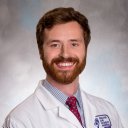
 Drew FK Williamson
· 7 previous affiliations
- Emory UniversitySince 2024
- Assistant Professor · Since 2024
- Modella AISince 2024
- Consultant · Since 2024
- Harvard Medical School2018–2024
- Clinical Fellow · 2018–2024
- Postdoc · 2023
- Brigham and Women's Hospital2023–2024
- Postdoctoral Researcher · 2023–2024
- Postdoc · 2023
- Massachusetts General Hospital2022–2023
- Clinical Fellow · 2022–2023
- Case Western Reserve University2013–2018
- Doctor of Medicine - MD · 2013–2018
- Bachelor of Arts - BA, Mathematics
Research Overview
Drew FK Williamson focuses on the intersection of computational pathology and artificial intelligence, specifically the development of deep learning models for multimodal data integration. His work emphasizes the synthesis of histopathological imaging with genomic and transcriptomic data to improve diagnostic accuracy and prognostic prediction. As a board-certified pathologist, Williamson’s research program bridges the gap between technical machine learning innovations and their practical implementation in clinical workflows, with a particular emphasis on scalability, interpretability, and algorithmic fairness.
Research Trajectory
Williamson’s early research, beginning around 2019, addressed the fundamental challenge of integrating disparate data types in oncology. This period was marked by the development of frameworks designed to fuse high-resolution histopathology images with molecular profiles. By moving beyond single-modality models, this work sought to capture the complex interactions between a tumor’s morphological appearance and its underlying genetic drivers. A significant portion of this early effort was dedicated to Decentralized Model Training via Federated Learning, recognizing that the privacy constraints of medical data often prevent the centralization required for traditional deep learning.
By 2021, his focus expanded to include the technical infrastructure necessary for large-scale computational pathology. This involved creating systems for rapid image retrieval across massive repositories and exploring weakly supervised learning techniques that could function without exhaustive, manual pixel-level annotations. During this time, Williamson also began investigating the socio-technical implications of clinical AI, specifically The Failure of Fairness through Unawareness. This research highlighted how simply removing demographic variables from training data is insufficient to prevent biased outcomes, as models can often infer sensitive attributes from morphological features.
In the mid-2020s, Williamson’s work shifted toward the development of foundational models and the integration of spatial transcriptomics. This transition reflected a broader move in the field toward Aligning Tissue Morphology with Molecular Signatures at a higher resolution. His recent projects involve the creation of vision-language assistants capable of diagnostic reasoning and the curation of large-scale datasets that pair histology with spatial gene expression. These efforts aim to provide a more granular understanding of the tumor microenvironment while ensuring that the resulting models are efficient enough for real-world deployment, often utilizing techniques like Window Based Attention for High Resolution Vision to manage the computational demands of gigapixel images.
Current Directions
Williamson’s current research program is organized around three primary pillars: multimodal foundation models, spatial biology, and clinical equity.
The first pillar involves the advancement of multimodal large language models (MLLMs) tailored for pathology. These systems are designed to act as diagnostic assistants that can navigate whole-slide images, identify relevant morphological features, and synthesize these findings into evidence-based reports. This work extends into the development of multi-agent systems that mimic the iterative reasoning process of human pathologists.
The second pillar focuses on the emerging field of spatial transcriptomics. Williamson is working to overcome the technical artifacts inherent in these technologies, such as Overcoming Data Sparsity in Single Cell Sequencing. By establishing standardized datasets and benchmarking foundation models on paired histology and transcriptomic data, his lab seeks to enable the prediction of molecular states directly from routine H&E-stained slides.
The third pillar addresses the necessity of Equitable Clinical AI through Demographic Debiasing. Williamson continues to investigate how computational pathology models perform across diverse patient populations. This involves identifying systematic performance disparities and developing algorithmic interventions to ensure that AI-driven diagnostics do not exacerbate existing healthcare inequities.
Representative Work
Pathomic Fusion: An Integrated Framework for Fusing Histopathology and Genomic Features for Cancer Diagnosis and Prognosis This work introduced a framework for the multimodal integration of histology images and genomic profiles. The methodology utilized a gating-based attention mechanism and Kronecker products to model interactions between modalities, demonstrating that integrated models could outperform single-modality approaches in predicting outcomes for glioma and kidney cancer.
Fast and Scalable Image Search For Histology As a second author, Williamson contributed to the development of FISH (Fast and Scalable Image Search), a search engine designed for gigapixel histology repositories. The system combined self-supervised learning via VQ-VAE with Van Emde Boas trees to achieve constant-time search speeds, allowing clinicians to retrieve similar cases from millions of slides without manual annotations.
A Foundational Multimodal Vision Language AI Assistant for Human Pathology This research details the development of PathChat, a multimodal AI assistant specifically architected for pathology. By integrating a histology-specific vision encoder with a large language model, the system achieved high diagnostic accuracy on complex cases, suggesting the potential for MLLMs to serve as interactive tools in the pathology workflow.
HEST-1k: A Dataset For Spatial Transcriptomics and Histology Image Analysis Williamson contributed to the creation of HEST-1k, a resource providing over 1,200 paired spatial transcriptomics profiles and histology images across 26 organs. This dataset serves as a benchmark for models attempting to predict molecular signatures from morphology, providing a standardized roadmap for future research in spatial biology.
Modeling Dense Multimodal Interactions Between Biological Pathways and Histology for Survival Prediction This paper introduced SURVPATH, a framework that models interactions between high-resolution tissue images and bulk gene expression. By grouping genes into biologically relevant pathway tokens and using memory-efficient Transformers, the model provides interpretable insights into how specific genotypes influence phenotypic expression in cancer.
Demographic bias in misdiagnosis by computational pathology models In this collaborative study, Williamson participated in an analysis of how deep learning-based pathology systems perform across different demographic groups. The research utilized data from large public atlases and internal patient records to demonstrate that models for subtyping carcinomas and predicting mutations can exhibit significant performance disparities, highlighting the need for demographic debiasing in clinical AI.
Profile updated
Loading new papers…
Other researchers whose papers cluster into the same research directions — a proxy for overlapping technical interests and shared intellectual neighborhoods.
See something wrong? Report a mistake