

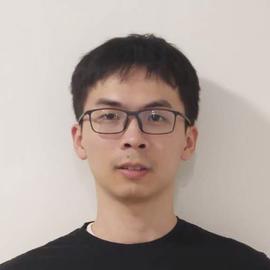
 Yun Chen
· 5 previous affiliations
- WaabiSince 2021
- Researcher · Since 2021
- University of TorontoSince 2021
- PhD student · Since 2021
- Uber AI (United States)2019–2021
- Research Scientist · 2019–2021
- MS student · 2016–2019
- Undergrad student · 2012–2016
- Research Intern · 2018
5 other authors named Yun Chen: Yun Chen (Shanghai University of Finance and Economics · 45 papers), Yun Chen (3 papers), Yun Chen (1 paper), Yun Chen (Korea Advanced Institute of Science and Technology · 1 paper), Yun Chen (King's College London · 1 paper)
Research Overview
Yun Chen focuses on computer vision, neural rendering, and autonomous driving, with an emphasis on large-scale 3D reconstruction and sensor simulation. His early work addressed multi-sensor perception and motion forecasting for autonomous vehicles. More recently, he develops generalizable neural rendering techniques and closed-loop simulators to generate high-fidelity, dynamic 3D environments from real-world driving data.
Research Trajectory
Early in his career, his research concentrated on robust perception and prediction pipelines for autonomous driving. In 2019, he participated in designing an end-to-end learnable architecture that fuses information at various levels to simultaneously reason about 2D and 3D detection, ground estimation, and depth completion in Multi-Task Multi-Sensor Fusion for 3D Object Detection. Concurrently, he introduced a neural network block for extracting joint 2D and 3D features in Learning Joint 2D-3D Representations for Depth Completion. This approach utilized domain-specific sub-networks to apply 2D convolutions on image pixels and continuous convolutions on 3D points, fusing the hierarchical representations to advance depth reconstruction.
By 2020, his focus expanded to end-to-end architectures that bridge perception, prediction, and planning. He was part of the team developing PnPNet: End-to-End Perception and Prediction With Tracking in the Loop, a model that takes sequential sensor data to output object tracks and future trajectories online. By updating tracks at each time step through joint data association and trajectory estimation, this work aligns with the broader area of Unified Differentiable Architectures for Perception and Planning. He also contributed to DSDNet: Deep Structured Self-driving Network, which performs object detection, motion prediction, and planning within a single neural network. By utilizing a deep structured energy-based model to produce socially consistent multimodal predictions, this work addressed the research direction of Reducing Error Propagation in Modular Autonomous Pipelines. Additionally, he participated in modeling complex actor-map interactions in Learning Lane Graph Representations for Motion Forecasting. Instead of relying on rasterized images, this method constructed a lane graph from raw map data and employed a novel graph convolution network to capture complex topology and long-range dependencies, contributing to the direction of Road Topology Reasoning for Autonomous Navigation. Collectively, this era of his work also supported the broader area of Cross-Modal Sensor Fusion for Robust Autonomous Perception.
Around 2021, while a researcher at Waabi AI, his trajectory shifted toward scalable sensor simulation and neural rendering. He developed GeoSim: Realistic Video Simulation via Geometry-Aware Composition for Self-Driving, a geometry-aware image composition process. This method synthesizes novel urban driving scenarios by extracting dynamic objects from sensor data and rendering them at novel poses within existing images, ensuring both realistic geometry and appearance. To support simulation with realistic assets, he collaborated on CADSim: Robust and Scalable in-the-wild 3D Reconstruction for Controllable Sensor Simulation. This work focused on automatically reconstructing traffic participants with high-quality appearance and articulated geometry from sensor data collected in the wild, providing a scalable alternative to manually created assets.
This line of research culminated in closed-loop systems like UniSim: A Neural Closed-Loop Sensor Simulator, which transforms single real-world driving logs into high-fidelity, editable digital twins. By combining multi-resolution neural feature fields with learnable actor priors, the simulator enables realistic closed-loop testing on safety-critical scenarios, which intersects with the broader area of Unified Multimodal Generative World Models for Autonomous Driving. Concurrently, he addressed the computational challenges of rendering massive environments. He presented Real-Time Neural Rasterization for Large Scenes. To overcome the limitations of traditional graphics pipelines and small-scale neural rendering, this approach combined a moderate-quality scaffold mesh with a learned neural texture field and shader, modeling view-dependent effects to enhance realism at high frame rates and contributing to the research direction of Scale Adaptive Anti Aliasing for Gaussian Splatting.
In 2024 and 2025, his work advanced into generalizable and dynamic 4D reconstruction. He introduced G3R: Gradient Guided Generalizable Reconstruction, an approach that efficiently predicts high-quality 3D scene representations for large environments, mitigating the artifacts and slow processing times associated with per-scene optimization. His collaborative efforts then expanded into dynamic multi-sensor modeling. He participated in the development of Flux4D: Flow-based Unsupervised 4D Reconstruction, a flow-based unsupervised method that models moving 3D worlds—such as turning vehicles or crossing pedestrians—without relying on expensive human-labeled tracklets. He also worked on SaLF: Sparse Local Fields for Multi-Sensor Rendering in Real-Time, which addressed the limitations of pinhole-restricted 3D Gaussian Splatting by decoupling the representation from the rendering procedure, enabling fast and accurate simulation of light-based sensors like cameras and LiDARs. Finally, to further populate these simulated worlds, he contributed to GenAssets: Generating in-the-wild 3D Assets in Latent Space. Recognizing that existing neural-rendering methods struggle with sparse, partially occluded observations, this approach leveraged diffusion-based generative models in latent space to build complete, diverse, and relightable assets from limited fields of view.
Current Directions
The most recent papers in the evidence address the scalability, realism, and efficiency of dynamic scene reconstruction for autonomous simulation. Recent work investigates generalizable, feed-forward architectures that eliminate the need for expensive per-scene optimization, enabling rapid 3D and 4D reconstruction of moving environments without relying on human-labeled tracklets. Additionally, current research explores sparse local fields to support real-time, multi-sensor rendering beyond standard pinhole cameras, facilitating accurate simulation of both cameras and LiDARs. Another major focus is the use of latent generative models to synthesize diverse, relightable 3D assets from sparse, partially occluded in-the-wild data, ensuring that simulated environments are populated with realistic and varied traffic participants.
Profile updated
Loading new papers…
Other researchers whose papers cluster into the same research directions — a proxy for overlapping technical interests and shared intellectual neighborhoods.
See something wrong? Report a mistake