

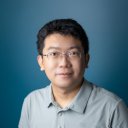
 Jingkang Wang
· 3 previous affiliations
- WaabiSince 2021
- Researcher · Since 2021
- University of TorontoCurrent
- Current
- PhD student · 2019–2025
- Shanghai Jiao Tong University2015–2019
- Undergrad student · 2015–2019
Research Overview
Jingkang Wang focuses on 3D world modeling, neural rendering, and generative AI for autonomous systems. His trajectory spans early work in robust reinforcement learning and adversarial robustness to the development of scalable, high-fidelity sensor simulators. His current research addresses unsupervised 4D reconstruction and the generation of realistic, simulation-ready assets to ensure the safe deployment of physical AI.
Research Trajectory
Wang’s early research explored foundational data and representation challenges across different domains. In 2018, he participated in creating the LiDAR-Video Driving Dataset: Learning Driving Policies Effectively, which provided an early benchmark combining dashboard cameras and laser scanners to improve the semantic understanding of real traffic for autonomous driving. Around this time, he also contributed to natural language processing, specifically exploring character embeddings that capture both phonetic and semantic information in Multiple Character Embeddings for Chinese Word Segmentation.
Transitioning into 2020 and 2021, his focus shifted toward robust machine learning, reinforcement learning (RL), and optimization. He introduced a framework for RL in environments with noisy rewards by estimating a reward confusion matrix in Reinforcement Learning with Perturbed Rewards, allowing agents to learn effectively without prior knowledge of the noise distribution. He further explored robustness in Adversarial Attack Generation Empowered by Min-Max Optimization, formulating the minimization of worst-case attack loss across multiple domains as a min-max problem. Addressing the challenge of acquiring high-quality supervision, he developed methods to leverage imperfect information from peer agents in Policy Learning Using Weak Supervision.
In parallel, Wang worked on improving the efficiency of model training and data annotation. He proposed a cost-efficient algorithm for online hyperparameter tuning that intelligently skips expensive validation steps in Cost-Efficient Online Hyperparameter Optimization. He also participated in research on active learning for perception and prediction modules in autonomous driving. This work, detailed in Just Label What You Need: Fine-Grained Active Selection for P&P through Partially Labeled Scenes, advanced the research direction of Learning from Sparse Labels via Partial Loss and the broader area of Prioritizing Dataset Breadth Over Local Annotation Density.
Around 2021, while affiliated as a Staff Researcher at Waabi, Wang's trajectory increasingly concentrated on sensor simulation and the generation of safety-critical scenarios for autonomous vehicles. He developed AdvSim: Generating Safety-Critical Scenarios for Self-Driving Vehicles, an adversarial framework that modifies actor trajectories in a physically plausible manner and updates LiDAR sensor data to simulate perception failures.
Moving into 2022 and 2023, his work heavily emphasized high-fidelity 3D environments and closed-loop simulation. He addressed the bottleneck of manual asset creation by reconstructing articulated geometry from in-the-wild sensor data in CADSim: Robust and Scalable in-the-wild 3D Reconstruction for Controllable Sensor Simulation. This contributed significantly to the research area of Generative Simulation for Scaling Embodied AI and the direction of Sparse View 3D Reconstruction with Geometric and Generative Priors. He subsequently collaborated on UniSim: A Neural Closed-Loop Sensor Simulator, which transforms real-world driving logs into editable digital twins using multi-resolution neural feature fields and learnable actor priors. To handle environmental variations, he co-developed LightSim, detailed in Neural Lighting Simulation for Urban Scenes, which builds lighting-aware digital twins to generate diverse illumination conditions. He also extended adversarial testing to 3D object shapes in Adv3D: Generating Safety-Critical 3D Objects through Closed-Loop Simulation, evaluating how variations in scene appearance affect the full autonomy system.
In 2025, Wang's research advanced into dynamic scene reconstruction and real-time rendering. He tackled the challenge of modeling moving worlds without relying on expensive human-labeled tracklets or lengthy per-scene optimization in Flux4D: Flow-based Unsupervised 4D Reconstruction, contributing to the area of Feed-Forward 4D Gaussian Reconstruction for Dynamic Scenes. He also participated in developing SaLF: Sparse Local Fields for Multi-Sensor Rendering in Real-Time, which addresses the slow training and rendering times of traditional neural radiance fields to enable realistic multi-sensor evaluation. Finally, he collaborated on GenAssets: Generating in-the-wild 3D Assets in Latent Space, utilizing diffusion-based generative models to build complete and diverse traffic participant assets from sparse, partially occluded in-the-wild observations.
Current Directions
The most recent papers in the evidence address the challenges of dynamic 4D scene reconstruction and the generation of high-fidelity 3D assets for multi-sensor simulation. Recent work investigates unsupervised methods for modeling moving environments, moving away from reliance on human-labeled tracklets to capture complex dynamic behaviors like turning vehicles or crossing pedestrians. Additionally, current efforts focus on overcoming the limitations of traditional neural rendering by developing real-time, multi-sensor rendering techniques and leveraging latent space generative models to reconstruct diverse, in-the-wild assets from sparse and occluded observations. These directions collectively aim to bridge the domain gap between simulation and reality for the rigorous testing of autonomous systems.
Profile updated
| Paper | Venue | Year |
|---|---|---|
| Adversarial Attack Generation Empowered by Min-Max OptimizationGitHubwangjksjtu/ | NeurIPS | 2021 |
Loading new papers…
Other researchers whose papers cluster into the same research directions — a proxy for overlapping technical interests and shared intellectual neighborhoods.
See something wrong? Report a mistake