

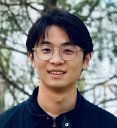
 Yulu Gan
· 6 previous affiliations
- Massachusetts Institute of TechnologySince 2023
- PhD student · 2024–2029
- Research Assistant · Since 2024
- Intern · 2023–2024
- Nvidia (United States)Since 2026
- Research Intern · Since 2026
- Summer Research Intern · 2025
- Intern · 2024
- Peking University2021–2024
- Research Assistant · 2021–2024
- Intern · 2023
Research Overview
Yulu Gan focuses on the intersection of artificial intelligence and science, investigating how biologically inspired mechanisms and evolutionary processes can improve modern machine learning systems. His research spans continual adaptation in dynamic environments, unified architectures for computer vision, and the development of backpropagation-free learning algorithms. Recently, he has concentrated on scaling zeroth-order optimization and exploring the dense topological properties of pretrained model weights.
Research Trajectory
The early phase of this research trajectory centered on computer vision, particularly addressing challenges in dynamic environments and image reconstruction. In 2023, work in the area of Restoring Isotropic Resolution in Volumetric Imaging led to the development of DiffuseIR: Diffusion Models for Isotropic Reconstruction of 3D Microscopic Images. This unsupervised method utilized diffusion models to learn the structural distribution of biological tissues, enabling high-resolution 3D reconstructions from anisotropic inputs without requiring retraining for different imaging settings. Concurrently, research on continual test-time adaptation in non-stationary streams produced Decorate the Newcomers: Visual Domain Prompt for Continual Test Time Adaptation. Motivated by prompt learning in natural language processing, this approach introduced an image-layer visual domain prompt to adapt frozen source models to changing target datasets, mitigating catastrophic forgetting. This focus on dynamic real-world deployment was further expanded in Cloud-Device Collaborative Adaptation to Continual Changing Environments in the Real-World, which proposed a collaborative learning paradigm to overcome the computational constraints and limited generalization of lightweight models on client devices.
Moving into 2024, the focus broadened to encompass unified generalist architectures for computer vision and biologically plausible learning mechanisms. InstructCV: Instruction-Tuned Text-to-Image Diffusion Models as Vision Generalists demonstrated how generative text-to-image diffusion models could be repurposed to perform tasks like object detection and segmentation through natural language instructions. By framing computer vision as an instruction-guided image-to-image generation problem, the method achieved robust generalization to unseen datasets. In parallel, contributions to video synthesis included Decouple Content and Motion for Conditional Image-to-Video Generation, which addressed the inefficiencies of pixel-space generation by disentangling spatial content and temporal motions using a 3D-UNet diffusion model.
During this period, the research also bridged artificial intelligence and neuroscience. Self-Assembly of a Biologically Plausible Learning Circuit advanced the research direction of Credit Assignment without Weight Transport. This work introduced a neural circuit that self-assembles from random initial connectivity using localized heterosynaptic plasticity rules, offering a biologically plausible alternative to backpropagation that performs competitively with standard stochastic gradient descent. Additionally, On the Power of Decision Trees in Auto-Regressive Language Modeling explored sequential reasoning, demonstrating that auto-regressive decision trees can simulate automata and Turing machines, with tree ensembles rivaling much larger transformer models on specific reasoning benchmarks.
In 2025, the trajectory incorporated large-scale spatial reasoning and cross-modal techniques. FoundationMotion: Auto-Labeling and Reasoning about Spatial Movement in Videos introduced an automated pipeline that combines object tracking with language model reasoning to generate a large-scale dataset for spatial understanding. This allowed mid-sized open-source models to perform complex motion reasoning tasks effectively. Furthermore, Cross-Modal Alignment Regularization: Enhancing Language Models with Vision Model Representations introduced a regularization term to align language model representations with vision models during training, improving performance across downstream tasks in both pre-training and fine-tuning settings.
The most recent work in 2026 has shifted toward novel optimization paradigms and the structural properties of large language models. Neural Thickets: Diverse Task Experts Are Dense Around Pretrained Weights revealed that the weight space of well-pretrained models contains dense "thickets" of task-specific experts. This insight motivated RandOpt, a parallel post-training algorithm that samples random weight perturbations and ensembles the most effective ones at inference time. Finally, Evolution Strategies at Scale: LLM Fine-Tuning Beyond Reinforcement Learning demonstrated that evolution strategies can be successfully applied to the full-parameter fine-tuning of billion-parameter models. By utilizing a memory-efficient, zeroth-order approach, this method provides a backpropagation-free alternative to reinforcement learning that is robust against reward hacking and maintains training stability.
Current Directions
The most recent papers in the evidence address the optimization and adaptation of large language models, with a particular emphasis on backpropagation-free methods and the topological properties of pretrained weight spaces. Current work investigates how zeroth-order optimization techniques, such as evolution strategies, can be scaled to fine-tune billion-parameter models efficiently. This approach bypasses the memory constraints of traditional gradient-based reinforcement learning while offering increased robustness against reward hacking and improved handling of sparse rewards. Additionally, ongoing research explores the dense neighborhoods of task-specific experts surrounding pretrained model weights. By leveraging these "neural thickets," new post-training algorithms are being developed to sample and ensemble weight perturbations, enabling effective model adaptation without the need for complex gradient updates. Broadly, these directions reflect a continued interest in finding simpler, biologically inspired, or evolutionary alternatives to standard backpropagation for scaling and aligning modern artificial intelligence systems.
Profile updated
Loading new papers…
Other researchers whose papers cluster into the same research directions — a proxy for overlapping technical interests and shared intellectual neighborhoods.
See something wrong? Report a mistake