

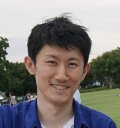
 Yohei Nakata
· 2 previous affiliations
- Panasonic (United States)Since 2013
- Researcher · Since 2013
- Kobe University2010–2013
- PhD student · 2010–2013
Research Overview
Yohei Nakata focuses on generative modeling, out-of-distribution detection, and the computational efficiency of deep neural networks. His trajectory spans from early work on model quantization to the development of expressive normalizing flows and flow matching techniques for robust uncertainty quantification. Recently, his research investigates training-free methods for accelerating inference in large vision-language models and diffusion architectures.
Research Trajectory
Nakata’s early work addressed the practical challenges of deploying neural networks in resource-constrained environments, where model compression is often necessary. In 2021, he explored techniques to maintain predictive performance during this compression process, investigating knowledge distillation to guarantee consistency between inferences before and after quantization in Lossless AI: Toward Guaranteeing Consistency between Inferences Before and After Quantization via Knowledge Distillation.
His focus subsequently expanded to the reliability and safety of deployed models, particularly in handling distributional shifts in complex computer vision tasks like semantic segmentation. Standard discriminative models often produce overconfident, imprecise probabilities when encountering novel classes at test time. To address this, his research group proposed a generative model in Concurrent Misclassification and Out-of-Distribution Detection for Semantic Segmentation via Energy-Based Normalizing Flow (2023). By developing FlowEneDet—a normalizing flow framework with energy-based inputs—the work enabled concurrent in-distribution misclassification and out-of-distribution (OOD) detection. This contribution advanced the area of Energy Scores for Out-of-Distribution Detection by allowing previously deployed segmentation models to be extended without the need for complete retraining.
Continuing to refine generative architectures in 2024, Nakata directed research into the expressivity and conditioning of bijective flows. The paper ContextFlow++: Generalist-Specialist Flow-based Generative Models with Mixed-variable Context Encoding introduced an additive conditioning approach that overcame the limitations of conventional vector concatenation. This enabled a practical setup where specialized, context-conditioned models could be trained alongside a fixed, general-knowledge pretrained model, expanding the utility of normalizing flows in complex density estimation tasks.
In parallel, he investigated alternatives to the computationally expensive ordinary differential equation (ODE) solvers required for continuous normalizing flows. His group developed an interpolant-free approach in DFM: Interpolant-free Dual Flow Matching, which optimized both forward and reverse vector fields without relying on explicit assumptions about the modeled field. This simplified the maximum likelihood training phase and offered a more tractable path to modeling expressive, infinite-length architectures.
Nakata also collaborated on methods to improve the computational efficiency of robust uncertainty estimation. In Split-Ensemble: Efficient OOD-aware Ensemble via Task and Model Splitting, he participated in designing a framework that splits classification tasks into semantically related subtasks using a tree-like architecture. By sharing early features, the method achieved the superior accuracy and OOD detection capabilities of an ensemble while maintaining the computational cost of a single model. This work contributed to research directions such as Reducing Overconfident Errors on Novel Samples and Resource Constrained Uncertainty Estimation.
Most recently, Nakata’s trajectory has emphasized accelerating inference across diverse, large-scale architectures. He contributed to ODEt (ODEl): Shortcutting the Time and Length in Diffusion and Flow Models for Faster Sampling (2025), which introduced a method to reduce latency and memory usage in generative models. By treating the sequential layers of a transformer as an inner ODE, the method effectively shortcuts both the time dimension and network depth to achieve substantial reductions in latency without sacrificing image quality. In the domain of multimodal models, he collaborated on SparseVLM: Visual Token Sparsification for Efficient Vision-Language Model Inference (2025). This training-free method accelerates vision-language models by using text prompts to guide the pruning of redundant visual tokens, recycling discarded visual information into compact summaries. This approach achieves significant compression rates while preserving the model's ability to accurately interpret complex visual inputs, aligning with the broader areas of Instruction Guided Visual Token Pruning and Training-Free Sparse Attention for Pre-trained Transformers.
Current Directions
The most recent work in the evidence indicates a strong focus on optimizing the inference efficiency of large-scale generative and multimodal architectures. Current directions investigate training-free methods to accelerate sampling and reduce computational overhead without sacrificing output quality. This includes developing techniques to shortcut the time and depth dimensions in diffusion and flow models, as well as designing prompt-guided token sparsification strategies for vision-language models. By addressing the latency and memory bottlenecks inherent in complex neural networks, this research aims to make highly expressive models more practical for real-world deployment.
Profile updated
Loading new papers…
Other researchers whose papers cluster into the same research directions — a proxy for overlapping technical interests and shared intellectual neighborhoods.
See something wrong? Report a mistake