

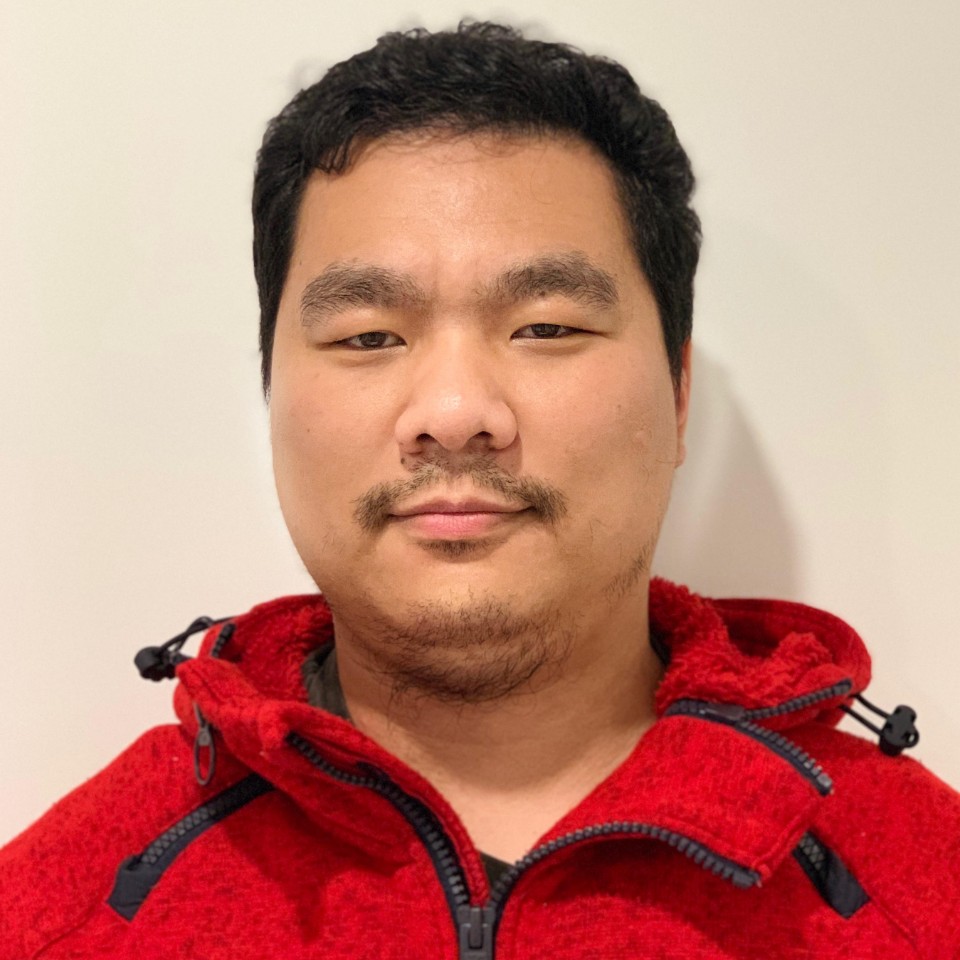
 Yufei Wang
· 4 previous affiliations
- Huawei Technologies (China)Since 2023
- Researcher · Since 2023
- Macquarie University2019–2020
- MS student · 2019–2020
- The University of Queensland2014–2016
- Undergrad student · 2014–2016
- Sun Yat-sen University2011–2016
- Undergrad student · 2011–2016
5 other authors named Yufei Wang: Yufei Wang (SparcAI Inc · Nanyang Technological University · 35 papers), Yufei Wang (Carnegie Mellon University · 23 papers), Yufei Wang (University of California San Diego · 3 papers), Yufei Wang (Character.AI · 2 papers), Yufei Wang (University of Pittsburgh · 1 paper)
Research Overview
Yufei Wang focuses on natural language processing, specifically exploring vision-and-language tasks, constrained text generation, and data augmentation for low-resource environments. His trajectory spans foundational work in syntactic parsing and novel object captioning to the development of robust evaluation frameworks for large language models. Currently, his research emphasizes verifiable reward mechanisms and semantic alignment to improve the reasoning and reliability of generative models.
Research Trajectory
Wang’s early research investigated the role of syntactic structures in natural language understanding. In 2019, he explored the integration of syntax into semantic role labeling with How to Best Use Syntax in Semantic Role Labelling. Concurrently, he addressed the challenges of processing spontaneous speech in Neural Constituency Parsing of Speech Transcripts. This work demonstrated that self-attentive neural parsers could jointly learn syntax and detect disfluencies—such as self-corrections and filler words—effectively eliminating the need for standalone disfluency cleaning pipelines.
During this period, Wang also expanded into multimodal domains, participating in the creation of a major benchmark for image captioning. With collaborators, he developed nocaps: novel object captioning at scale, a large-scale dataset designed to train models to describe visual concepts learned from alternative data sources rather than relying solely on paired image-caption data. This contribution significantly advanced the research direction of Open Vocabulary Image Captioning for Novel Objects and the broader area of Saliency-Driven Content Selection for Multimodal Generation. He continued to refine novel object captioning methodologies in ECOL-R: Encouraging Copying in Novel Object Captioning with Reinforcement Learning, leveraging reinforcement learning to improve how models handle unseen visual entities.
By 2021, Wang’s focus broadened to address the black-box nature of sequence-to-sequence neural text generation. He sought to improve the controllability of pre-trained models like BART and T5, ensuring they could adhere to specific rules or constraints during inference. He introduced the Neural Rule-Execution Tracking Machine For Transformer-Based Text Generation, a framework designed to track and enforce rule execution dynamically. He further expanded on these constraint mechanisms in Mention Flags (MF): Constraining Transformer-based Text Generators. Together, these projects made substantial contributions to the area of Constrained Decoding for Structured and Lexical Generation.
In 2022 and 2023, Wang tackled the challenge of data scarcity in natural language understanding. He developed techniques to generate high-quality synthetic training data, beginning with PromDA: Prompt-based Data Augmentation for Low-Resource NLU Tasks, which advanced the research direction of Generative Data Augmentation for Linguistic Integrity. Recognizing that standard language models often produce synthetic data lacking task-specific knowledge, he subsequently proposed KnowDA: All-in-One Knowledge Mixture Model for Data Augmentation in Low-Resource NLP. This work introduced a Knowledge Mixture Training framework to pre-train sequence-to-sequence models across diverse tasks, yielding superior data augmentation for low-resource settings. Alongside his empirical work, Wang also mapped the intersection of language models and scientific literature in When Large Language Models Meet Citation: A Survey, detailing how structural citation data can inform context-aware AI.
Most recently, Wang’s trajectory has shifted toward the evaluation, verification, and alignment of large language models. In 2025, he co-developed RevisEval: Improving LLM-as-a-Judge via Response-Adapted References, a framework that mitigates the biases of using LLMs as evaluators for open-ended text by generating high-quality, response-adapted references. In 2026, he contributed to SAC-Opt: Semantic Anchors for Iterative Correction in Optimization Modeling, which addresses "silent" logical errors in generated code by reconstructing natural language semantic anchors to verify alignment with the original problem intent. This work actively shapes areas such as Semantic Verification through Generative Reconstruction and Semantic Alignment for Machine Verifiable Logic. Building on the theme of verification, he also helped introduce From Verifiable Dot to Reward Chain: Harnessing Verifiable Reference-based Rewards for Reinforcement Learning of Open-ended Generation, a reinforcement learning approach that uses verifiable style checks and keyword chains to train models more sample-efficiently while resisting reward hacking.
Current Directions
Wang’s most recent work investigates the reliability, evaluation, and logical consistency of large language models. A primary focus is on developing robust evaluation frameworks that overcome the limitations and biases of "LLM-as-a-Judge" paradigms, particularly in open-ended generation tasks where gold-standard references are absent.
Additionally, his current research addresses the alignment of generative models through verifiable reinforcement learning and iterative correction. By designing systems that can anchor generated outputs—such as optimization code or open-ended text—to verifiable semantic constraints and reward chains, he aims to prevent silent logical failures and reward hacking. This ensures that language models not only produce fluent text and executable code but also accurately solve the underlying problems they are tasked with.
Profile updated
Loading new papers…
Other researchers whose papers cluster into the same research directions — a proxy for overlapping technical interests and shared intellectual neighborhoods.
See something wrong? Report a mistake