

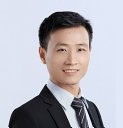
 Lifeng Shang
· 2 previous affiliations
- Huawei Technologies (China)Since 2013
- Researcher · Since 2013
- University of Hong Kong2007–2012
- PhD student · 2007–2012
Research Overview
Lifeng Shang focuses on large language model reasoning, reinforcement learning for open-ended generation, and autonomous agent systems for complex information seeking. His trajectory spans early work in computer vision and neural machine translation to foundational contributions in model compression and multi-hop retrieval. Currently, he investigates methods for enhancing the deliberative reasoning and self-correction capabilities of large reasoning models.
Research Trajectory
Lifeng Shang’s early research focused on computer vision and pattern recognition. Between 2006 and 2009, he explored the application of neural networks and hidden Markov models to image processing tasks. This included Rigid medical image registration using PCA neural network (2006) and Binary Image Thinning Using Autowaves Generated by PCNN (2007), which utilized pulse-coupled neural networks for skeleton extraction in images. He subsequently developed techniques for facial expression recognition in Nonparametric discriminant HMM and application to facial expression recognition (2009), introducing a nonparametric output probability estimation method to improve discrimination at both the hidden state and class levels.
By 2015, his focus had shifted toward deep learning for natural language processing and multimodal tasks. He participated in developing Multimodal Convolutional Neural Networks for Matching Image and Sentence (2015), an end-to-end framework that composed semantic fragments to learn inter-modal relations, addressing the alignment of global semantics with local spatial precision. Concurrently, he introduced Neural Responding Machine for Short-Text Conversation (2015), formalizing response generation as an encoder-decoder decoding process. This work tackled the one-to-many mapping problem in dialogue evaluation and sought to overcome generic response biases in sequence-to-sequence dialogue generation.
As pre-trained language models grew in scale, Shang contributed significantly to model compression and efficient inference. In 2020, he collaborated on DynaBERT: Dynamic BERT with Adaptive Width and Depth, which allowed flexible sizing for deployment on edge devices with varying hardware constraints. This was accompanied by the widely recognized distillation approach TinyBERT: Distilling BERT for Natural Language Understanding (2020). Moving toward complex reasoning and knowledge extraction, he helped develop HopRetriever: Retrieve Hops over Wikipedia to Answer Complex Questions (2021), defining a "hop" as a combination of a hyperlink and an outbound document to gather scattered evidence. This work advanced the broader area of Iterative Retrieval Augmented Generation for Multi Hop Reasoning. This was followed by an investigation into the internal mechanisms of these models in How Pre-trained Language Models Capture Factual Knowledge? A Causal-Inspired Analysis (2022), contributing to research on The Causal Disconnect in Language Model Reasoning.
By 2024, Shang’s trajectory centered on aligning, evaluating, and refining large language models (LLMs). He guided work on Gaining Wisdom from Setbacks: Aligning Large Language Models via Mistake Analysis (2024), proposing that models learn better by understanding why harmful content is problematic rather than only training on perfect examples—a method aimed at mitigating the alignment tax in LLMs. He also participated in creating FollowBench: A Multi-level Fine-grained Constraints Following Benchmark for Large Language Models (2024) to evaluate instruction adherence across multiple constraint types, supporting the broader field of Evaluating Generative AI with Large Language Models. In 2025, this focus on targeted improvement continued with Dynamic data selection with normalized gradient-based influence approximation for targeted fine-tuning of LLMs and Self-Error-Instruct: Generalizing from Errors for LLMs Mathematical Reasoning. The latter framework synthesizes generalized training data from isolated mathematical failures, addressing challenges related to The Quality Bottleneck of Teacher Generated Synthetic Data and verifying synthetic data via cross-method consistency.
The most recent phase of his work emphasizes deliberative reasoning, reinforcement learning, and autonomous agents. He oversaw the development of DocPuzzle: A Process-Aware Benchmark for Evaluating Realistic Long-Context Reasoning Capabilities (2025), which evaluates multi-step logic via reasoning checklists, exploring the emergent reasoning threshold in language models and process-oriented evaluation. To enhance information seeking, he guided DeepDiver: Adaptive Web-Search Intensity Scaling via Reinforcement Learning (2025), an RL framework that cultivates search intensity scaling in smaller models, intersecting with research in Group Relative Policy Optimization for Large Reasoning Models and dynamic context sizing based on query complexity. This agentic focus expanded in 2026 with UIS-Digger: Towards Comprehensive Research Agent Systems for Real-world Unindexed Information Seeking, addressing the challenge of finding unindexed information and evaluating autonomous agents in interactive environments.
In 2026, his research heavily targeted the internal reasoning processes of models. He led Group Pattern Selection Optimization: Let LRMs Pick the Right Pattern for Reasoning, teaching models to dynamically select reasoning strategies and advancing the direction of Overcoming the Limits of Multi Step Language Model Reasoning. He also addressed superficial self-correction in Teaching Large Reasoning Models Effective Reflection via self-critique fine-tuning. Finally, he developed From Verifiable Dot to Reward Chain: Harnessing Verifiable Reference-based Rewards for Reinforcement Learning of Open-ended Generation (2026), which translates the success of verifiable math rewards to open-ended text. This work deeply engages with reinforcement learning with verifiable rewards, scaling language model reasoning, and iterative on-policy reward model refinement.
Expanding on verification and long-sequence dynamics in 2026, Shang participated in evaluating mathematical reasoning in Can LLMs Reliably Grade Olympiad Proofs? A Controlled Study of Mathematical Verification with LLMs, which introduces an expert-annotated USAMO dataset and a multi-armed bandit framework for proof grading. Shang also co-authored Fractional State Space Transition for Long Sequence Modeling (2026), proposing FRAC to replace standard exponential decay in state space models with fractional power-law memory for improved long-context sequence modeling. Broadening into multimodal code intelligence, Shang contributed to PrismaCoder: Pushing the Boundaries of Open Multimodal Code Intelligence through Decomposed Rubric Synthesis (2026), which uses synthesized decomposed rubrics for data curation and reinforcement learning to train models capable of generating visual artifacts.
Current Directions
Recent work investigates the optimization of Large Reasoning Models (LRMs) and autonomous agent systems. A primary focus is on reinforcement learning techniques that enhance deliberative reasoning, such as teaching models to dynamically select reasoning patterns and perform effective self-reflection. Additionally, current research addresses the challenge of applying verifiable rewards to open-ended text generation, moving beyond domains with strict objective correctness like mathematics or code. Another major theme involves developing sophisticated research agents capable of adaptive web search and unindexed information seeking, enabling smaller models to navigate noisy, real-world environments with the proficiency of much larger systems.
Profile updated
Loading new papers…
Other researchers whose papers cluster into the same research directions — a proxy for overlapping technical interests and shared intellectual neighborhoods.
See something wrong? Report a mistake