

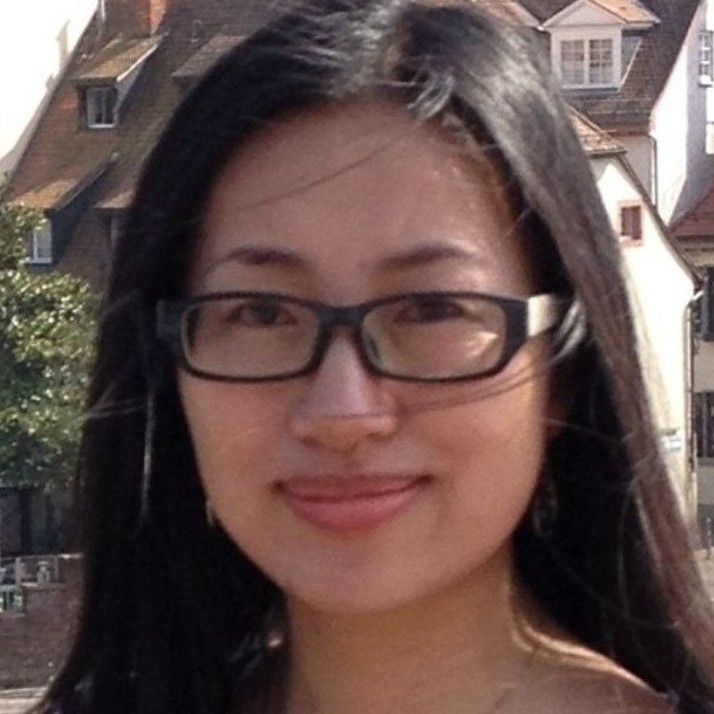
 Yufang Hou
· 5 previous affiliations
- Principal Researcher · Since 2015
- Technische Universität DarmstadtSince 2022
- Lecturer · Since 2022
- Full Professor · Since 2024
- IBM Research - IrelandCurrent
- Current
- Heidelberg University2011–2015
- PhD student · 2011–2015
Research Overview
Yufang Hou focuses on natural language processing, automated reasoning, and the synthesis of scientific evidence. Her trajectory spans foundational work in bridging anaphora resolution to the development of robust evaluation frameworks for generative models. Currently, she investigates how large language models handle knowledge conflicts and multimodal inconsistencies in scientific literature.
Research Trajectory
Hou's early research concentrated on discourse processing, specifically advancing the research direction of Resolving Bridging References for Associative Entity Tracking. In 2014, she introduced A Rule-Based System for Unrestricted Bridging Resolution: Recognizing Bridging Anaphora and Finding Links to Antecedents, which targeted diverse lexico-semantic relations beyond standard meronymic links and outperformed previous learning-based approaches. She expanded this foundational work in Unrestricted Bridging Resolution (2018), creating the ISNotes corpus to tackle both the recognition of bridging anaphors and their linking to antecedents. Later, she modernized this approach by formulating the problem as a machine reading comprehension task in Bridging Anaphora Resolution as Question Answering (2020).
Concurrently, her focus expanded into processing complex scholarly documents, contributing to the broader area of The Information Bottleneck of Scientific Abstracts. She led efforts to structure scientific literature, such as extracting metadata for Identification of Tasks, Datasets, Evaluation Metrics, and Numeric Scores for Scientific Leaderboards Construction (2019). Directing research on making scientific texts more accessible, she developed a discourse structure-based framework for automatic science journalism in 'Don't Get Too Technical with Me': A Discourse Structure-Based Framework for Automatic Science Journalism (2023), which transforms dense technical papers into layman-friendly summaries.
As generative models became central to natural language processing, Hou's work shifted toward rigorous evaluation methodologies. She analyzed the role of summary content units (SCUs) in On the Role of Summary Content Units in Text Summarization Evaluation (2024), exploring how small factual components can be used to judge candidate summaries. She also explored the research direction of Scalable Evaluation of Generative Models with LLM Judges, establishing a systematic framework for creative generation tasks in Systematic Task Exploration with LLMs: A Study in Citation Text Generation (2024). This work demonstrated that providing models with free-form intents and examples yields better results than relying solely on rigid categorical labels. Addressing the reliability of these models, she introduced WikiContradict: A Benchmark for Evaluating LLMs on Real-World Knowledge Conflicts from Wikipedia (2024), demonstrating that even retrieval-augmented models struggle to accurately represent contradictory facts, highlighting a critical gap in handling seemingly reliable sources.
Her recent trajectory emphasizes evidence synthesis and multimodal robustness. In 2025, she directed the creation of the CochraneForest dataset in Query-driven Document-level Scientific Evidence Extraction from Biomedical Studies, focusing on extracting evidence for clinical questions with conflicting data. Moving into multimodal domains, she participated in developing TRACED, a trajectory-guided framework for vision-language models in Seeing What’s Wrong: A Trajectory-Guided Approach to Caption Error Detection (2026). This approach analyzes iterative edits to maximize alignment, providing interpretable hints for caption correction. She also co-authored PRISMM-Bench: A Benchmark of Peer-Review Grounded Multimodal Inconsistencies (2026), which evaluates large multimodal models on subtle mismatches between text, figures, and equations in scientific papers. Additionally, she collaborated on the grand challenge proposal POLY-SIM: POLYglot Speaker Identification with Missing Modality Grand Challenge 2026 (2026), addressing robust AI performance when visual cues are absent and audio languages vary.
Current Directions
The most recent papers in the evidence address the reliability of AI systems in complex, real-world scenarios, particularly concerning conflicting information and multimodal inconsistencies. Recent work investigates how large multimodal models process subtle mismatches between text, figures, and equations in scientific literature, as well as how vision-language models can better detect and correct caption errors. Furthermore, ongoing research focuses on synthesizing scientific evidence from biomedical studies, specifically developing methods to extract and adjudicate conflicting data to support clinical research questions.
Profile updated
Loading new papers…
Other researchers whose papers cluster into the same research directions — a proxy for overlapping technical interests and shared intellectual neighborhoods.
See something wrong? Report a mistake