

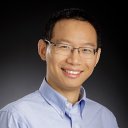
 Yuanxiong Guo
· 5 previous affiliations
- The University of Texas at San AntonioSince 2019
- Associate Professor · Since 2022
- Cloud Technology Endowed Fellow · 2023–2024
- Assistant Professor · 2019–2022
- Visiting Associate Professor · 2026
- Oklahoma State University2014–2019
- Assistant Professor · 2014–2019
- University of Florida2010–2014
- Graduate Research Assistant · 2010–2014
- PhD student · 2010–2012
- Chinese University of Hong Kong2009–2010
- Postgraduate Student · 2009–2010
Research Overview
Yuanxiong Guo focuses on privacy-preserving machine learning, federated learning, and resource optimization in distributed systems. His early work addressed energy management in smart grids and colocation data centers using stochastic optimization. More recently, he investigates the intersection of differential privacy and communication efficiency in federated learning, particularly through gradient sparsification and wireless edge computing.
Research Trajectory
Yuanxiong Guo's research initially centered on resource allocation and energy management in large-scale distributed infrastructures. His early investigations addressed the smart grid, where he developed stochastic optimization frameworks to minimize expected electricity costs for residential customers in Optimal Power Management of Residential Customers in the Smart Grid. He subsequently extended these optimization techniques to cloud computing environments. In Dynamic Multi-Tenant Coordination for Sustainable Colocation Data Centers, he utilized Lyapunov optimization to manage energy consumption across independent tenants, and later applied cooperative game theory to reduce energy costs via aggregated power procurement in Aggregation-Based Colocation Datacenter Energy Management in Wholesale Markets. Concurrently, he explored resource allocation in mobile edge computing, designing systems that leverage unmanned aerial vehicles to support Internet of Things (IoT) devices in Joint Task Offloading and Resource Allocation in UAV-Enabled Mobile Edge Computing.
As distributed systems increasingly relied on data-driven models, Guo's focus shifted toward the security and privacy of collaborative machine learning. Recognizing the vulnerabilities of centralized data collection in IoT environments, he introduced methods for privacy-preserving crowdsensing in Practical Collaborative Learning for Crowdsensing in the Internet of Things with Differential Privacy. This marked a broader engagement with the research direction of The Privacy-Utility Trade-off in Differentially Private Learning. Contributing to this area, he collaborated on DP-ADMM: ADMM-Based Distributed Learning With Differential Privacy, which integrated differential privacy with the Alternating Direction Method of Multipliers to secure distributed learning without requiring strict assumptions on the objective function.
A major theme in Guo's subsequent work is the co-design of communication efficiency and privacy in federated learning (FL). Because standard differential privacy mechanisms often inject noise proportional to model size—severely degrading accuracy in deep neural networks—he proposed integrating random sparsification with gradient perturbation. This approach, which amplifies privacy guarantees while reducing communication overhead, was detailed in Sparsified Privacy-Masking for Communication-Efficient and Privacy-Preserving Federated Learning, advancing the area of Privacy Amplification via Gradient Sparsification. He continued to refine these mechanisms in CPFed: Communication-Efficient and Privacy-Preserving Federated Learning and Federated Learning with Sparsification-Amplified Privacy and Adaptive Optimization.
To further improve the practical deployment of FL on edge devices, Guo developed techniques that balance client-level privacy with model utility. In Federated Learning with Sparsified Model Perturbation: Improving Accuracy under Client-Level Differential Privacy and Agent-Level Differentially Private Federated Learning via Compressed Model Perturbation, he demonstrated that sparsifying or compressing local model updates before adding noise yields a superior privacy-accuracy tradeoff. Addressing the communication bottlenecks inherent in these systems, he also proposed a hybrid local stochastic gradient descent algorithm that leverages both device-to-device and device-to-server cooperation in Hybrid Local SGD for Federated Learning with Heterogeneous Communications.
Most recently, Guo has expanded federated learning frameworks to accommodate complex data structures and wireless physical layers. In One Node Per User: Node-Level Federated Learning for Graph Neural Networks, he co-developed a framework that decouples message-passing from feature transformation, enabling collaborative graph learning when each client holds only a single node's data. Simultaneously, he has investigated the intersection of FL and wireless communications. In Communication and Energy Efficient Wireless Federated Learning with Intrinsic Privacy, he proposed a scheme for private federated edge learning using over-the-air computation, contributing to the broader study of Gradient Inversion and Privacy Leakage in Federated Learning.
Current Directions
The most recent papers in the evidence indicate a focus on adapting federated learning to specialized network environments and complex data topologies. Recent work investigates how to securely train Graph Neural Networks (GNNs) in a federated setting where individual users represent isolated nodes, requiring novel decoupling of message-passing and feature transformation steps. Additionally, Guo is exploring federated edge learning over wireless networks, specifically designing schemes that leverage over-the-air computation to achieve simultaneous communication efficiency, energy reduction, and intrinsic differential privacy for edge devices.
Profile updated
Loading new papers…
Other researchers whose papers cluster into the same research directions — a proxy for overlapping technical interests and shared intellectual neighborhoods.
See something wrong? Report a mistake