


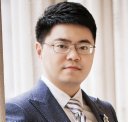
Research Overview
Yan Kang focuses on federated learning, privacy-preserving machine learning, and the intersection of data integration with distributed systems. Early collaborative work addressed the foundational challenges of vertical federated learning and cross-silo data alignment. More recently, this research has expanded to optimize the privacy-utility tradeoff in distributed networks and adapt federated architectures for large language models.
Research Trajectory
Yan Kang’s research trajectory is characterized by a sustained focus on making distributed machine learning more practical, efficient, and secure. Emerging around 2020 with participation in foundational benchmarking efforts for federated learning (FL), Kang’s early work quickly specialized in Vertical Federated Learning (VFL)—a paradigm where different features of the same users are distributed across multiple parties.
By 2022, a major theme in Kang’s work became the reconciliation of traditional data management with modern distributed machine learning, touching upon the broader area of Learning Directly Over Normalized Relational Databases. Because real-world machine learning relies on data scattered across isolated silos, integrating this data without violating privacy constraints poses significant computational bottlenecks. As a second author, Kang contributed to Bridging the Gap between Data Integration and ML Systems, which proposed utilizing metadata generated during traditional data integration processes to streamline decentralized model training.
During this same period, Kang addressed the algorithmic limitations of VFL, particularly the issue of data deficiency. Conventional VFL methods typically rely only on aligned and labeled samples, leaving vast amounts of unaligned data unused. In A Hybrid Self-Supervised Learning Framework for Vertical Federated Learning, Kang and collaborators introduced FedHSSL. This framework leveraged cross-party views of aligned samples to extract representations from unaligned and unlabeled data, significantly improving the utility of dispersed features without compromising the federation's privacy boundaries.
Moving into 2023, Kang’s focus shifted toward the automated optimization of privacy mechanisms and model hyperparameters in secure environments. Training models over encrypted data—such as using homomorphic encryption in tree-boosting algorithms—often introduces severe computational overhead and complex configuration challenges. Contributing to the research direction of Automated Hyperparameter Optimization for Federated Learning, Kang co-authored SecureBoost Hyperparameter Tuning via Multi-Objective Federated Learning. This work replaced heuristic hyperparameter selection with a constrained multi-objective optimization approach, striking a more rigorous balance between model utility, training efficiency, and privacy preservation.
This optimization theme was further generalized in A Meta-learning Framework for Tuning Parameters of Protection Mechanisms in Trustworthy Federated Learning. Recognizing that standard privacy protections often act as a "utility tax," Kang and co-authors developed a meta-learning approach to help practitioners quantify and navigate the inherent tradeoffs between privacy leakage, utility loss, and efficiency reduction. This work aligns closely with broader themes such as Selective Differential Privacy for Preserving Model Utility, aiming to provide mathematical privacy guarantees without crippling the underlying model's performance.
Most recently, Kang’s trajectory has expanded to address the intersection of federated learning with Large Language Models (LLMs) and continual learning. As LLMs demand vast computational resources and massive, often sensitive, datasets, training them in centralized silos is increasingly prohibitive. In FATE-LLM: A Industrial Grade Federated Learning Framework for Large Language Models, Kang contributed to the design of an industrial-grade framework that enables resource-constrained enterprises to collaboratively train LLMs. Concurrently, Kang has participated in research tackling the temporal challenges of distributed networks. In Overcoming Spatial-Temporal Catastrophic Forgetting for Federated Class-Incremental Learning, Kang collaborated on a framework (FedCBC) designed to fuse knowledge across both temporal and spatial dimensions, preventing local clients from forgetting previously learned classes as new data continually arrives.
Current Directions
Based on the most recent papers in the evidence, Kang’s current research directions focus on scaling federated learning architectures to accommodate the unique demands of Large Language Models and dynamic, continually updating data streams.
A primary focus is the development of robust frameworks that allow multiple entities to collaboratively train or fine-tune LLMs without centralizing sensitive text data. This involves navigating the high computational costs of LLMs while integrating advanced privacy protections, intersecting with work in the area of Differentially Private Text Generation via Logit Perturbation.
Additionally, recent work investigates Federated Class-Incremental Learning (FCiL). As local clients in a federated network continuously encounter new classes of data, models are prone to spatial-temporal catastrophic forgetting. Kang’s recent collaborative efforts aim to design specialized classifiers and knowledge-fusion techniques that allow distributed models to learn sequentially, retaining historical knowledge while adapting to new, client-specific information. Finally, the automated tuning of privacy-utility tradeoffs remains an active concern, ensuring that as federated systems grow in complexity, their protection mechanisms can be dynamically optimized for specific industrial applications.
Profile updated
Loading new papers…
Other researchers whose papers cluster into the same research directions — a proxy for overlapping technical interests and shared intellectual neighborhoods.
See something wrong? Report a mistake