

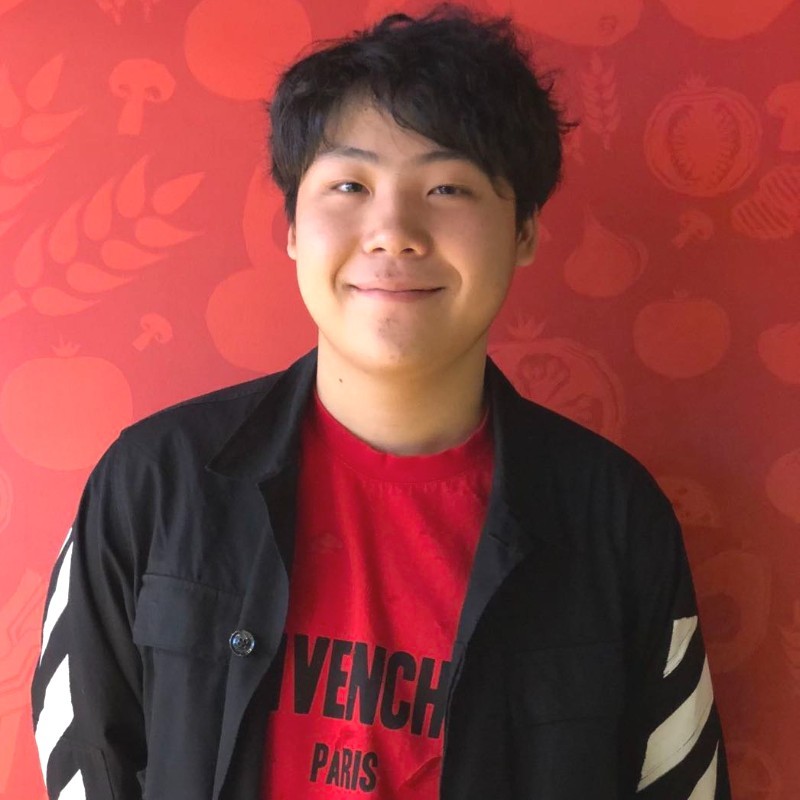
 Yuanqi Du
· 5 previous affiliations
- Microsoft (United States)Current
- Current
- Cornell TechSince 2022
- PhD student · Since 2022
- University of Amsterdam2021–2022
- Researcher · 2021–2022
- DP Technology2021–2022
- Researcher · 2021–2022
- George Mason University2017–2021
- Undergrad student · 2017–2021
Research Overview
Yuanqi Du focuses on probabilistic machine learning, geometric deep learning, and their applications in accelerating discovery across the natural sciences. His early work developed equivariant graph neural networks and molecular representation learning techniques for computational chemistry. Recently, he investigates advanced sampling methods, generative modeling of transition paths, and the use of large language models for autonomous scientific hypothesis generation.
Research Trajectory
Yuanqi Du’s research began with a focus on controllable generative modeling. In 2021, he introduced Property Controllable Variational Autoencoder via Invertible Mutual Dependence, developing the PCVAE architecture. By enforcing an invertible mutual dependence between latent variables and data properties, this model enabled high-precision manipulation of continuous-valued and inter-correlated features without relying on traditional disentanglement constraints.
In 2022, his focus expanded into computational chemistry, specifically targeting the research direction of Bridging the Molecular Geometric Representation Gap. He helped develop ClofNet in SE(3) Equivariant Graph Neural Networks with Complete Local Frames. This architecture advanced the broader area of SE(3) Equivariance via Local Frame Scalarization by constructing orthonormal local frames for each edge, losslessly projecting geometric tensors into invariant scalars to bypass the heavy computational cost of spherical harmonics. Concurrently, he explored the area of Self-Supervised Molecular Pretraining through a comprehensive survey, Pre-training Graph Neural Networks for Molecular Representations: Retrospect and Prospect. This work, alongside his contributions to Featurizations Matter: A Multiview Contrastive Learning Approach to Molecular Pretraining, contributed to the broader field of Graph Neural Networks for Molecular and Materials Representation. In the latter paper, he participated in proposing the MEMO framework, which adaptively learns from diverse molecular featurizations, including SMILES strings and 3D geometries. He also began addressing the physical dynamics of molecules, participating in Path Integral Stochastic Optimal Control for Sampling Transition Paths to sample likely transition paths between metastable conformational states without relying on hand-crafted collective variables.
By 2023, his work scaled to encompass solid-state materials and more expressive geometric architectures. He led the development of M$^2$Hub: Unlocking the Potential of Machine Learning for Materials Discovery, providing an integrated toolkit to bridge molecular and solid-state materials research by unifying diverse datasets and benchmarks. Continuing his work on geometric graphs, he contributed to A new perspective on building efficient and expressive 3D equivariant graph neural networks, which introduced LEFTNet. This model utilized Local Substructure Encoding and Frame Transition Encoding to achieve high accuracy on molecular property prediction while maintaining computational efficiency.
In 2024, his focus deepened on the intersection of generative modeling and physical dynamics, particularly in the area of Accelerating Rare Event Sampling in Molecular Dynamics. He oversaw the development of ChemFlow in Traversing Chemical Space with Latent Potential Flows, framing molecule manipulation as learning a vector field to transport molecular distributions toward desired properties. To address rare event sampling in dynamical systems, he proposed a variational formulation of Doob's h-transform in Doob's Lagrangian: A Sample-Efficient Variational Approach to Transition Path Sampling. Further advancing this domain, his group introduced Generalized Flow Matching for Transition Dynamics Modeling, a data-driven framework that learns surrogate potentials from short-run simulations to find high-quality transition paths efficiently.
Throughout 2025, he investigated the computational bottlenecks of neural samplers and their applications in complex optimization. In No Trick, No Treat: Pursuits and Challenges Towards Simulation-free Training of Neural Samplers, he proposed modifications using time-dependent mechanisms to enable simulation-free training. He also applied diffusion models to complex optimization problems in Diffusion Models as Constrained Samplers for Optimization with Unknown Constraints, reformulating optimization as a sampling problem from the product of a Boltzmann distribution and the data manifold. Additionally, he introduced FEAT: Free energy Estimators with Adaptive Transport, combining stochastic interpolants with non-equilibrium physics identities to calculate free energy differences robustly.
Most recently, in 2026, his work has expanded to autonomous scientific discovery and large language models. He led Accelerating Scientific Discovery with Autonomous Goal-evolving Agents, introducing the SAGA framework, which uses a bi-level architecture to allow agents to dynamically evolve their own objectives for tasks like drug design and DNA engineering. He also guided research on Towards Diverse Scientific Hypothesis Search with Large Language Models, presenting EvoDiverse, an evolutionary framework that adapts parallel tempering to prevent diversity collapse in LLM-based hypothesis generation. Alongside these agentic approaches, he continued exploring structural biology, participating in Graph representation learning for protein conformation sampling to explore the structure space and plasticity of protein molecules. In rare event modeling, Du developed Rare Event Analysis via Stochastic Optimal Control and oversaw Pharos: Learning to Control Rare Events at Scale, which advances Accelerating Rare Event Sampling in Molecular Dynamics by using stochastic optimal control to jointly learn transition steering and quantitative kinetics across molecular and biomolecular systems. He also contributed to establishing A unified perspective on fine-tuning and sampling with diffusion and flow models, as well as Science Prediction Universe, a benchmark for evaluating whether AI agents can reliably predict experimental outcomes in wet-lab domains.
Current Directions
The most recent papers in the evidence address the integration of large language models and autonomous agents into the scientific discovery process. Recent work investigates frameworks that allow AI agents to dynamically evolve their own research objectives, as well as evolutionary algorithms that prevent diversity collapse when using LLMs to search for scientific hypotheses. Alongside these agentic systems, ongoing research continues to refine probabilistic machine learning for physical systems, focusing on simulation-free training for neural samplers, robust free energy estimation using adaptive transport, and the application of diffusion models to optimization problems with unknown feasibility constraints.
Profile updated
Loading new papers…
Other researchers whose papers cluster into the same research directions — a proxy for overlapping technical interests and shared intellectual neighborhoods.
See something wrong? Report a mistake