

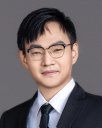
 Yuankai Luo
· 3 previous affiliations
- Nanjing UniversitySince 2025
- Assistant Professor · Since 2025
- Beihang University2021–2025
- PhD student · 2021–2025
- Undergrad student · 2017–2021
Research Overview
Yuankai Luo focuses on improving the efficiency and scalability of artificial intelligence systems, with an emphasis on structural representation learning and graph neural networks. His trajectory spans the optimization of classic graph architectures and the development of specialized transformers for complex topologies, while his most recent work investigates streamlined generative frameworks for structural data.
Research Trajectory
Luo's early work addresses the limitations of standard graph models when applied to data with partial orderings. In 2022, he explored these challenges in DAGformer: Directed Acyclic Graph Transformer, which highlighted how conventional models often treat graphs as undirected, thereby losing the rich structural hierarchy of directed acyclic graphs (DAGs). This research contributed to the broader area of Bridging Text Semantics and Graph Topology. He formalized this approach the following year in Transformers over Directed Acyclic Graphs. By replacing standard global attention with a reachability-based mechanism restricted to a node's ancestors and descendants, this work advanced the research direction of Reachability Masked Attention for Directed Acyclic Graphs and established more memory-efficient models for tasks like source code classification.
Concurrently, Luo applied graph-based reasoning to specialized domains. In Impact-Oriented Contextual Scholar Profiling using Self-Citation Graphs, he collaborated on the development of GeneticFlow, a method that models self-citations as a genetic lineage of innovation to predict scientific awards more accurately than flat bibliometric indicators. In the biochemical domain, he introduced algebraic topology to self-supervised learning in Improving Self-supervised Molecular Representation Learning using Persistent Homology. By using topological fingerprints to guide contrastive learning, this approach improved performance in low-data scenarios and contributed to work in the area of Preventing Dimensional Collapse in Self-Supervised Learning.
Moving into 2024, Luo's research expanded to address the scalability and expressivity of graph models. To capture multi-level community structures in large networks, he developed Enhancing Graph Transformers with Hierarchical Distance Structural Encoding. This method injects hierarchy distances directly into the attention mechanism, enabling linear-time scaling to massive graphs and advancing work in the areas of Structural Inductive Biases for Graph Transformers and Information Loss in Graph Pooling and Coarsening. During this period, his focus also shifted toward critically evaluating the necessity of complex architectures. In Classic GNNs are Strong Baselines: Reassessing GNNs for Node Classification, he conducted an empirical analysis demonstrating that traditional message-passing networks, when properly tuned, can match the performance of more complex Graph Transformers.
This philosophy of architectural simplicity became a defining theme of his 2025 publications. He extended the reassessment of classic models in Can Classic GNNs Be Strong Baselines for Graph-level Tasks? Simple Architectures Meet Excellence, introducing the GNN+ framework. By integrating standard deep learning regularization techniques, the framework showed that simple architectures like GCN and GIN could consistently perform on par with complex alternatives across numerous benchmarks while running significantly faster. Investigating the mechanics of these regularizations, he published Beyond Random Masking: When Dropout meets Graph Convolutional Networks, which revealed that dropout in GCNs primarily combats oversmoothing by creating dimension-specific stochastic sub-graphs that preserve node identities in deep networks.
Alongside architectural refinement, Luo addressed the computational overhead of graph embeddings. In Node Identifiers: Compact, Discrete Representations for Efficient Graph Learning, he introduced a framework to compress continuous embeddings into highly compact, discrete node IDs, achieving massive inference speedups and memory savings while retaining essential structural information. He also continued his earlier work on scholarly profiling, participating in the development of GeneticPrism: Multifaceted Visualization of Citation-Based Scholarly Research Evolution.
Most recently, Luo has extended his focus on streamlined architectures to generative models. In SimGFM: Simplifying Discrete Flow Matching for Graph Generation, he and his collaborators proposed a simplified discrete flow matching framework that eliminates task-specific heuristics. By utilizing an endpoint-focused scheduler and a straightforward velocity-field formulation, the approach drastically reduces the required sampling steps for structural generation.
Current Directions
The most recent papers in the evidence indicate a strong focus on simplifying and optimizing generative frameworks for structural data. Recent work investigates discrete flow matching for graph generation, emphasizing the removal of complex heuristics in favor of streamlined formulations and specialized schedulers. Additionally, ongoing themes in his research address the fundamental efficiency of graph learning systems, exploring techniques like extreme vector quantization for node embeddings and the systematic refinement of classic message-passing architectures to achieve state-of-the-art performance with minimal computational overhead.
Profile updated
Loading new papers…
Other researchers whose papers cluster into the same research directions — a proxy for overlapping technical interests and shared intellectual neighborhoods.
See something wrong? Report a mistake