

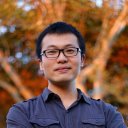
 Yu-Xiang Wang
· 4 previous affiliations
- University of California San DiegoSince 2024
- Associate Professor · Since 2024
- Associate Professor · 2023–2024
- Assistant Professor · 2018–2024
- Amazon (United States)2017–2018
- Scientist · 2017–2018
- Carnegie Mellon University2013–2017
- PhD student · 2013–2017
Research Overview
Yu-Xiang Wang focuses on differential privacy, reinforcement learning, and the theoretical foundations of machine learning. His early work explored subspace clustering and Bayesian posterior sampling for privacy-preserving analysis. More recently, his research investigates the generalization dynamics of neural networks, deployment-efficient reinforcement learning, and optimization strategies for large language models and diffusion architectures.
Research Trajectory
Wang’s early research addressed structural data analysis and representation learning. In 2013, he introduced Provable Subspace Clustering: When LRR meets SSC, a method that combined Sparse Subspace Clustering (SSC) and Low-Rank Representation (LRR) to exploit both the sparsity and low-rank structure of representation matrices. He subsequently expanded his focus to graph-structured data, developing Trend Filtering on Graphs in 2016. This work extended univariate trend filtering to graphs, providing a locally adaptive smoothing technique that improved upon traditional Laplacian and wavelet smoothing methods for signals with varying degrees of smoothness.
A significant portion of his trajectory has focused on the theoretical guarantees of privacy-preserving machine learning, particularly in the area of Differential Privacy through Bayesian Posterior Sampling. In 2015, he established foundational connections between cryptographic privacy and Bayesian learning in Privacy for Free: Posterior Sampling and Stochastic Gradient Monte Carlo. Building on this, he proposed a more granular framework in 2017 with Per-instance Differential Privacy and the Adaptivity of Posterior Sampling in Linear and Ridge regression. This work demonstrated that real-world privacy protection for specific individuals is often much stronger than global worst-case guarantees suggest, advancing the broader direction of Differentially Private Posterior Sampling. He continued to refine privacy mechanisms with collaborators in 2019, exploring privacy amplification techniques in Poission Subsampled Rényi Differential Privacy.
Concurrently, Wang investigated decision-making under uncertainty and distribution shift. In 2017, he addressed the challenge of estimating target policy values using historical data in Optimal and Adaptive Off-policy Evaluation in Contextual Bandits. The following year, he contributed to methods for handling distribution shifts in medical diagnosis and other domains, co-developing techniques in Detecting and Correcting for Label Shift with Black Box Predictors that quantify and correct classifier shift without requiring test set labels.
These interests naturally extended into reinforcement learning (RL), where Wang has made substantial contributions to sample and deployment efficiency. In 2019, he participated in developing Provably Efficient Q-Learning with Low Switching Cost, contributing to the research direction of Reinforcement Learning with Low Switching Cost. By 2022, his focus included the statistical limits of offline RL; his group analyzed how appropriate function approximators mitigate sample complexity burdens in Near-optimal Offline Reinforcement Learning with Linear Representation: Leveraging Variance Information with Pessimism, advancing the area of Minimax Optimal Reinforcement Learning via Variance Weighted Regression. That same year, he addressed the practical constraints of real-world RL—where policies can only be updated in large batches rather than continuously—in Near-Optimal Deployment Efficiency in Reward-Free Reinforcement Learning with Linear Function Approximation, a key contribution to work in the area of Deployment Efficient Reinforcement Learning.
In recent years, Wang’s research has expanded to encompass the theoretical dynamics of deep learning, large language models (LLMs), and advanced differential privacy mechanisms. Returning to privacy in 2025, his group introduced a novel "purification" framework in Purifying Approximate Differential Privacy with Randomized Post-processing. This method converts approximate DP mechanisms into pure DP mechanisms without sacrificing utility, contributing to the broader area of Privacy Preserving Analysis via Wasserstein Sensitivity. He also developed algorithms that automatically adapt to data geometry, such as in Adapting to Linear Separable Subsets with Large-Margin in Differentially Private Learning, which improves error bounds by ignoring outlier data points.
Simultaneously, Wang has rigorously analyzed the generalization properties of neural networks. In 2025, he investigated two-layer ReLU networks in Stable Minima Cannot Overfit in Univariate ReLU Networks: Generalization by Large Step Sizes, presenting a new theory of generalization for local minima reached via gradient descent with constant learning rates. This theoretical inquiry continued into 2026 with Generalization Below the Edge of Stability: The Role of Data Geometry, which introduced the principle of "data shatterability" to explain how networks naturally adapt to low-dimensional structures while struggling with data concentrated on a sphere. He also explored the geometric principles underlying generative models in What Architectural Inductive Bias Makes Diffusion Models Succeed? A Perspective from the Implicit Regularization of Gradient Descent, revealing how sparse connectivity and clean-data prediction implicitly regularize gradient descent.
Finally, Wang has addressed the efficiency and stability of LLM inference. In 2025, his group proposed Permute-and-Flip: An optimally stable and watermarkable decoder for LLMs, balancing text quality with diversity and watermarkability. In 2026, he advanced speculative decoding with the HedgeSpec framework in Not-a-Bandit: Provably No-Regret Drafter Selection in Speculative Decoding for LLMs, transforming the selection of "drafter" models from a bandit problem into a highly efficient full-information online learning task.
Current Directions
The most recent papers in the evidence indicate a strong ongoing focus on the theoretical foundations of deep learning and the optimization of large-scale generative models. A primary theme is understanding how architectural inductive biases and intrinsic data geometry drive generalization, particularly analyzing gradient descent dynamics in diffusion models and ReLU networks operating at or below the "Edge of Stability."
Additionally, current work investigates the efficiency of Large Language Models during deployment. This includes developing optimal decoding strategies that preserve text quality while enabling watermarking, as well as designing provably efficient, no-regret frameworks for speculative decoding that dynamically select drafter models to accelerate inference. Alongside these deep learning advancements, recent research continues to push the boundaries of differential privacy, focusing on methods that adapt to large-margin data subsets and techniques that purify approximate privacy guarantees into pure differential privacy.
Profile updated
Loading new papers…
Other researchers whose papers cluster into the same research directions — a proxy for overlapping technical interests and shared intellectual neighborhoods.
See something wrong? Report a mistake