

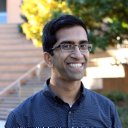
 Gautam Kamath
· 5 previous affiliations
- University of WaterlooSince 2019
- Assistant Professor · Since 2019
- New York UniversitySince 2026
- Assistant Professor · Since 2026
- Postdoc · 2018–2019
- PhD student · 2012–2018
- Cornell Tech2008–2012
- Undergrad student · 2008–2012
Research Overview
Gautam Kamath focuses on reliable and trustworthy machine learning, with an emphasis on data privacy, robust statistics, and high-dimensional distribution learning. His trajectory spans foundational theoretical limits in differential privacy to practical algorithms for robust estimation under adversarial conditions. Currently, his work investigates the vulnerabilities of generative models and the fundamental constraints of private data synthesis.
Research Trajectory
Kamath’s early work addressed the computational bottlenecks of learning distributions under adversarial conditions. With collaborators, he contributed to Robust Estimators in High Dimensions without the Computational Intractability in 2016, which provided computationally efficient algorithms for agnostically learning fundamental high-dimensional classes despite arbitrary data corruption.
This interest in robust, high-dimensional statistics naturally extended into data privacy. In 2019, he introduced Privately Learning High-Dimensional Distributions, presenting novel differentially private algorithms for multivariate Gaussian and product distributions. This work advanced the broader research direction of Sample Complexity of High-Dimensional Private Learning.
In 2020, his focus expanded to practical and theoretical challenges in private estimation, particularly for unbounded and heavy-tailed data—contributing significantly to the area of Private Statistical Estimation for Unbounded Data and the related direction of Private Statistical Estimation for Unbounded Distributions. He developed Private Mean Estimation of Heavy-Tailed Distributions, establishing minimax sample complexity bounds that demonstrated qualitatively different behavior under privacy constraints compared to standard estimation. Concurrently, he co-developed CoinPress: Practical Private Mean and Covariance Estimation, which provided accurate estimators for multivariate sub-Gaussian data at small sample sizes. Both of these contributions explored the research area of The Bias-Variance Trade-off in Differential Privacy Clipping. Addressing implementation vulnerabilities in privacy systems, he also published The Discrete Gaussian for Differential Privacy. This work highlighted how continuous noise distributions can destroy privacy due to floating-point errors and proposed the discrete Gaussian as a robust alternative, advancing the research direction of Discrete Noise Mechanisms for Robust Differential Privacy.
Continuing to probe the fundamental limits of private estimation, Kamath formalized new theoretical constraints in New Lower Bounds for Private Estimation and a Generalized Fingerprinting Lemma (2022) and later explored inherent trade-offs in A Bias-Variance-Privacy Trilemma for Statistical Estimation (2023). He also investigated how auxiliary information can improve private training in Choosing Public Datasets for Private Machine Learning via Gradient Subspace Distance, introducing a metric to align gradient subspaces between public and private data to reduce noise-induced utility loss. Alongside privacy, his research trajectory includes significant work on data poisoning and adversarial robustness. In Exploring the Limits of Indiscriminate Data Poisoning Attacks, he identified a computable threshold that dictates a phase transition in model poisoning reachability, showing that indiscriminate attacks remain largely ineffective until a specific poisoning ratio is crossed.
By 2024, Kamath’s work synthesized and expanded upon these dual themes of privacy and robustness. He authored a comprehensive survey, The Broader Landscape of Robustness in Algorithmic Statistics, which unified challenges in data contamination, heavy-tailed distributions, and differential privacy under a shared algorithmic framework centered on spectral analysis and convex relaxations. He also resolved an open question in learning theory with Not All Learnable Distribution Classes are Privately Learnable, refuting a prior conjecture by demonstrating a distribution class that is learnable in total variation distance but not under differential privacy. In Private Mean Estimation with Person-Level Differential Privacy, he established fundamental limits and nearly optimal algorithms for protecting all samples from a single user, introducing a "Threaded Clip-and-Noise" technique for high-dimensional data.
In 2025, his research further explored adversarial dynamics and local privacy models. He oversaw research on On the Learnability of Distribution Classes with Adaptive Adversaries, proving that adaptive attackers who observe data before corrupting it can make accurate distribution learning impossible, unlike oblivious adversaries. He also introduced the Scheffé graph in Query-Efficient Locally Private Hypothesis Selection via the Scheffe Graph to drastically reduce the user sample complexity required for non-interactive private data collection. Additionally, he participated in Not All Samples Are Equal: Quantifying Instance-level Difficulty in Targeted Data Poisoning, which provided attack-agnostic metrics to identify training samples most vulnerable to targeted poisoning.
Most recently, his work has intersected with the evaluation of large-scale generative models, contributing to the research direction of Privacy Aware Scaling in Foundation Models. In \textsc{ContinuousBench}: Can Differentially Private Synthetic Text Improve Capabilities? (2026), he and his collaborators designed a benchmark revealing that state-of-the-art differentially private synthetic text generation currently fails to transfer valuable knowledge from sensitive corpora, highlighting a critical gap in private data synthesis.
Current Directions
The most recent papers in the evidence address the intersection of differential privacy, generative modeling, and adversarial robustness. Current work investigates the efficacy of differentially private synthetic data, particularly evaluating whether privacy-preserving text generation can successfully transfer capabilities from sensitive corpora without leaking information. Alongside this, recent research explores the theoretical limits of distribution learning under adaptive adversarial attacks and develops query-efficient mechanisms for locally private hypothesis selection. Another active focus involves quantifying instance-level vulnerabilities in machine learning models to better understand and defend against targeted data poisoning using attack-agnostic metrics.
Profile updated
Loading new papers…
Other researchers whose papers cluster into the same research directions — a proxy for overlapping technical interests and shared intellectual neighborhoods.
See something wrong? Report a mistake