

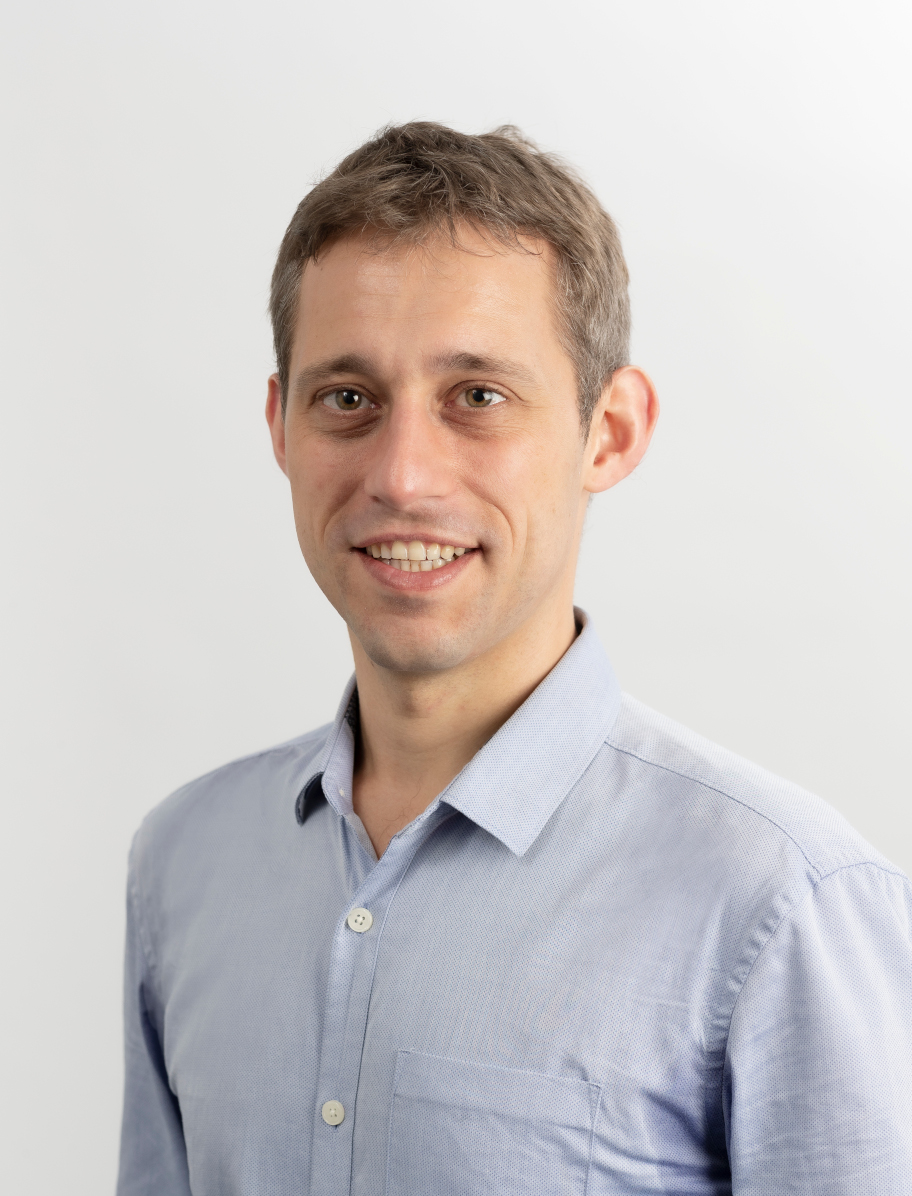
 Clement Louis Canonne
· 4 previous affiliations
- The University of SydneySince 2021
- Lecturer · Since 2021
- Postdoc · 2019–2020
- Stanford University2017–2019
- Postdoc · 2017–2019
- Columbia University2012–2017
- PhD student · 2012–2017
Research Overview
Clement Louis Canonne focuses on distribution testing, learning theory, and the mathematical foundations of data privacy. His trajectory spans fundamental advances in property testing under information constraints to rigorous frameworks for differential privacy. Currently, he investigates the computational aspects of statistical inference and privacy in distributed, resource-constrained, and quantum environments.
Research Trajectory
Canonne’s early research established foundational results in property testing and communication complexity. In 2015, he and his collaborators introduced a novel framework in Testing Probability Distributions using Conditional Samples. This work allowed algorithms to query distributions on subsets of their domain, yielding highly efficient algorithms for uniformity and equivalence testing and significantly advancing the research direction of Distribution Testing with Conditional Sampling Oracles. Concurrently, he explored interactive communication settings in Communication with Imperfectly Shared Randomness, analyzing how communication complexity can benefit from shared correlations even when perfect randomness is unavailable.
Building on these themes, his work expanded to structured distributions. The 2018 paper Testing for Families of Distributions via the Fourier Transform provided a unified framework for testing whether an unknown discrete distribution belongs to a specific family, such as log-concave distributions. By exploiting spectral properties, this research yielded computationally efficient and near-optimal testers, contributing to the broader area of Approximate Fourier Sparsity in Structured Distributions.
By 2020, Canonne’s focus increasingly integrated differential privacy and distributed statistical inference. A critical practical challenge in differential privacy is the vulnerability of continuous noise distributions to floating-point representation errors. He addressed this in The Discrete Gaussian for Differential Privacy, introducing a discrete alternative that preserves privacy guarantees on finite computers, a key development in the area of Discrete Noise Mechanisms for Robust Differential Privacy. In the distributed setting, Domain Compression and its Application to Randomness-Optimal Distributed Goodness-of-Fit examined the trade-offs between shared randomness, information constraints, and sample complexity, advancing the research direction of Preserving Statistical Distance through Randomized Domain Compression.
His recent trajectory demonstrates a sustained focus on the nuances of privacy and complex observation models. The 2024 study Private Distribution Testing with Heterogeneous Constraints: Your Epsilon Might Not Be Mine tackled scenarios where different datasets possess varying sensitivity levels, moving beyond the standard assumption of a single privacy budget. In 2025, he investigated high-dimensional statistics under restricted observation windows in Gaussian Mean Testing under Truncation. That same year, he resolved a long-standing gap in sample complexity bounds with Settling the Complexity of Testing Grainedness of Distributions, and Application to Uniformity Testing in the Huge Object Model.
Canonne has also formalized the theoretical limits of privacy mechanisms across different regimes and applications. Tight Bounds for Machine Unlearning via Differential Privacy quantified the inherent "deletion capacity" of differentially private models, proving how many training points a model can forget without degrading accuracy. In Locally Private Histograms in All Privacy Regimes, he analyzed frequency estimation algorithms in medium- and low-privacy settings, which are highly relevant in practice but historically less studied than high-privacy regimes. The foundational principles of these approaches were synthesized in Make some noise: the mathematical theories behind data privacy, which outlines how calibrated random noise guarantees privacy against unknown computational attacks. Further pushing the theoretical boundaries, The Randomness Complexity of Differential Privacy demonstrated that private data release requires surprisingly few random bits by leveraging deterministic rounding schemes.
Beyond classical computing, Canonne has explored quantum property testing. Uniformity Testing When You Have the Source Code (2025) introduced a quantum algorithm for testing distributions when the generating circuit is accessible, improving the state-of-the-art quantum complexity bounds. Moving into 2026, his work continues to refine distributed inference, as seen in Closeness testing from distributed measurements, which provides time- and sample-efficient algorithms for two-sample composite hypothesis testing under strict communication limits. This line of inquiry is further expanded in Uniformity Testing Under User-Level Local Privacy, adapting uniformity testing to user-level privacy constraints.
Current Directions
The most recent papers in the evidence indicate a strong ongoing focus on the intersection of statistical inference and rigorous data privacy. Canonne is actively investigating how to perform fundamental tasks—such as closeness and uniformity testing—under severe distributed communication constraints and user-level local privacy models. Additionally, his recent work addresses the resource complexities of privacy itself, minimizing the randomness required for differential privacy and quantifying the capacity for machine unlearning in private models. He is also exploring the frontier of quantum property testing, specifically designing algorithms that leverage source code access to achieve optimal complexity bounds.
Profile updated
Loading new papers…
Other researchers whose papers cluster into the same research directions — a proxy for overlapping technical interests and shared intellectual neighborhoods.
See something wrong? Report a mistake