

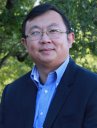
 Yu Wang
· 2 previous affiliations
- Temple UniversitySince 2019
- Full Professor · Since 2019
- Full Professor · 2004–2019
50 other authors named Yu Wang: Yu Wang (Tsinghua University · 679 papers), Yu Wang (Tianjin University · 79 papers), Yu Wang (University of Oregon · Vanderbilt University · 77 papers), Yu Wang (Shanghai Jiao Tong University · 62 papers), Yu Wang (53 papers), and 45 more
Research Overview
Yu Wang focuses on the optimization, security, and architectural design of distributed systems, with a particular emphasis on wireless sensor networks, mobile crowdsensing, and edge intelligence. Wang’s work spans the development of efficient routing protocols and medium access control (MAC) mechanisms to the implementation of privacy-preserving machine learning and quantum-assisted scheduling in decentralized environments. By integrating economic modeling, deep reinforcement learning, and hardware-assisted security, Wang addresses the fundamental trade-offs between system performance, energy constraints, and data privacy in modern mobile and ubiquitous computing infrastructures.
Research Trajectory
The early stages of Wang’s research, beginning around 2008, were primarily concerned with the fundamental networking challenges of Wireless Sensor Networks (WSNs) and Wireless Multimedia Sensor Networks (WMSNs). During this period, the work focused on overcoming the limitations of resource-constrained nodes to ensure reliable data transmission. Wang participated in the development of the Geographic Routing in Wireless Multimedia Sensor Networks, which introduced a two-phase geographic greedy forwarding (TPGF) algorithm. This approach bypassed the need for complex face routing or planarization, making it more suitable for the high-bandwidth requirements of multimedia streaming in sensor environments. This interest in protocol efficiency extended to the MAC layer, where Wang contributed to the design of SA-MAC: Self-Stabilizing Adaptive MAC Protocol for Wireless Sensor Networks. This work addressed the conflict between low-power duty cycling and network stability, proposing a mechanism for nodes to dynamically adjust transmission and wake-up patterns based on local traffic conditions.
By 2013, Wang’s focus shifted toward the intersection of mobile sensing and security, specifically leveraging the hardware capabilities of smartphones for behavioral biometrics. This transition marked a move from network-layer optimization to application-layer intelligence. As a senior researcher on the SilentSense project, Wang explored how micro-movements and touch patterns could serve as transparent authentication factors, effectively turning ambient sensor data into a security asset.
In the mid-2010s, Wang’s research expanded into the domain of mobile crowdsensing and opportunistic networks. This phase was characterized by an analytical focus on data utility and participant incentives. Wang led efforts to quantify the value of worker-contributed data, moving beyond simple resolution metrics to prioritize data diversity in visual crowdsensing tasks. Simultaneously, Wang investigated the optimization of data dissemination in energy-constrained environments, developing heuristic algorithms to balance delivery delays against communication costs in multicasting scenarios.
The most recent phase of Wang’s work, beginning around 2019, reflects the broader shift in the field toward edge computing, federated learning, and privacy-preserving AI. This period is defined by the application of advanced computational techniques—such as deep reinforcement learning and quantum-classical hybrid algorithms—to solve NP-hard scheduling and resource allocation problems. Wang has also addressed the security vulnerabilities inherent in edge-based inference, utilizing secure enclaves to protect proprietary models.
Current Directions
Wang’s current research agenda is increasingly focused on the scalability and robustness of decentralized optimization and the integration of emerging technologies into the mobile ecosystem. A significant portion of this work involves Frequency-Aware Data Tiering for Heterogeneous Storage Systems, which addresses the latency gap between processors and storage in large-scale data environments. By optimizing how data moves between high-speed memory and high-capacity storage tiers, Wang aims to improve the throughput of data-intensive applications.
In the realm of machine learning, Wang is exploring Probabilistic Gaussian Embeddings for Recommender Systems. This direction moves away from traditional point-vector representations of users and items, instead using probability distributions to capture the inherent uncertainty and multi-faceted nature of user preferences. This probabilistic approach is complemented by work in Kronecker Structured Covariance for High Dimensional Inference, which seeks to make high-dimensional data analysis more tractable by imposing structural constraints on covariance matrices, particularly in "small data" regimes.
Wang also maintains an interest in the physical and environmental applications of sensing technology. This includes research into Robust Visual Tracking in Low-Light and Nighttime Environments, which adapts computer vision models for deployment in challenging real-world conditions. Furthermore, Wang’s portfolio includes interdisciplinary inquiries into biological systems, such as Reinforcing Epithelial Barriers via Tight Junction Protein Upregulation and Restructuring Microbial Communities Through Ecological Engineering. While these areas diverge from core computer science, they reflect a broader interest in the structural balance and resilience of complex systems, whether they are microbial communities or distributed sensor networks.
Representative Work
SilentSense: silent user identification via touch and movement behavioral biometrics As the senior author, Wang developed a framework for transparent user authentication on smartphones. The system exploits the unique micro-movements of a device caused by a user's touch actions, extracting principal features to build a biometric model. This work demonstrated that ambient sensor data could be used for continuous, non-intrusive security without requiring active user participation.
Worker-Contributed Data Utility Measurement for Visual Crowdsensing Systems In this senior-authored paper, Wang addressed the challenge of measuring data quality in visual crowdsensing. The research shifted the focus from traditional image metrics to data diversity, distinguishing between static object imagery and evolving event photography. By linking these quality metrics to task-specific requirements, the work provided a framework for improving the utility of crowdsourced visual data.
Crowdsensing Game with Demand Uncertainties: A Deep Reinforcement Learning Approach Wang served as the senior author on this study, which applied deep reinforcement learning to the economic modeling of crowdsensing. The research addressed the problem of demand uncertainty and the need for private information protection for mobile users. By designing a novel economic model that accounts for resource constraints, Wang provided a method for crowdsourcers to optimize participant selection in unpredictable environments.
Quantum Assisted Scheduling Algorithm for Federated Learning in Distributed Networks Reflecting a recent shift toward hybrid computing, Wang led the development of the Hybrid Quantum-Classical Benders' Decomposition (HQCBD) algorithm. This work tackles the NP-hard problem of scheduling multiple federated learning models in distributed networks. By combining quantum computing's search capabilities with classical optimization, the algorithm improves scalability and reduces the training costs associated with resource competition in FL environments.
Model Protection: Real-Time Privacy-Preserving Inference Service for Model Privacy at the Edge In this collaborative work, Wang contributed to the design of a secure machine-learning-as-a-service (MLaaS) system for edge devices. The project utilized Intel SGX enclaves to protect proprietary ML models during inference. The research focused on the difficult balance between maintaining model privacy and meeting the real-time latency requirements of edge applications, providing a practical solution for secure edge intelligence.
On the Convergence of Decentralized Stochastic Minimax Optimization Algorithm with Compressed Communication Wang participated in the development of CE-DSGDAR, an algorithm designed for communication-efficient decentralized minimax optimization. The work addresses the high communication overhead typically found in decentralized learning by combining momentum-based gradient tracking with an error feedback mechanism. This approach allows for significant data compression while maintaining the convergence properties of full-precision optimization methods.
Profile updated
Loading new papers…
Other researchers whose papers cluster into the same research directions — a proxy for overlapping technical interests and shared intellectual neighborhoods.
See something wrong? Report a mistake