

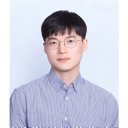
 Youngho Yoon
1 previous affiliation
- PhD student · 2020–2026
Research Overview
Youngho Yoon focuses on 3D computer vision, neural rendering, and image restoration, with a particular emphasis on novel view synthesis and implicit neural representations. His trajectory spans from continuous spherical image super-resolution to generalizable neural radiance fields and multi-task domain adaptation. Currently, his work addresses the integration of generative diffusion models with 3D Gaussian splatting to achieve high-quality scene reconstruction from degraded visual inputs.
Research Trajectory
Youngho Yoon’s early research addressed the challenges of enhancing and aligning complex 2D image formats, particularly focusing on omnidirectional vision and large-parallax scenarios. Contributing to the research direction of Continuous Neural Representations for Arbitrary Scale Super Resolution, he introduced SphereSR: 360° Image Super-Resolution with Arbitrary Projection via Continuous Spherical Image Representation. This work moved away from traditional 2D pixel grids, which often introduce distortion or information loss when applied to spherical panoramas. By leveraging a Spherical Local Implicit Image Function (SLIIF), the model predicts RGB values at any arbitrary spherical coordinate. This continuous representation allows for high-resolution outputs across various projection types, such as perspective, fisheye, or equirectangular formats, advancing the broader area of View Invariant Representation Learning through Cross View Alignment.
Continuing his work on complex image alignment, he collaborated on methods to resolve artifacts in panoramic stitching. With co-authors, he developed Pixel-Wise Warping for Deep Image Stitching, a framework designed to handle large-parallax problems that traditional global or local homography estimations struggle to resolve. The approach utilizes a Pixel-wise Warping Module to estimate a warp field akin to optical flow, paired with a Stitched Image Generating Module to seamlessly blend non-overlapping regions, significantly reducing undesired structural artifacts.
Transitioning into 3D computer vision, Yoon began investigating the intersection of single-image super-resolution and continuous volumetric representations. He proposed Cross-Guided Optimization of Radiance Fields with Multi-View Image Super-Resolution for High-Resolution Novel View Synthesis. Recognizing that Neural Radiance Fields (NeRF) are heavily constrained by the spectral characteristics of coordinate-based networks when scaling to high resolutions, this framework employs a cross-guided optimization strategy. By performing multi-view image super-resolution on training views and jointly optimizing the radiance fields, the method overcomes inherent spectral limitations to produce sharper, high-fidelity novel views.
Building on these volumetric techniques, his focus shifted toward eliminating the need for computationally expensive per-scene optimization. Working in the area of Bypassing Per Scene Optimization in 3D Scene Reconstruction, he developed GMT: Enhancing Generalizable Neural Rendering via Geometry-Driven Multi-Reference Texture Transfer. While generalizable NeRFs (G-NeRFs) construct radiance fields on-the-fly, they frequently struggle to capture fine, scene-specific details. To remedy this, the GMT framework introduces a geometry-driven texture transfer mechanism that leverages multiple reference views. This approach preserves high-frequency fidelity in the synthesized images without requiring lengthy optimization phases, intersecting with the research direction of Spatial Context for Implicit Neural Representations.
In parallel with his advancements in neural rendering, Yoon expanded his research into robust computer vision under adverse conditions and domain shifts. He co-developed Robust Adverse Weather Removal via Spectral-based Spatial Grouping, introducing the SSGformer. This "All-in-One" transformer architecture restores images corrupted by various weather conditions, such as rain, snow, and haze. The model achieves localized and effective restoration by combining classical spectral decomposition techniques—specifically Sobel filtering and Singular Value Decomposition (SVD)—with a spatial grouping mechanism to cluster similar degradation patterns.
Addressing robustness from a multi-task learning perspective, he also explored test-time adaptation for models facing environmental domain shifts. In Synchronizing Task Behavior: Aligning Multiple Tasks during Test-Time Training, he and his collaborators introduced S4T. When multi-task models transition to new environments, they often exhibit unsynchronized behavior where one task (e.g., depth estimation) might improve at the expense of another (e.g., semantic segmentation). S4T leverages the inherent relationships between tasks to ensure they adapt harmoniously to new domains without gradient interference.
Most recently, Yoon has synthesized his expertise in 3D scene representation and robust image restoration. He introduced ReSplat: Degradation-agnostic Feed-forward Gaussian Splatting via Self-guided Residual Diffusion, a framework that performs high-quality novel view synthesis directly from degraded input images. By integrating a residual diffusion model with explicit 3D Gaussian geometry, ReSplat achieves universal image restoration that remains spatially consistent across multiple views, bridging the gap between generative priors and feed-forward 3D reconstruction.
Current Directions
Recent work investigates the intersection of generative diffusion models, explicit 3D scene representations, and robust computer vision. The most recent papers in the evidence address the challenge of performing high-quality novel view synthesis "in the wild," where input images are frequently corrupted by adverse weather, blur, or low-light conditions.
By integrating self-guided residual diffusion with 3D Gaussian splatting, this current direction aims to achieve degradation-agnostic, feed-forward scene reconstruction. A major theme in this ongoing research is ensuring strict spatial consistency across multiple views while simultaneously performing universal image restoration. This represents a shift from optimizing neural representations in controlled, pristine environments toward building robust, real-world 3D vision systems capable of recovering high-fidelity geometry and texture from highly imperfect visual data. Additionally, ongoing themes in his work suggest a continued interest in aligning multi-task behaviors and leveraging spectral decomposition to handle complex, overlapping image degradations dynamically.
Profile updated
Loading new papers…
Other researchers whose papers cluster into the same research directions — a proxy for overlapping technical interests and shared intellectual neighborhoods.
See something wrong? Report a mistake