

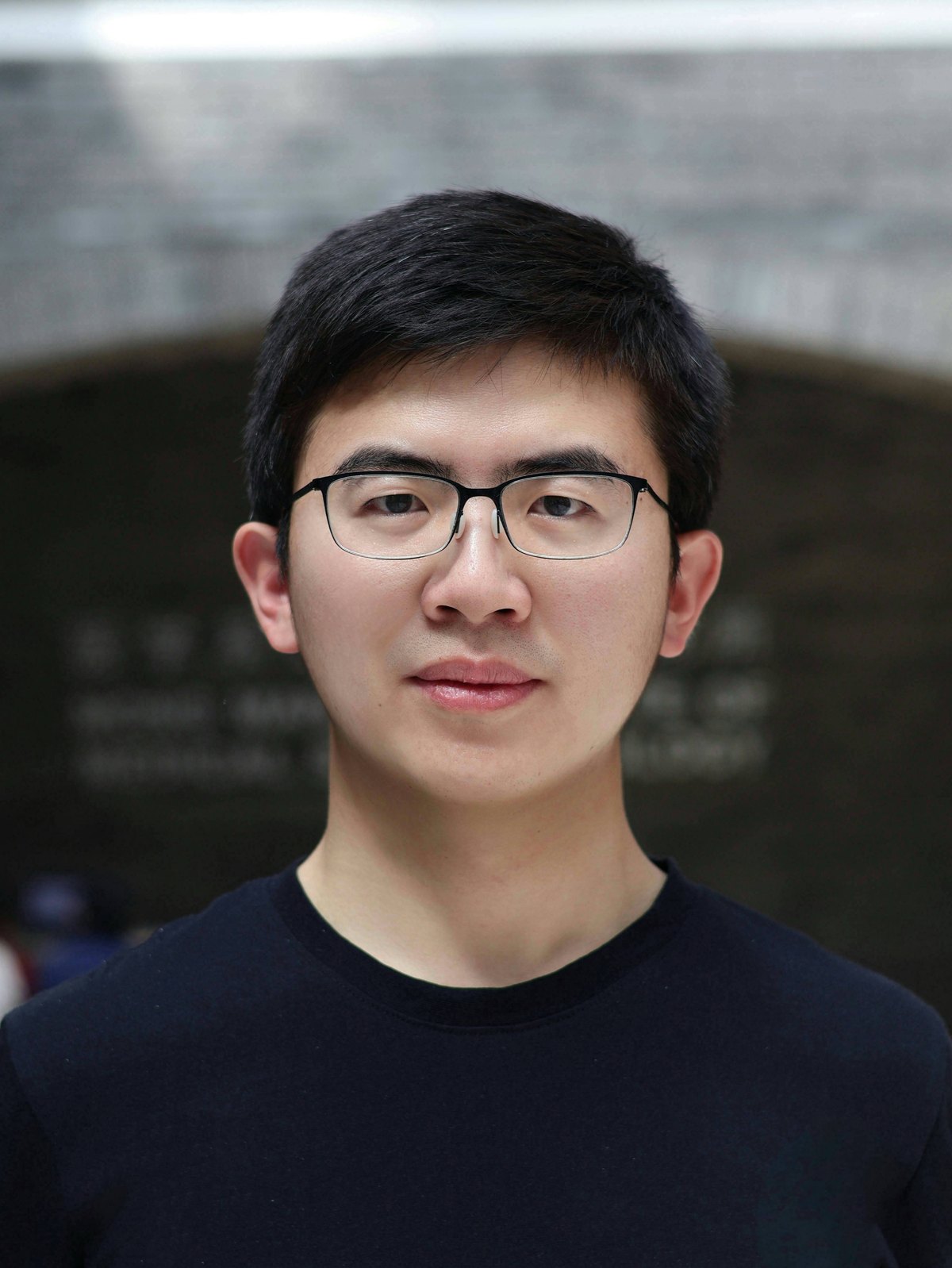
 Yonghao Song
· 1 previous affiliation
- Tsinghua UniversitySince 2026
- Postdoc · Since 2026
Research Overview
Yonghao Song focuses on brain-computer interfaces, neural signal decoding, and spatiotemporal representation learning for electroencephalography (EEG). His early work developed robust classification frameworks and data augmentation techniques to improve the reliability of motor imagery decoding across subjects. More recently, his research investigates multimodal alignment and zero-shot visual decoding, mapping complex neural activity to natural images and semantic text.
Research Trajectory
Yonghao Song’s early research concentrated on improving the practical viability of brain-computer interfaces (BCIs) for motor assistance. In 2020, he developed A Practical EEG-Based Human-Machine Interface to Online Control an Upper-Limb Assist Robot, which utilized P300 brainwave components to achieve reliable online control for individuals with motor impairments. Recognizing that standard convolutional networks often struggle to capture long-range dependencies in neural data, he introduced the Spatial-Temporal Tiny Transformer (S3T) in Transformer-based Spatial-Temporal Feature Learning for EEG Decoding. This lightweight architecture replaced traditional convolutional layers with attention mechanisms to decode motor imagery, contributing to the broader research direction of Temporal Patching for Time Series Transformers.
A major bottleneck in BCI deployment is the extensive calibration required for new users. To address this, he proposed a specialized generative adversarial network in Common Spatial Generative Adversarial Networks based EEG Data Augmentation for Cross-Subject Brain-Computer Interface. By explicitly modeling the spatial relationships between brain signals to artificially expand user-specific data, this work advanced the area of Overcoming Inter-Subject Variability in EEG Models. Continuing to refine motor imagery decoding, he collaborated on Joint spatial and temporal features extraction for multi-classification of motor imagery EEG and A novel hybrid CNN-Transformer model for EEG Motor Imagery classification. The latter combined local feature extraction via CNNs with global dependency perception via Transformers to navigate the low signal-to-noise ratio inherent in EEG data.
Building on these hybrid architectures, he subsequently developed the EEG Conformer: Convolutional Transformer for EEG Decoding and Visualization, a unified framework that encapsulates local temporal features and global correlations within a single model. His work on model adaptability also included contributions to Excellent fine-tuning: From specific-subject classification to cross-task classification for motor imagery, which explored transfer learning techniques across different BCI tasks.
Around 2024, his focus expanded from motor imagery to the complex challenge of visual decoding from neural signals. He introduced the Natural Image Contrast EEG (NICE) framework in Decoding Natural Images from EEG for Object Recognition. By employing contrastive learning to align noisy brain signals with high-level image representations, this model achieved zero-shot object recognition from brain activity. This research intersects with the areas of Cross-Modal Fusion for Spatiotemporal Neuroimaging and Preserving Asymmetric Spatiotemporal Structure in Neural Signals. Concurrently, he investigated the theoretical and practical limits of visual BCIs in Estimating and approaching the maximum information rate of noninvasive visual brain-computer interface. He also contributed to High-performance c-VEP-BCI under minimal calibration, which utilized linear modeling and transfer learning to maintain high information transfer rates while significantly reducing the user calibration burden.
In 2025, his work on visual decoding matured into unified, multi-task frameworks. He developed UMind: A Unified Multitask Network for Zero-Shot M/EEG Visual Decoding, which aligns neural activity with both images and dual-grained text descriptions. By training simultaneously on retrieval, classification, and reconstruction, UMind demonstrated the importance of semantic context in high-fidelity brain-to-image decoding. He further explored language-guided alignment in Recognizing Natural Images From EEG With Language-Guided Contrastive Learning and addressed domain shifts in Unsupervised multi-source domain adaptation via contrastive learning for EEG classification.
As the field moved toward large-scale models, he participated in the development of AdaBrain-Bench: Benchmarking Brain Foundation Models for Brain-Computer Interface Applications. This comprehensive benchmark evaluated foundation models across diverse BCI tasks and datasets, highlighting the ongoing challenges in achieving plug-and-play brain decoding and contributing to the broader direction of Subject Independent Validation for Generalizable Machine Learning. Most recently, he collaborated on Image-to-Brain Signal Generation for Visual Prosthesis with CLIP Guided Multimodal Diffusion Models, which inverted the decoding paradigm. By utilizing Diffusion Transformers and Large Language Models to convert images into biologically plausible EEG and MEG signals, this work aims to provide foundational models for advanced visual prostheses.
Current Directions
The most recent papers in the evidence indicate a strong focus on multimodal alignment and the development of foundation models for neural decoding. Recent work investigates the integration of semantic text, natural images, and brain signals (EEG/MEG) using contrastive learning and diffusion models. A key objective in this current research is achieving zero-shot generalization, allowing models to interpret or generate neural responses for unseen visual stimuli. Furthermore, ongoing efforts address the standardization and evaluation of large-scale brain foundation models, seeking to overcome persistent challenges in cross-subject variability and domain adaptation to enable more robust, generalized brain-computer interfaces and visual prostheses.
Profile updated
Loading new papers…
Other researchers whose papers cluster into the same research directions — a proxy for overlapping technical interests and shared intellectual neighborhoods.
See something wrong? Report a mistake