

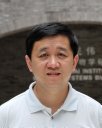
 Xiaorong Gao
· 1 previous affiliation
- Tsinghua UniversitySince 2004
- Full Professor · Since 2004
Research Overview
Xiaorong Gao focuses on non-invasive brain-computer interfaces, electroencephalogram (EEG) signal processing, and neural decoding algorithms. His trajectory spans the development of spatial filtering techniques and steady-state visual evoked potential (SSVEP) paradigms to recent advances in deep learning for neuroimaging. Currently, his work addresses cross-modal fusion and high-density spatiotemporal neural recording to enable high-speed, low-calibration brain-computer communication.
Research Trajectory
Early work in signal processing began with Multi-Scale Nonlinear Thresholding for Ultrasonic Speckle Suppression in 1999. By the early 2000s, this methodological expertise was directed toward non-invasive neurotechnology, demonstrated by the Design and implementation of a brain-computer interface with high transfer rates. A major methodological contribution during this period was the application of canonical correlation analysis (CCA) to extract narrowband frequency components, detailed in Frequency Recognition Based on Canonical Correlation Analysis for SSVEP-Based BCIs.. This approach significantly improved recognition accuracy over standard fast Fourier transform methods. With collaborators, he also addressed practical system robustness, such as distinguishing active tasks from resting states in An Algorithm for Idle-State Detection in Motor-Imagery-Based Brain-Computer Interface, and reviewed comprehensive stimulus modulation strategies in VEP-based brain-computer interfaces: time, frequency, and code modulations.
Between 2014 and 2020, the research evolved to incorporate advanced probabilistic modeling for spatial filtering and noise suppression. This included Bayesian estimation of ERP components from multicondition and multichannel EEG and the development of a generic spatio-temporal framework in Probabilistic Common Spatial Patterns for Multichannel EEG Analysis., which mitigated overfitting issues inherent in traditional common spatial pattern algorithms. Applications and refinement of SSVEP systems expanded concurrently; his group demonstrated practical utility in Control of a 7-DOF Robotic Arm System With an SSVEP-Based BCI. To address background noise and improve detection, they introduced spatio-temporal equalization techniques, applied to SSVEP in A Dynamic Window Recognition Algorithm for SSVEP-Based Brain-Computer Interfaces Using a Spatio-Temporal Equalizer and generalized for event-related potentials in The Spatio-Temporal Equalization for Evoked or Event-Related Potential Detection in Multichannel EEG Data. To reduce visual fatigue in users while maintaining performance, he also developed a High-Frequency SSVEP Stimulation Paradigm Based On Dual Frequency Modulation.
The most recent phase of work integrates deep learning architectures and high-density recording to push the boundaries of BCI performance. In 2023, his lab shifted from discrete classification to continuous control paradigms with a Visual tracking brain computer interface, mapping neural responses directly to velocity vectors. They also proposed the EEG Conformer: Convolutional Transformer for EEG Decoding and Visualization to capture both local and global temporal features in neural data.
In 2024, work expanded into the research direction of Cross-Modal Fusion for Spatiotemporal Neuroimaging with Decoding Natural Images from EEG for Object Recognition, introducing a self-supervised contrastive learning framework to align noisy EEG signals with high-level image representations for zero-shot object recognition. Addressing practical deployment, High-performance c-VEP-BCI under minimal calibration contributed to the broader area of Overcoming the Calibration Bottleneck in Neural Decoding and the direction of Asynchronous Neural Decoding for Self-Paced Brain Interfaces, while also touching upon the area of Non-linear Modeling of Neural Population Dynamics. Recent investigations in 2025 include longitudinal biometric security in Enhancing information security through brainprint: A longitudinal study on ERP identity authentication. Furthermore, advancing the area of High-Density Spatiotemporal Neural Recording, his collaborative work on High-Density EEG Enables the Fastest Visual Brain-Computer Interfaces utilized 256-channel arrays and a frequency-phase-space encoding method to achieve highly precise target distinction and rapid information transfer rates.
Current Directions
The most recent papers in the evidence indicate a focus on maximizing the speed, accuracy, and usability of non-invasive brain-computer interfaces. Current work investigates high-density EEG configurations combined with novel multidimensional encoding strategies to dramatically increase information transfer rates. Additionally, recent research explores the intersection of neurotechnology and deep learning, utilizing convolutional transformers and contrastive learning frameworks to decode complex visual stimuli directly from brain activity. There is also an ongoing effort to reduce user burden through minimal-calibration systems and to explore novel applications of neural signals, such as longitudinal identity authentication using event-related potentials.
Profile updated
| Paper | Venue | Year |
|---|---|---|
| Decoding Natural Images from EEG for Object RecognitionGitHubeeyhsong/ | ICLR | 2024 |
Loading new papers…
Other researchers whose papers cluster into the same research directions — a proxy for overlapping technical interests and shared intellectual neighborhoods.
See something wrong? Report a mistake