

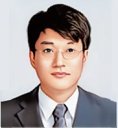
 Yong-Ju Lee
· 3 previous affiliations
- Current
- Researcher · 2011–2026
- Chungnam National University2007–2011
- PhD student · 2007–2011
- Jeonbuk National University1999–2010
- MS student · 1999–2010
Research Overview
Yong-Ju Lee focuses on multimodal learning, generative artificial intelligence, and visual speech recognition. His early trajectory spanned spatial database optimization and audio-visual speech processing before expanding into deep learning architectures for computer vision. His current research emphasizes efficient text-to-image diffusion models, multimodal agent collaboration, and noise-robust visual speech recognition systems.
Research Trajectory
Lee's early work in the 1990s addressed foundational problems in speech processing and spatial databases. Initial research explored Korean speech synthesis in Speech synthesis using demisyllables for Korean: a preliminary system. Concurrently, he made contributions to the research direction of Hierarchical Spatial Partitioning. In Controlled Decomposition Strategy for Complex Spatial Objects, a method was introduced to represent complex spatial objects in databases, balancing the number and complexity of decomposed components to improve spatial query performance. This approach was expanded in Spatial Query Processing Using Object Decomposition Method, utilizing a two-step indexing structure to manage approximation accuracy. This line of research culminated in the development of main-memory data structures for multi-dimensional objects, detailed in The DR-tree: A Main Memory Data Structure for Complex Multi-dimensional Objects.
In the mid-2000s, focus shifted toward multimodal speech processing and out-of-vocabulary challenges. Contributions to audio-visual fusion for noise-robust speech recognition included Correcting Korean vowel speech recognition errors with limited lip features. This lightweight method used a single snapshot of a speaker's lips to correct audio errors, advancing visual anchoring for robust speech enhancement. Collaborative work also addressed spoken document retrieval in Phone vector DHMM to decode a phone recognizer's output, tackling the out-of-vocabulary problem to improve search capabilities within spoken audio.
Over the following decade, the research encompassed diverse applied systems and computer vision tasks. This included video delivery architectures in Cable-TV-based home video streaming system: practice and experience, and robotics localization in Performance Improvement of Iterative Closest Point-Based Outdoor SLAM by Rotation Invariant Descriptors of Salient Regions. Further applied work analyzed sensor data environments in A Layered Features Analysis in Smart Farm Environments.
By 2020, Lee's focus transitioned heavily toward deep learning architectures, model compression, and advanced computer vision. Investigations into binary convolutional neural networks were presented in Efficient Approximation of Filters for High-Accuracy Binary Convolutional Neural Networks. In Precise Aerial Image Matching based on Deep Homography Estimation, a deep homography alignment network was developed to progressively estimate transformation parameters, preventing the distortion of straight lines in aerial imagery. Efficiency in natural language processing was explored in Block-wise Word Embedding Compression Revisited: Better Weighting and Structuring, which introduced the DiscBlock approach. By utilizing differentiable masking and k-means clustering, this work improved performance-to-compression ratios.
In recent years, as a researcher at the Electronics and Telecommunications Research Institute (ETRI), Lee has concentrated on multimodal foundation models, generative AI, and visual speech recognition. Noise-robust systems were revisited in Multimodal audiovisual speech recognition architecture using a three‐feature multi‐fusion method for noise‐robust systems, extracting features from log-Mel spectrograms and word embeddings to mimic human dialogue recognition. The area of decomposing complex tasks into sequential pipelines was advanced with A Multimodal Chain of Tools for Described Object Detection. This framework leverages specialized tools and multimodal large language models for compositional reasoning.
In the generative AI space, Lee participated in the development of compressed text-to-image models in KOALA: Empirical Lessons Toward Memory-Efficient and Fast Diffusion Models for Text-to-Image Synthesis. By focusing on self-attention distillation, the KOALA models significantly reduce size and increase speed compared to standard diffusion models, advancing research directions such as Distilling Attention Maps for Efficient Neural Networks and Legible Text Generation in Diffusion Models. Most recently, a hybrid architecture was introduced in Dual-Stream Former: A Dual-Branch Transformer Architecture for Visual Speech Recognition. Combining a Video Swin Transformer with a Conformer, this approach reduces character error rates for visually confusable phonemes.
Current Directions
Recent work investigates the intersection of multimodal understanding, generative artificial intelligence, and efficient model architectures. A primary focus is on visual speech recognition (VSR) and audiovisual fusion, where recent architectures combine spatial feature extraction with robust temporal modeling to interpret visually confusable phonemes in noisy environments. Concurrently, research in generative visual intelligence explores memory-efficient diffusion models, utilizing knowledge distillation to enable high-resolution text-to-image synthesis on consumer-grade hardware. Finally, ongoing projects address multimodal agent collaboration, developing frameworks that decompose complex object detection and reasoning tasks into sequential pipelines utilizing specialized tools and multimodal large language models.
Profile updated
Loading new papers…
Other researchers whose papers cluster into the same research directions — a proxy for overlapping technical interests and shared intellectual neighborhoods.
See something wrong? Report a mistake