

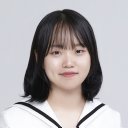
 Yoorhim Cho
· 3 previous affiliations
- Post-master's Researcher · Since 2026
- Sungkyunkwan University2024–2026
- MS student · 2024–2026
- Sookmyung Women's University2019–2024
- Undergrad student · 2019–2024
Research Overview
Yoorhim Cho focuses on visuo-tactile perception, vision-language models, and the efficient compression of generative AI architectures. Her trajectory includes developing memory-efficient diffusion models for text-to-image synthesis through knowledge distillation. Most recently, she investigates retrieval-augmented methods to enhance touch understanding using enriched visual data.
Research Trajectory
During her graduate studies at Sungkyunkwan University and subsequent research roles, Cho contributed to the development of highly efficient generative architectures. In 2023, she collaborated on research addressing the substantial computational bottlenecks of large-scale generative models. This effort led to KOALA: Self-Attention Matters in Knowledge Distillation of Latent Diffusion Models for Memory-Efficient and Fast Image Synthesis, which introduced a family of compact text-to-image models. By compressing massive architectures like Stable Diffusion XL (SDXL) into versions up to 69% smaller and four times faster, the work demonstrated that self-attention is a critical component for effective knowledge distillation. This enabled high-quality 1024px image synthesis on standard consumer-grade hardware. This research intersects with several broader research directions, including Knowledge Distillation via Attention Map Alignment and the area of Generalizing Model Pruning Across Diverse Neural Architectures.
This project evolved into a formalized set of methodologies presented at NeurIPS in 2024. In KOALA: Empirical Lessons Toward Memory-Efficient and Fast Diffusion Models for Text-to-Image Synthesis, Cho and her collaborators further detailed how combining self-attention distillation with high-quality synthetic captions yields robust, lightweight models. By making state-of-the-art generative capabilities accessible without enterprise-grade hardware, this line of inquiry contributes directly to the research direction of Overcoming Data Inaccessibility in Generative AI Research and the broader area of Progressive Trajectory Distillation for Fast Diffusion Models. Additional themes explored in this context include the research direction of Compositional Attribute Binding in Text to Image Diffusion and the area of Legible Text Generation in Diffusion Models.
Expanding her focus into multimodal perception, her 2025 work investigates the intersection of vision and touch. She co-developed RA-Touch: Retrieval-Augmented Touch Understanding with Enriched Visual Data, a framework that leverages retrieval-augmented methods to improve touch understanding by integrating enriched visual data.
Current Directions
The most recent papers in the evidence address visuo-tactile perception and the continued refinement of vision-language models. Her current work investigates how retrieval-augmented generation techniques can be applied to cross-modal understanding, specifically bridging visual and tactile data. Additionally, her foundational work in model compression suggests an ongoing interest in making complex multimodal and generative architectures more memory-efficient and accessible for practical deployment.
Profile updated
Loading new papers…
Other researchers whose papers cluster into the same research directions — a proxy for overlapping technical interests and shared intellectual neighborhoods.
See something wrong? Report a mistake