

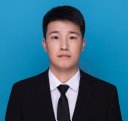
 Yong Guan
· 1 previous affiliation
- North China Electric Power UniversitySince 2025
- Associate Professor · Since 2025
Research Overview
Yong Guan focuses on natural language processing, event-centric information extraction, and the mechanistic interpretability of neural models. His trajectory spans foundational linguistic analysis and abstractive summarization to advanced event relation extraction and large language model benchmarking. Currently, he investigates multi-agent debate frameworks to enhance reasoning and reliability in complex generative language tasks.
Research Trajectory
Guan’s early research explored foundational challenges in natural language processing and text comprehension. In 2016, he investigated lexical semantics in Chinese Word Similarity Computing Based on Combination Strategy. He subsequently analyzed the prerequisites for machine reading systems in What Linguistic Information Does Reading Comprehension Require? (2020). Building on these linguistic foundations, he addressed abstractive text summarization in 2021 with Integrating Semantic Scenario and Word Relations for Abstractive Sentence Summarization. Recognizing that existing graph-based methods often neglected the correlation between word relations and structural information, he proposed a Dual Graph network. This approach constructed semantic scenario and word relation graphs based on FrameNet, utilizing a graph fusion method to learn richer semantic representations for summary generation.
A major and enduring theme in Guan’s work is event-centric natural language understanding. In 2023, he explored event detection mechanisms in Trigger-Argument based Explanation for Event Detection. To support the broader research community, he contributed to the development of MAVEN-ARG: Completing the Puzzle of All-in-One Event Understanding Dataset with Event Argument Annotation (2024), a comprehensive benchmark featuring a large-scale schema designed to support event detection, argument extraction, and relation extraction simultaneously.
To address the specific challenges of long-range dependencies and information redundancy in document-level extraction, Guan developed TacoERE: Cluster-aware Compression for Event Relation Extraction (2024). This work introduced a compression-then-extraction paradigm that splits documents into intra- and inter-clusters, modeling both local event relations and broader document dependencies. Expanding the utility of event structures into information retrieval, he designed Event GDR: Event-Centric Generative Document Retrieval (2024). This model integrates event taxonomy to overcome common retrieval challenges, specifically improving inner-content correlation and providing explicit semantic structure during identifier construction. He also provided a synthesis of related linguistic resources in A Comprehensive Overview of CFN From a Commonsense Perspective (2024).
As large language models (LLMs) became central to natural language processing, Guan’s research expanded to include rigorous model evaluation and interpretability. He collaborated on KoLA: Carefully Benchmarking World Knowledge of Large Language Models (2024), a framework utilizing a four-level cognitive taxonomy and a continuously updated dataset to measure how models process world knowledge while mitigating data contamination. This benchmarking effort intersects with several broader research areas, including the direction of Shifting from Static Benchmarks to Dynamic Evaluation, the area of Cross Task Performance Normalization in Machine Learning, and the field of Hierarchical Task Evaluation for Large Models.
Concurrently, Guan addressed the opacity of neural networks through Knowledge-Aware Neuron Interpretation for Scene Classification (2024). This work proposed a framework incorporating external knowledge to ensure concept completeness and semantic fusion, allowing for better verification of model behavior. He continued to advance this interpretability agenda in Empowering Mechanistic Interpretability of Deep Neural Networks with Knowledge Graphs (2025).
Most recently, Guan has focused on complex reasoning and open-ended predictive tasks. He introduced OpenEP: Open-Ended Future Event Prediction (2024), shifting future event prediction from rigid classification to flexible text generation. This work included the release of the OpenEPBench dataset and a framework leveraging stakeholder extraction and historical analogies to improve prediction quality. To further enhance reasoning in extraction tasks, he presented MMD-ERE: Multi-Agent Multi-Sided Debate for Event Relation Extraction (2025). This approach divides language model agents into groups assigned to specific debate topics, integrating cooperation and confrontation to refine the understanding of event relations. This methodology directly advances the research areas of Multi-Agent Collaboration for Reliable Reasoning and Iterative Multi-Agent Debate for Language Model Reasoning.
Current Directions
The most recent papers in the evidence indicate a strong focus on multi-agent frameworks and the mechanistic interpretability of deep learning models. Guan is actively investigating how iterative debate among specialized language model agents can resolve ambiguities and improve reliability in complex reasoning tasks, particularly event relation extraction. Additionally, his work continues to bridge external knowledge structures—such as knowledge graphs and historical analogies—with neural architectures. This dual focus aims to improve both the transparency of model predictions and the capacity of generative models to perform open-ended, structured reasoning about future events.
Profile updated
Loading new papers…
Other researchers whose papers cluster into the same research directions — a proxy for overlapping technical interests and shared intellectual neighborhoods.
See something wrong? Report a mistake