

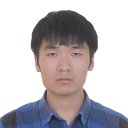
 Yong Cheng
· 3 previous affiliations
- Google (United States)Since 2018
- Researcher · Since 2018
- Tencent (China)2017–2018
- Researcher · 2017–2018
- Tsinghua University2012–2017
- PhD student · 2012–2017
3 other authors named Yong Cheng: Yong Cheng (Jiangsu Open University · 13 papers), Yong Cheng (11 papers), Yong Cheng (Video Rebirth · 4 papers)
Research Overview
Yong Cheng focuses on machine translation, multimodal representation learning, and the scaling of large language models (LLMs) for generative tasks across text, speech, and vision. His research trajectory reflects a transition from statistical machine translation and latent-variable modeling to the development of unified architectures capable of cross-modal understanding. Recently, his work has centered on leveraging frozen or fine-tuned LLMs for complex multimodal generation and specialized applications in clinical reasoning.
Research Trajectory
Cheng’s early research was grounded in the structural challenges of statistical machine translation (SMT) and information retrieval. During this period, he addressed fundamental issues in how models map correspondences between languages, particularly the "alignment problem." His contributions involved improving the retrieval of translations through structured query representations and exploring the Symmetrizing Word Alignments through Bidirectional Agreement, a method designed to overcome the inherent asymmetries in early models like the IBM Models. This phase of his work also touched upon broader data modeling challenges, including Reconstructing Continuous Fields via Geostatistical Interpolation and Exploiting Correlation for Efficient Distributed Sensing, which sought to manage data redundancy and missing measurements in sensing systems.
As the field shifted toward deep learning, Cheng focused on the limitations of generative latent-variable models. He investigated the "laziness" of traditional Maximum Likelihood Estimation (MLE), which often causes models to prioritize high-frequency but semantically irrelevant correlations. By proposing alternative estimation frameworks, he sought to force models to capture more meaningful underlying structures in unsupervised natural language processing. This interest in model robustness naturally extended to Neural Machine Translation for Low-Resource Languages, where the scarcity of parallel data necessitates more efficient transfer learning and regularization techniques.
By 2020, Cheng’s work increasingly addressed the robustness of Neural Machine Translation (NMT) systems. He developed adversarial augmentation methods to improve model generalization, moving beyond simple data scaling to focus on the geometry of the embedding space. This period also saw an expansion into Cross-Lingual Transfer via Linguistic Proximity, examining how the relationship between source and target languages influences the efficacy of model adaptation.
In the early 2020s, Cheng transitioned toward the unification of disparate modalities. He contributed to the development of models that bridge the gap between speech and text, aiming for architectures that treat these modalities as shared representation spaces rather than separate signals. This work laid the foundation for his recent focus on multimodal LLMs, where he has explored how transformer architectures can be adapted for visual generation and medical reasoning. His recent participation in large-scale projects involves Noisy Embedding Regularization for Large Language Models, a technique that uses stochastic perturbations to prevent models from memorizing superficial patterns during training.
Current Directions
Cheng’s current research is characterized by two primary streams: the expansion of LLMs into the visual domain and the application of these models to high-stakes domains like medicine. In the visual domain, he is involved in developing tokenization strategies that allow LLMs to outperform traditional diffusion models in image and video generation. By treating visual data as a discrete sequence of tokens, this work attempts to apply the success of the transformer architecture to generative vision tasks.
Simultaneously, Cheng has participated in the development of specialized multimodal models for the medical field. This involves tailoring general-purpose models like Gemini to handle complex clinical vignettes, medical imaging, and long-context reasoning. These efforts focus on "complementary human-AI reasoning," where the model serves as a diagnostic aid that can be critiqued and refined by medical professionals.
Representative Work
Maximum Reconstruction Estimation for Generative Latent-Variable Models In this work, Cheng addresses a core weakness in the training of generative latent-variable models like Hidden Markov Models (HMMs). While Maximum Likelihood Estimation (MLE) is the standard approach, it often fails to induce meaningful patterns, instead latching onto superficial statistical noise. Cheng proposes Maximum Reconstruction Estimation (MRE) as a more robust alternative, encouraging models to focus on the structural features necessary for accurate data reconstruction. This work is foundational to his later interests in model regularization and robustness.
AdvAug: Robust Adversarial Augmentation for Neural Machine Translation As the primary author, Cheng introduces a novel adversarial augmentation method designed to improve the vicinal risk minimization of NMT models. By sampling virtual sentences from a smooth, interpolated embedding space, AdvAug forces the model to remain robust against perturbations that would otherwise lead to translation errors. The method demonstrated significant performance gains across multiple translation benchmarks, including Chinese-English and English-German, highlighting Cheng's focus on the geometric properties of neural representations.
Mu2SLAM: Multitask, Multilingual Speech and Language Models Cheng led the development of Mu2SLAM, a unified architecture designed to overcome the modality gap between speech and text. Unlike previous approaches that relied on modality-specific components, Mu2SLAM utilizes a joint pre-training framework to learn representations that are effective for both speech understanding and text processing. This work represents a significant step toward "one-model" architectures that can handle diverse linguistic inputs without specialized hacks.
SPAE: Semantic Pyramid AutoEncoder for Multimodal Generation with Frozen LLMs In this second-author paper, Cheng explores the possibility of enabling visual understanding and generation in LLMs without updating their underlying parameters. By introducing a "semantic pyramid" that translates images into the LLM’s existing vocabulary, the researchers achieved significant improvements in few-shot image classification. This work demonstrates Cheng's interest in the interpretability of multimodal representations and the efficiency of using frozen model weights.
Query Lattice for Translation Retrieval Reflecting his early work in translation systems, this paper proposes a query lattice framework to improve the accuracy of translation retrieval. By representing multiple translation hypotheses in a lattice structure, the system can more effectively match user queries against large-scale translation memories. This research highlights Cheng’s early expertise in the intersection of computational linguistics and information retrieval.
VideoPoet: A Large Language Model for Zero-Shot Video Generation Cheng participated in the development of VideoPoet, a large-scale generative model that treats video and audio as a sequence of discrete tokens. This work challenges the dominance of diffusion models in the visual domain by demonstrating that the LLM paradigm—specifically the use of autoregressive transformers—can achieve superior motion fidelity and zero-shot task flexibility. His involvement in this project underscores his current focus on scaling multimodal architectures to handle high-dimensional temporal data.
Profile updated
Loading new papers…
Other researchers whose papers cluster into the same research directions — a proxy for overlapping technical interests and shared intellectual neighborhoods.
See something wrong? Report a mistake