

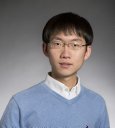
 Pengcheng Yin
· 7 previous affiliations
- Google DeepMind (United Kingdom)Since 2023
- Staff Research Scientist · Since 2025
- Senior Research Scientist · 2023–2025
- Meta (United States)Since 2026
- Researcher · Since 2026
- Part-time Research Collaborator · 2019
- Google (United States)2021–2023
- Researcher · 2021–2023
- Carnegie Mellon University2016–2021
- Doctor of Philosophy - PhD, Computer Science · 2016–2021
- Master student · 2016–2018
- Microsoft Semantic Machines2020
- Researcher Intern · 2020
- Intern · 2020
- University of Hong Kong2014–2016
- Mphil student · 2014–2016
Research Overview
Pengcheng Yin focuses on natural language to code generation, semantic parsing, and the reasoning capabilities of large language models. His trajectory spans from early syntax-driven neural semantic parsers to large-scale foundation models and autonomous multimodal agents. Currently, he investigates complex software engineering benchmarks, enterprise-level text-to-SQL workflows, and the execution semantics of code.
Research Trajectory
The early phase of Yin's research focused on bridging the gap between natural language and formal programming languages through syntax-aware modeling. In 2017, he introduced A Syntactic Neural Model for General-Purpose Code Generation, proposing a neural architecture powered by a grammar model to explicitly capture target syntax as prior knowledge. This approach effectively scaled up the generation of complex Python programs from natural language descriptions. He expanded on this foundation in 2018 by developing TRANX: A Transition-based Neural Abstract Syntax Parser for Semantic Parsing and Code Generation. TRANX utilized a transition system based on abstract syntax descriptions to constrain the output space, ensuring highly accurate and generalizable mappings from natural language utterances to formal meaning representations across various domains.
Moving into 2020, his research broadened to encompass joint representations of text and structured tabular data with TaBERT: Pretraining for Joint Understanding of Textual and Tabular Data. By 2022, he was guiding research into the limitations of neural program synthesizers, specifically their struggles to combine familiar concepts in novel ways. He oversaw the development of Compositional Generalization and Decomposition in Neural Program Synthesis, which introduced a Decompositional Transformer designed to force models to solve complex tasks step-by-step using specialized attention masks.
In 2023, Yin's work scaled significantly as he contributed to the development of major foundation models, notably serving as a lead contributor to the PaLM 2 Technical Report. This work detailed a compute-efficient, multilingual model trained with a mixture of objectives, demonstrating improved reasoning capabilities across diverse downstream tasks. Concurrently, he continued advancing domain-specific code generation, presenting Natural Language to Code Generation for Interactive Data Science. This research introduced the ARCADE benchmark for context-aware code generation in pandas notebooks and the fine-tuned PaChiNCo model.
During this period, he also directed research into whether language models can understand execution semantics statically. In Can Large Language Models Reason about Program Invariants? (2023), his team demonstrated that fine-tuned models employing a scratchpad approach could predict logical rules during execution without requiring dynamic traces, matching the performance of traditional dynamic analysis tools. Around the same time, Yin explored the efficiency of graph computation, guiding the development of SCARA: Scalable Graph Neural Networks with Feature-Oriented Optimization (2023). This work, later expanded in the journal article Scalable decoupling graph neural network with feature-oriented optimization (2024), optimized graph message-passing for million-scale graphs by efficiently decoupling, selecting, and reusing feature computation.
In 2024, his focus on execution semantics deepened with NExT: Teaching Large Language Models to Reason about Code Execution, a method designed to bridge the gap between how models read static code and how they understand its runtime behavior. He also addressed the challenge of evaluating code models at scale, directing the development of Unsupervised Evaluation of Code LLMs with Round-Trip Correctness. This framework evaluated models by having them describe code in natural language and synthesize it back, correlating strongly with human-curated benchmarks without requiring manual annotations.
Expanding beyond pure code generation, Yin led the creation of OSWorld: Benchmarking Multimodal Agents for Open-Ended Tasks in Real Computer Environments (2024). This benchmark tested AI agents in executable operating systems, exposing a significant execution gap in multi-app reasoning and GUI grounding. This work contributes heavily to the research direction of Hybrid Observation Spaces for Multimodal GUI Agents. He also participated in advancing natural language interfaces for databases, collaborating on SQL-PaLM: Improved large language model adaptation for Text-to-SQL. By exploring few-shot prompting and instruction fine-tuning, this work advanced the broader areas of Scaling Text-to-SQL to Massive Database Schemas and Scaling Text-to-SQL for Enterprise Data Environments.
In 2025, this trajectory continued with Spider 2.0: Evaluating Language Models on Real-World Enterprise Text-to-SQL Workflows, a benchmark featuring massive schemas and cloud dialects that further contributed to the research direction of Bridging the Dialect Gap in Database Querying. Most recently, in 2026, Yin collaborated on ProgramBench: Can Language Models Rebuild Programs From Scratch?, challenging agents to reconstruct complex software projects from executables and documentation. He also participated in The Efficiency Gap in Byte Modeling, investigating the computational costs and performance trade-offs of using raw bytes versus subword tokens in non-sequential language models.
Current Directions
The most recent papers in the evidence highlight a focus on the limitations of current language models in complex, real-world software engineering and enterprise environments. One major theme is evaluating models on repository-level software reconstruction, testing whether AI agents can transition from writing isolated snippets of code to engineering complete software projects from scratch using only documentation and executables.
Additionally, recent research investigates the intricacies of enterprise data workflows, particularly the challenges of navigating massive database schemas and diverse cloud dialects in text-to-SQL tasks. Finally, there is an ongoing exploration of fundamental model architectures, specifically analyzing the computational trade-offs and efficiency gaps between byte-level modeling and traditional subword tokenization in non-sequential generation paradigms.
Profile updated
Loading new papers…
Other researchers whose papers cluster into the same research directions — a proxy for overlapping technical interests and shared intellectual neighborhoods.
See something wrong? Report a mistake