

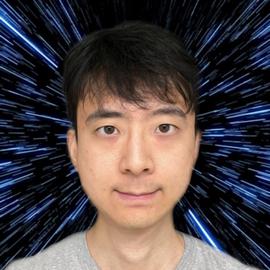
 Yihan Zhou
· 3 previous affiliations
- Current
- PhD student · 2021–2026
- University of British Columbia2018–2020
- MS student · 2018–2020
- University of Waterloo2015–2018
- Undergrad student · 2015–2018
1 other author named Yihan Zhou: Yihan Zhou (Center for Academic Research and Training in Anthropogeny · 1 paper)
Research Overview
Yihan Zhou focuses on active learning, online convex optimization, and data-driven algorithms for control systems. His early work explored first-order optimization methods and regret bounds for online learning under relaxed continuity assumptions. More recently, his research addresses the theoretical limits of active learning and the design of verifiable, model-free controllers for autonomous systems.
Research Trajectory
Yihan Zhou’s early research included work on hardware reliability and error correction, specifically developing Low redundancy matrix-based codes for adjacent error correction with parity sharing (2017).
He subsequently shifted his focus to online convex optimization and machine learning theory. He introduced Regret Bounds without Lipschitz Continuity: Online Learning with Relative-Lipschitz Losses (2020), which extended subgradient methods to relative Lipschitz and relative strongly convex functions. This work demonstrated that algorithms in this relative setting achieve performance analogous to classical settings, contributing to the broader area of Principled Design and Selection of Loss Functions. Continuing in optimization, he collaborated on Analyzing and Improving Greedy 2-Coordinate Updates for Equality-Constrained Optimization via Steepest Descent in the 1-Norm (2023). This research provided a dimension-independent linear convergence rate for greedy coordinate descent and introduced the GS-1 rule for handling constraints more efficiently than standard methods, advancing the research direction of Efficient Greedy Coordinate Descent for High-Dimensional Optimization.
A major focus of Zhou's recent theoretical work is active learning, where he seeks to establish near-optimal theoretical guarantees. He developed A Competitive Algorithm for Agnostic Active Learning (2023), providing an algorithm guaranteed to perform within a logarithmic factor of the best possible algorithm for specific instances. This bridged a long-standing gap in active learning theory by moving beyond worst-case parameters, contributing to the area of Instance Optimality Beyond the Worst Case. He expanded on these theoretical foundations in Towards Fundamental Limits for Active Multi-distribution Learning (2025). In the realizable setting, he introduced Near-Polynomially Competitive Active Logistic Regression (2025), presenting the first algorithm that is polynomially competitive with the optimal algorithm on every input instance. This work intersects with research directions such as Logarithmic Label Complexity in Active Learning and Feature Selection for High Dimensional Redundancy.
In parallel with his theoretical machine learning research, Zhou has contributed significantly to data-driven control and autonomous vehicle maneuvering. He helped develop Learned Quadratic Programming (LQP) controllers, a class of neural networks structured as unrolled optimization solvers. This approach was detailed in Bridging the Gaps: Learning Verifiable Model-Free Quadratic Programming Controllers Inspired by Model Predictive Control (2023) and further formalized in MPC-inspired reinforcement learning for verifiable model-free control (2024). These controllers combine the formal safety guarantees of Model Predictive Control (MPC) with the flexibility and robustness of Deep Reinforcement Learning (DRL), advancing the field of Stability Guarantees for Suboptimal Real-Time Control. He also explored predictive control approximations in Learning-Based Efficient Approximation of Data-Enabled Predictive Control (2024). Applying these control strategies to complex physical systems, he investigated high-speed vehicle dynamics in Consecutive Inertia Drift of Autonomous RC Car via Primitive-Based Planning and Data-Driven Control (2023) and Learning to Drift With Individual Wheel Drive: Maneuvering Autonomous Vehicle at the Handling Limits (2025).
Current Directions
The most recent papers in the evidence address two primary domains: the theoretical limits of active learning and the practical deployment of data-driven control for autonomous vehicles. In learning theory, recent work investigates near-polynomially competitive algorithms for active logistic regression and explores the fundamental limits of active multi-distribution learning. This research aims to improve sample and label efficiency by moving beyond worst-case bounds to instance-optimal guarantees. Concurrently, in the domain of robotics and control, recent efforts focus on maneuvering autonomous vehicles at their handling limits. This includes developing learning-based methods for complex dynamic tasks, such as controlled drifting with individual wheel drive, bridging the gap between verifiable predictive control and real-time reinforcement learning.
Profile updated
Loading new papers…
Other researchers whose papers cluster into the same research directions — a proxy for overlapping technical interests and shared intellectual neighborhoods.
See something wrong? Report a mistake