

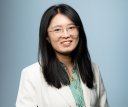
 Yifan Zhang
· 3 previous affiliations
- City University of Hong Kong (Dongguan)Since 2024
- Assistant Professor · Since 2024
- Current
- ETH Zurich2023–2024
- Postdoc · 2023–2024
- City University of Hong Kong2018–2023
- Postdoc · 2022–2023
- PhD student · 2018–2022
19 other authors named Yifan Zhang: Yifan Zhang (Institute of Automation · 97 papers), Yifan Zhang (Miromind · Apodex · 94 papers), YiFan Zhang (Institute of Automation · 46 papers), Yifan Zhang (Princeton University · 26 papers), Yifan Zhang (22 papers), and 14 more
Research Overview
Yifan Zhang focuses on spatial-temporal modeling, motion planning, and the development of intelligent transportation systems (ITS). His work primarily addresses the challenges of trajectory prediction and decision-making in autonomous driving, with a particular emphasis on integrating human-centric factors such as driving styles and intent into algorithmic frameworks. Zhang’s research trajectory has evolved from fundamental reinforcement learning applications in network routing toward sophisticated graph-based models for traffic estimation and out-of-distribution generalization in dynamic sensing networks.
Research Trajectory
Zhang’s early research, beginning around 2019, explored the utility of machine learning within complex network environments. In Evaluating and Boosting Reinforcement Learning for Intra-Domain Routing, Zhang investigated whether reinforcement learning (RL) could outperform traditional protocols in intradomain routing. This work established an early interest in high-dimensional action spaces and complex traffic conditions, identifying the specific challenges that arise when applying data-driven models to fundamental internet infrastructure.
By 2020, Zhang shifted his focus toward autonomous vehicle (AV) navigation, specifically addressing the limitations of sampling-based motion planning (SBMP). While SBMP is valued for its efficiency, traditional sampling strategies often result in trajectories that lack smoothness or fail to account for the intentions of surrounding agents. In A Novel Learning Framework for Sampling-Based Motion Planning in Autonomous Driving, Zhang proposed a two-stage prediction model and an automatic labeling scheme to bias sampling toward more realistic, human-like trajectories. This marked the beginning of a sustained effort to bridge the gap between classical algorithmic planning and deep learning-based prediction.
Between 2021 and 2023, Zhang’s work became increasingly centered on Modeling Heterogeneous Driving Styles in Autonomous Navigation. Recognizing that standard AV systems often treat surrounding vehicles as generic obstacles, Zhang developed models that explicitly account for the heterogeneity of human behavior. This period saw the development of generative car-following models that utilize Neural Processes to predict behavior for unseen driving styles. He further extended this to complex maneuvers in A Learning-Based Discretionary Lane-Change Decision-Making Model With Driving Style Awareness, where he integrated contextual traffic data with the specific driving styles of surrounding vehicles to improve decision-making accuracy. This research direction is closely linked to the broader challenge of Modeling Dynamic Transitions in Human Intent, ensuring that autonomous systems can adapt to the shifting behaviors of human drivers in real-time.
In his most recent work (2024–2025), Zhang has transitioned toward the systemic reliability of autonomous driving and the generalization capabilities of spatial-temporal models. He has contributed to the identification of critical failures in simulation environments, participating in the development of ICSFuzz: Collision Detector Bug Discovery in Autonomous Driving Simulators. This work highlights the "ignored collision scenarios" where simulators fail to report actual crashes, presenting a significant risk to the safety validation of autonomous systems. Simultaneously, Zhang has moved into a senior research role, focusing on the robustness of graph neural networks (GNNs) in the face of shifting data distributions.
Current Directions
Zhang’s current research focuses on the intersection of graph representation learning and out-of-distribution (OOD) generalization. As a senior author, he has advanced the use of retrieval-augmented frameworks to help spatio-temporal models adapt to unseen scenarios. In STRAP: Spatio-Temporal Pattern Retrieval for Out-of-Distribution Generalization, Zhang and his collaborators introduced a pattern library that allows models to store and retrieve historical spatial and temporal patterns, reducing the need for constant task-specific fine-tuning.
This interest in graph-based modeling extends to large-scale traffic state estimation (TSE). In Network-wide Freeway Traffic Estimation Using Sparse Sensor Data: A Dirichlet Graph Auto-Encoder Approach, Zhang addresses the problem of inferring traffic states in segments where sensors are absent. By utilizing inductive graph learning and addressing the bias introduced by zero-filling unobserved locations, this work aims to provide a more accurate, network-wide view of traffic dynamics. These recent efforts align with emerging themes in Multi-scale Spectral Decomposition for Graph Representation Learning, particularly in how spectral perspectives can improve domain adaptation and the handling of heterophilous graph signals.
Representative Work
Zhang’s contributions are characterized by the integration of physics-based constraints with deep learning architectures to solve practical problems in intelligent transportation.
In Integrating Algorithmic Sampling-Based Motion Planning with Learning in Autonomous Driving, Zhang refined the SBMP process for highway scenarios. By predicting the intentions of surrounding vehicles and learning the distribution of human trajectories, the model samples "important" points that prioritize safety and efficiency. This work also empirically examined the relationship between the number of sampled points and planning performance, providing a more grounded understanding of the trade-offs in real-time AV navigation.
The challenge of heterogeneous data in AV environments was addressed in his work on Temporal Occupancy Flow Graphs (TOFG). In TOFG: Temporal Occupancy Flow Graph for Prediction and Planning in Autonomous Driving, Zhang (as second author) contributed to a unified environment representation. This approach seeks to overcome the limitations of separate and sequential processing of high-definition map data and vehicle trajectories, which often leads to biased interpretations of vehicle-to-lane interactions.
Zhang has also investigated the security of autonomous systems, specifically regarding optical signal attacks. In Detecting and Identifying Optical Signal Attacks on Autonomous Driving Systems, he participated in developing a framework to identify compromised sensors. This research acknowledges that while machine learning models have improved object detection, the underlying hardware (LiDAR and cameras) remains vulnerable to signal interference, necessitating robust detection mechanisms to maintain system integrity.
Collectively, Zhang’s work demonstrates a progression from specific vehicle maneuvers and local planning problems to broader, more resilient spatial-temporal frameworks that govern how autonomous systems interact with complex, large-scale environments. His recent focus on OOD generalization and inductive graph learning suggests a continuing trajectory toward making intelligent transportation systems more adaptable to the unpredictability of real-world traffic networks.
Profile updated
Loading new papers…
Other researchers whose papers cluster into the same research directions — a proxy for overlapping technical interests and shared intellectual neighborhoods.
See something wrong? Report a mistake